

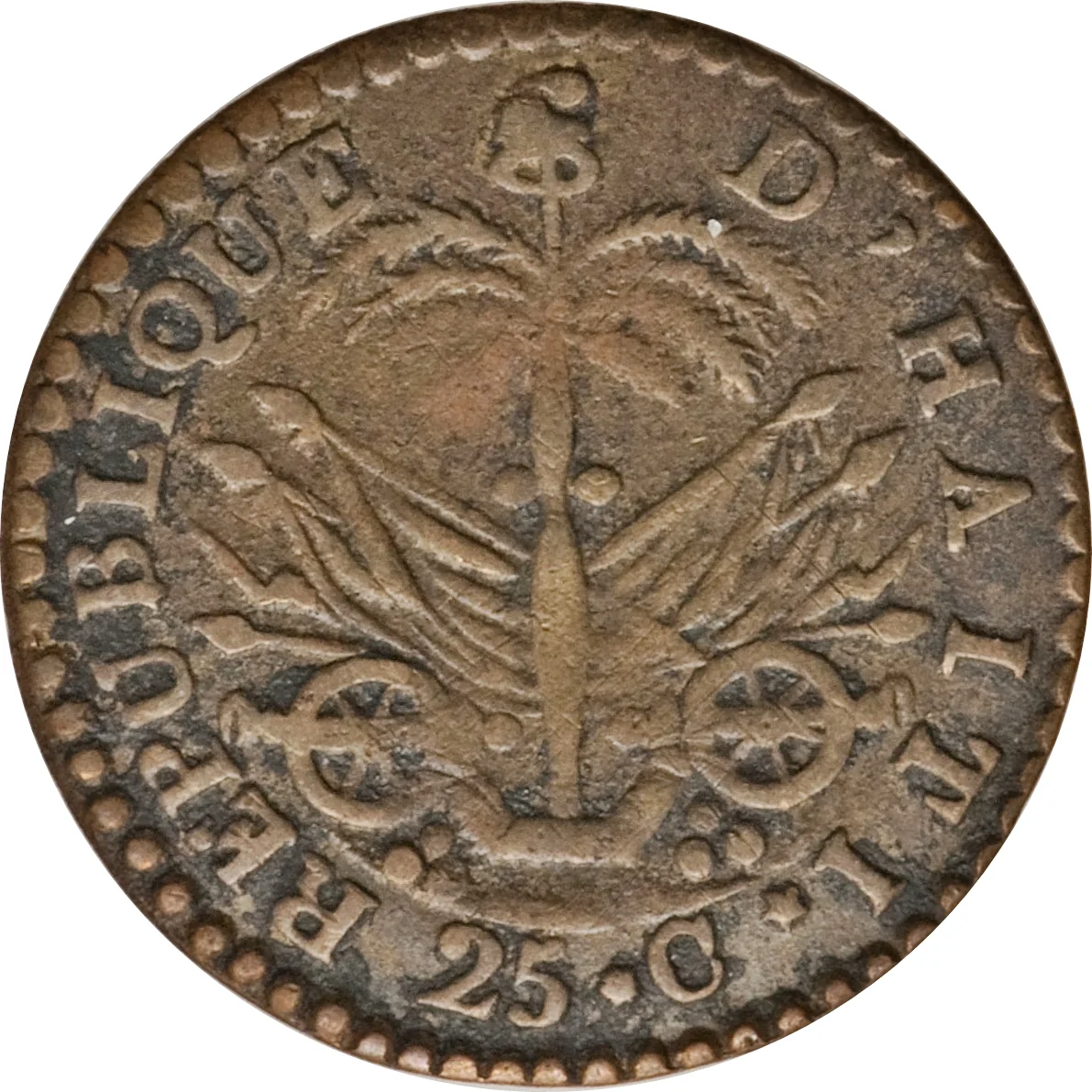
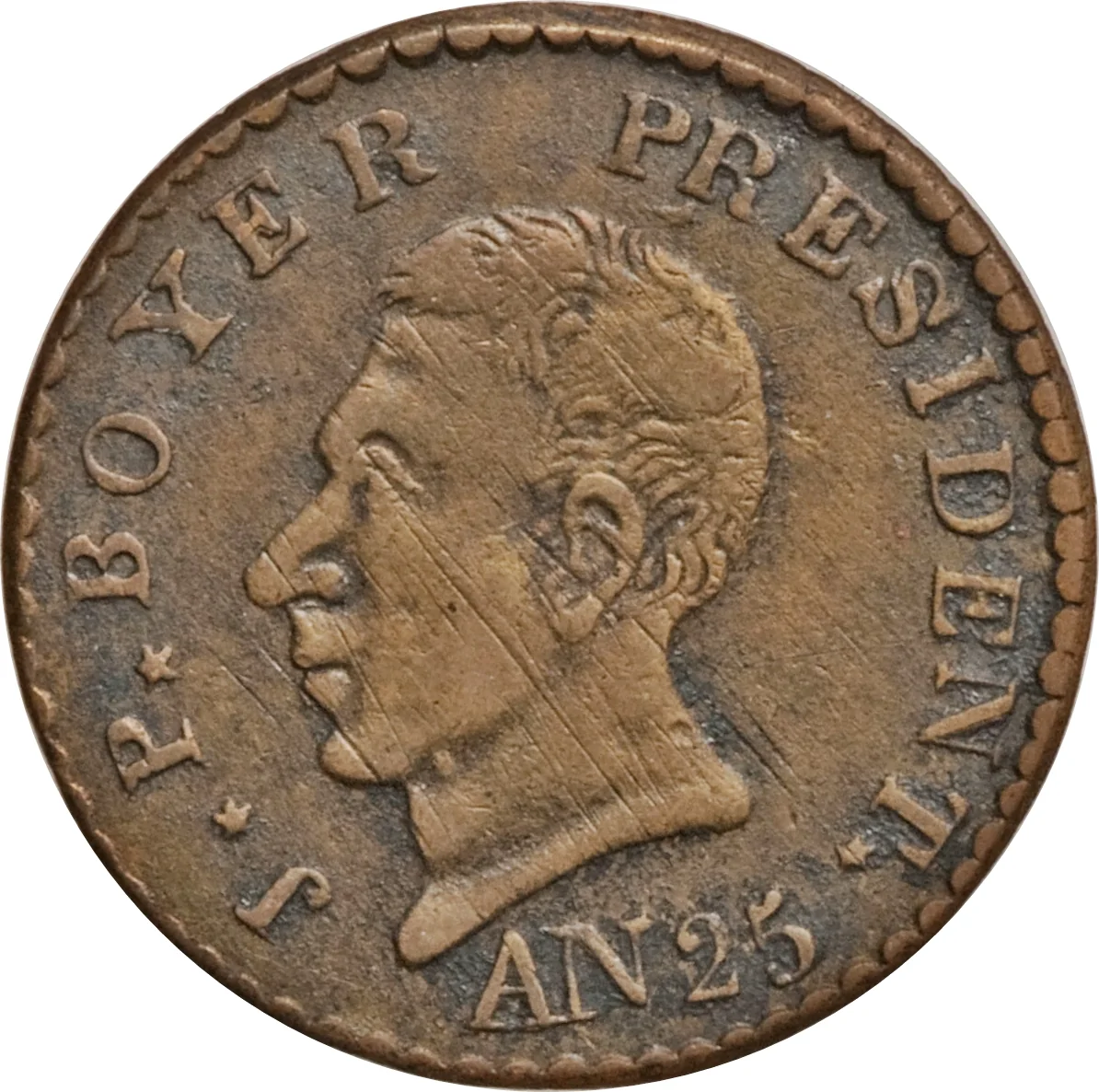
25 centimes – Haiti
Add to wishlist
Haiti
Context
Year: 1828
Haitian republican Year:: 25
Issuer: Haiti
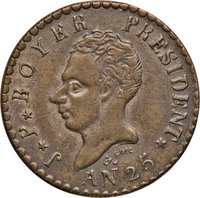
Ruler: Jean-Pierre Boyer
Currency:
(1813—1870)
Demonetized: Yes
Material
References
KM: #
Numista: #28723
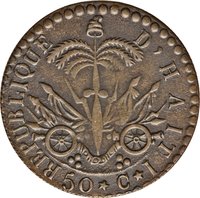
Obverse
Reverse
Edge
Plain
Mintings
| Year | Mint Mark | Mintage | Quality | Collection |
|---|---|---|---|---|
| 1828 | — | — |
Historical background
In 1828, Haiti’s currency situation was a direct legacy of its hard-won independence and the crippling economic isolation imposed by France. Following the 1804 revolution, the new nation was forced to pay an enormous indemnity to France—150 million gold francs, formally agreed in 1825—to secure diplomatic recognition and end a naval blockade. This crushing debt, which would take decades to pay, drained the treasury of specie (gold and silver coin) and forced the government to print paper money to fund its operations and the first installments of the debt. Consequently, the Haitian gourde, established in 1813, existed primarily as depreciating paper notes, with a severe shortage of solid coinage in circulation.
The economy operated with a dysfunctional dual system. The government-issued paper gourdes were legally mandated for all transactions, but their value was unstable and they were widely distrusted by the populace and foreign merchants. In practice, much domestic commerce, especially in rural areas, relied on barter or the physical French coinage that sporadically entered the economy. This disconnect between the official currency and real value created chronic inflation, hampered tax collection, and discouraged foreign investment, as traders demanded payment in hard currency for imports, further exacerbating the specie drain.
President Jean-Pierre Boyer, ruling over the unified island (including Santo Domingo), faced a profound fiscal crisis. His administration’s attempts to stabilize the currency through monetary laws and forced circulation of paper were largely ineffective without underlying economic strength or bullion reserves. The currency instability of 1828 was therefore a symptom of a deeper ailment: a nation struggling to build a sovereign economy while shackled by an extortionate foreign debt, a lack of international credit, and the legacy of a plantation system shattered by the revolution. The fragile paper gourde symbolized the precarious balance between Haiti’s political independence and its economic subjugation.
The economy operated with a dysfunctional dual system. The government-issued paper gourdes were legally mandated for all transactions, but their value was unstable and they were widely distrusted by the populace and foreign merchants. In practice, much domestic commerce, especially in rural areas, relied on barter or the physical French coinage that sporadically entered the economy. This disconnect between the official currency and real value created chronic inflation, hampered tax collection, and discouraged foreign investment, as traders demanded payment in hard currency for imports, further exacerbating the specie drain.
President Jean-Pierre Boyer, ruling over the unified island (including Santo Domingo), faced a profound fiscal crisis. His administration’s attempts to stabilize the currency through monetary laws and forced circulation of paper were largely ineffective without underlying economic strength or bullion reserves. The currency instability of 1828 was therefore a symptom of a deeper ailment: a nation struggling to build a sovereign economy while shackled by an extortionate foreign debt, a lack of international credit, and the legacy of a plantation system shattered by the revolution. The fragile paper gourde symbolized the precarious balance between Haiti’s political independence and its economic subjugation.
Series: 1828 Haiti circulation coins
💎 Extremely Rare