

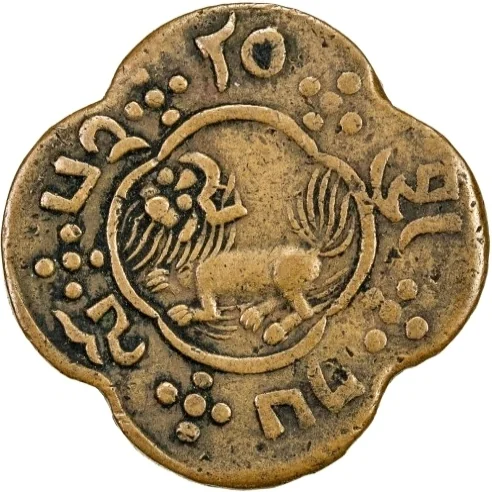
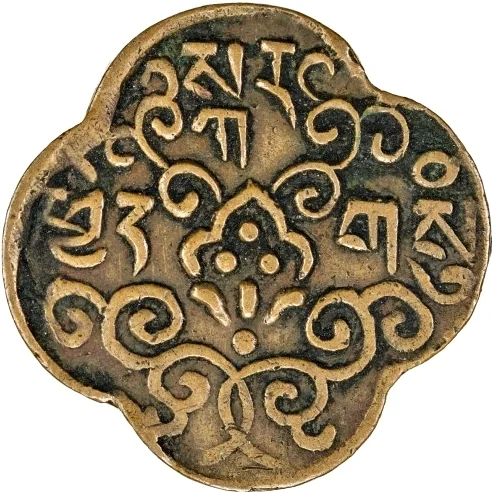
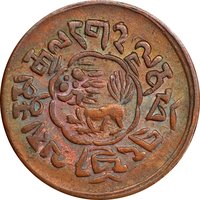
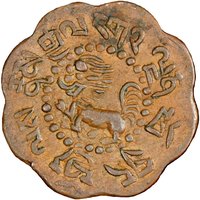
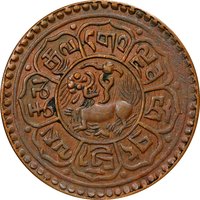
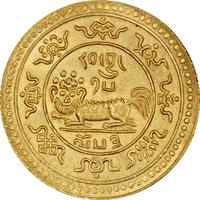
Obverse
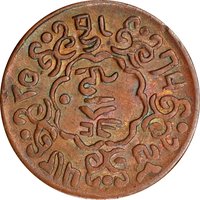
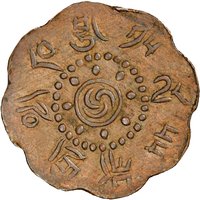
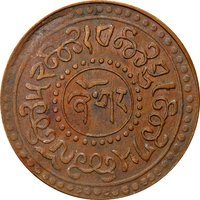
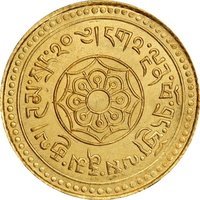
Reverse
Edge
Plain
Mintings
| Year | Mint Mark | Mintage | Quality | Collection |
|---|---|---|---|---|
| 1918 | — | — | ||
| 1919 | — | — | ||
| 1920 | — | — |
Historical background
In 1918, Tibet's currency situation reflected its complex political status, caught between de facto independence and the lingering claims of external powers. Following the collapse of the Qing Dynasty in 1911, the 13th Dalai Lama had declared Tibetan independence and expelled Chinese forces, establishing a period of effective autonomy. The primary circulating currency was the Tibetan silver coin, the tangka (or srang), minted in Lhasa and other locations like Dêgê. These coins, often hand-struck and of variable purity, formed the backbone of the local economy, alongside smaller copper denominations and the widespread use of barley as a unit of account in rural areas.
However, this system was not isolated. The period saw significant monetary infiltration from British India, a result of the 1904 Younghusband Expedition and subsequent trade treaties. Indian rupees, particularly the British trade rupee, circulated widely, especially in southern and western Tibet along trade routes. This created a dual-currency environment where larger transactions, particularly in foreign trade, were often conducted in rupees, while the tangka served daily local needs. Meanwhile, Chinese silver dayang dollars and Sichuan rupees also flowed into eastern border regions, reflecting continued, albeit diminished, economic ties with China.
This monetary fragmentation underscored Tibet's precarious sovereignty. The Lhasa government sought to assert control by standardizing its own coinage, but it lacked the centralized minting technology to prevent debasement or counterfeiting. The simultaneous circulation of Tibetan, Indian, and Chinese currencies highlighted the region's contested economic spheres of influence. Ultimately, the currency landscape of 1918 Tibet was a tangible expression of its political reality: a nation acting independently but under persistent economic pressure from both British imperial interests in the south and the unresolved territorial claims of the Republic of China to the east.
However, this system was not isolated. The period saw significant monetary infiltration from British India, a result of the 1904 Younghusband Expedition and subsequent trade treaties. Indian rupees, particularly the British trade rupee, circulated widely, especially in southern and western Tibet along trade routes. This created a dual-currency environment where larger transactions, particularly in foreign trade, were often conducted in rupees, while the tangka served daily local needs. Meanwhile, Chinese silver dayang dollars and Sichuan rupees also flowed into eastern border regions, reflecting continued, albeit diminished, economic ties with China.
This monetary fragmentation underscored Tibet's precarious sovereignty. The Lhasa government sought to assert control by standardizing its own coinage, but it lacked the centralized minting technology to prevent debasement or counterfeiting. The simultaneous circulation of Tibetan, Indian, and Chinese currencies highlighted the region's contested economic spheres of influence. Ultimately, the currency landscape of 1918 Tibet was a tangible expression of its political reality: a nation acting independently but under persistent economic pressure from both British imperial interests in the south and the unresolved territorial claims of the Republic of China to the east.
Series: 1918 Tibet circulation coins
✨ Legendary