

5 Sen – Japan
Japan
Context

Material
Diameter: 20.6 mm
Weight: 4.28 g
Shape: Round with a round hole
Composition: Copper-nickel
Technique: Milled
Alignment: Medal alignment
flip
References
Y: #Click to copy to clipboard43
Numista: #24457
Value
Exchange value: 0.05 JPY = $0.00
Obverse
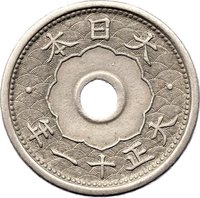
Description:
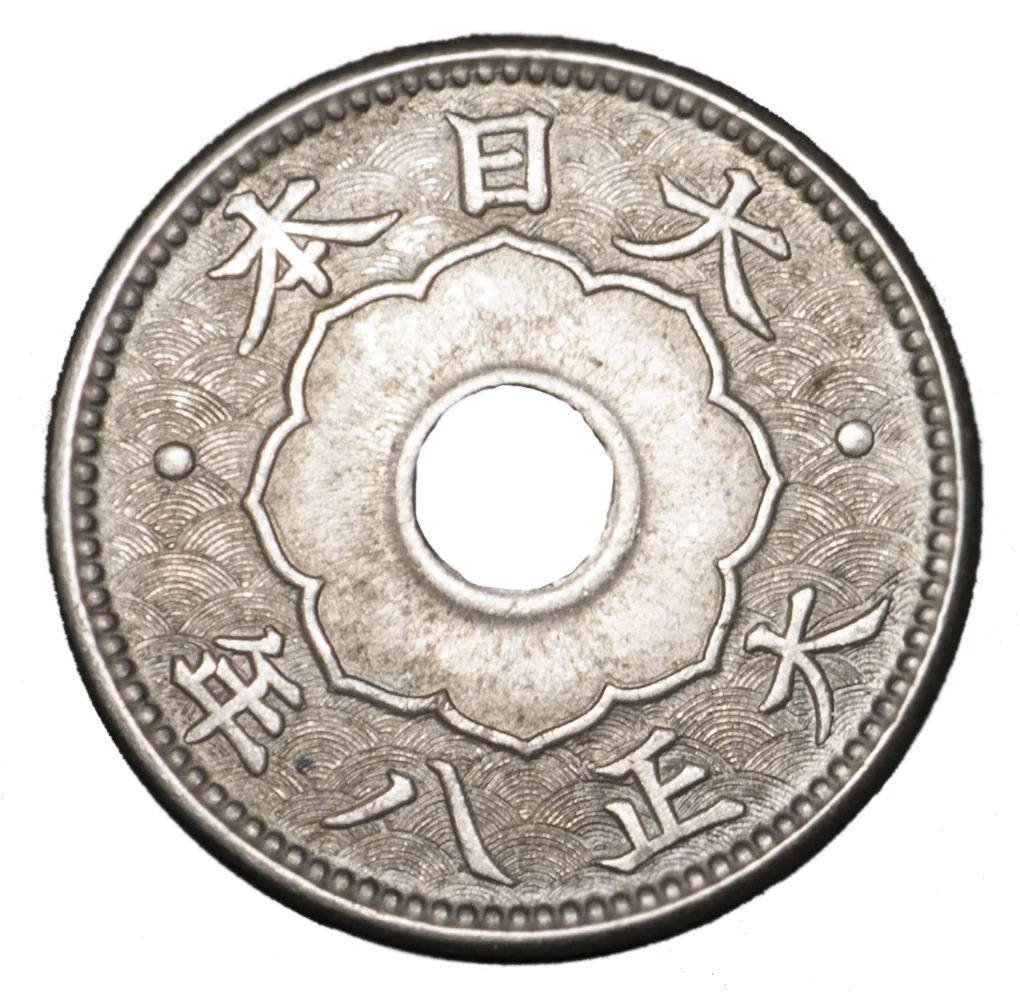
Floral cartouche encircling text on a wavy background.
Inscription:
· 本 日 大 ·
年 六 正 大
年 六 正 大
Translation:
Great Japan;
Year 6 of the Great [Era]
Year 6 of the Great [Era]
Language: Chinese
Reverse
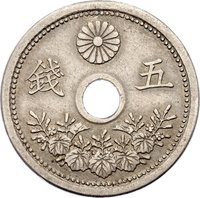
Description:
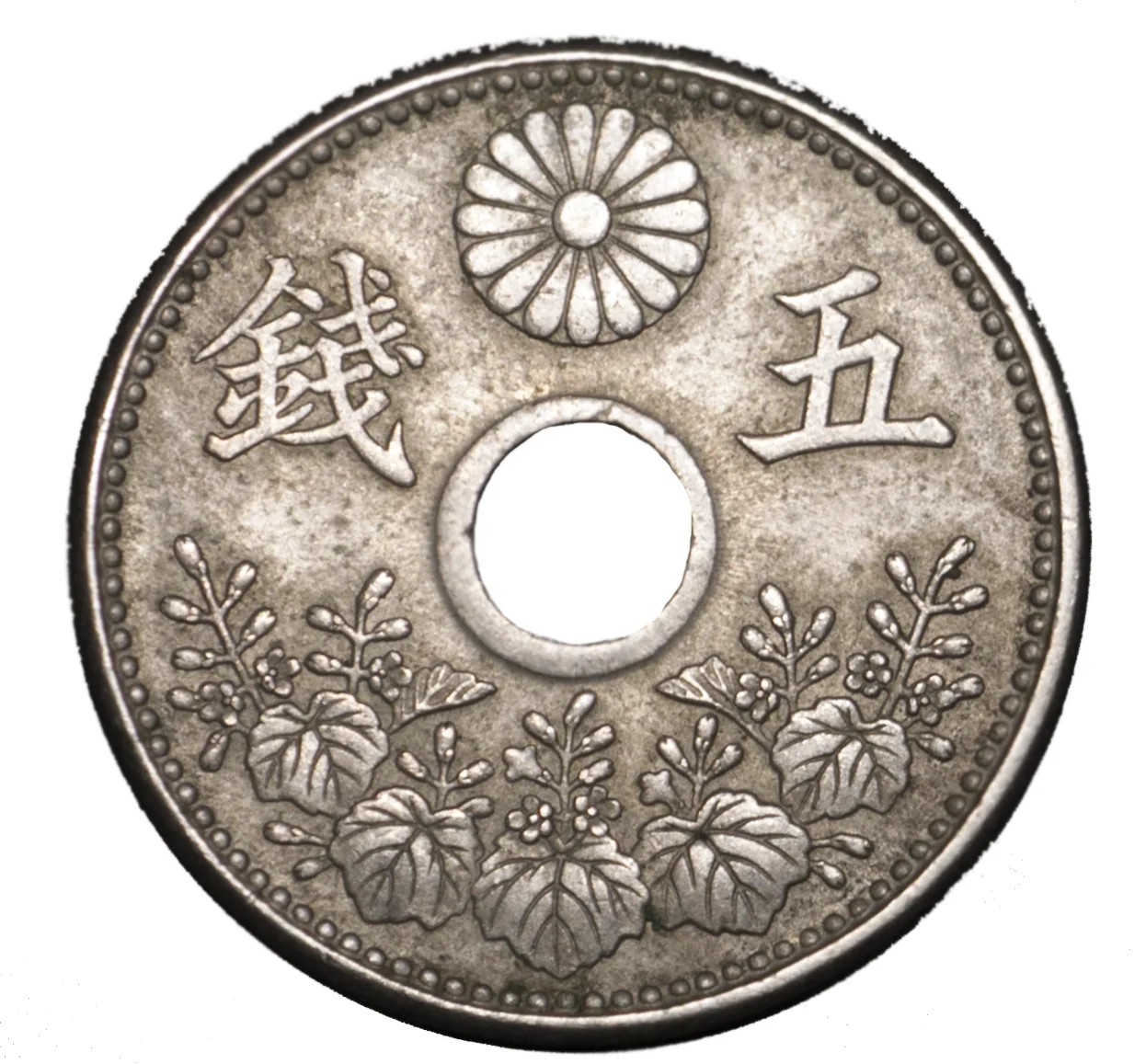
Chrysanthemum and Paulownia flowers flanking a center hole.
Inscription:
錢 五
Translation:
Five Cash
Language: Chinese
Edge
Plain
Categories
| Plants> Flower |
| Symbols> Coat of Arms |
Mints
| Name | Mark |
|---|---|
| Japan Mint | — |
Mintings
| Year | Mint Mark | Mintage | Quality | Collection |
|---|---|---|---|---|
| 1917 | — | 6,781,830 | ||
| 1918 | — | 9,131,211 | ||
| 1919 | — | 44,980,633 | ||
| 1920 | — | 21,906,326 |
Historical background
In 1917, Japan's currency situation was characterized by a significant departure from the gold standard, a measure taken at the outbreak of World War I. In September 1914, the Japanese government, following the lead of other major powers, suspended the convertibility of yen notes into gold. This decisive move was intended to prevent a damaging outflow of gold reserves and to provide the government and the Bank of Japan with greater flexibility to finance military expenditures and support a wartime economic boom. The suspension freed Japan from the strict monetary discipline of the gold standard, allowing for a substantial expansion of the money supply and bank credit to fuel industrial and export growth.
The period from 1914 to 1919 became known as Japan's "wartime boom," and by 1917, this was in full force. The economy experienced massive export surges, particularly to Allied nations, in sectors like shipping, shipbuilding, and munitions. This generated large trade surpluses and, ironically, led to a substantial inflow of gold, as Japan was paid in the precious metal by its allies. Consequently, while the yen was not convertible, Japan's gold holdings actually increased dramatically during the war. However, this monetary expansion also fueled rampant inflation, as the increased money supply chased a limited supply of goods, leading to rising prices and social discontent, particularly among urban workers and rentiers on fixed incomes.
Therefore, the currency situation in 1917 was one of contradiction and mounting pressure. Externally, the yen's value was managed through foreign exchange intervention rather than gold convertibility, while internally, the economy grappled with the consequences of easy money. The government enjoyed the fiscal and economic benefits of a detached currency, financing its involvement in the conflict and capitalizing on global demand. Yet, the foundational shift away from metallic backing, combined with inflationary pressures, sowed the seeds for postwar financial instability, setting the stage for the difficult return to the gold standard in the 1920s.
The period from 1914 to 1919 became known as Japan's "wartime boom," and by 1917, this was in full force. The economy experienced massive export surges, particularly to Allied nations, in sectors like shipping, shipbuilding, and munitions. This generated large trade surpluses and, ironically, led to a substantial inflow of gold, as Japan was paid in the precious metal by its allies. Consequently, while the yen was not convertible, Japan's gold holdings actually increased dramatically during the war. However, this monetary expansion also fueled rampant inflation, as the increased money supply chased a limited supply of goods, leading to rising prices and social discontent, particularly among urban workers and rentiers on fixed incomes.
Therefore, the currency situation in 1917 was one of contradiction and mounting pressure. Externally, the yen's value was managed through foreign exchange intervention rather than gold convertibility, while internally, the economy grappled with the consequences of easy money. The government enjoyed the fiscal and economic benefits of a detached currency, financing its involvement in the conflict and capitalizing on global demand. Yet, the foundational shift away from metallic backing, combined with inflationary pressures, sowed the seeds for postwar financial instability, setting the stage for the difficult return to the gold standard in the 1920s.
🌱 Fairly Common