

5 Sen – Japan
Japan
Context
Material
Diameter: 19.09 mm
Weight: 2.63 g
Thickness: 1.4 mm
Shape: Round with a round hole
Composition: Copper-nickel
Technique: Milled
Alignment: Medal alignment
flip
References
Y: #Click to copy to clipboard44
Numista: #9580
Value
Exchange value: 0.05 JPY = $0.00
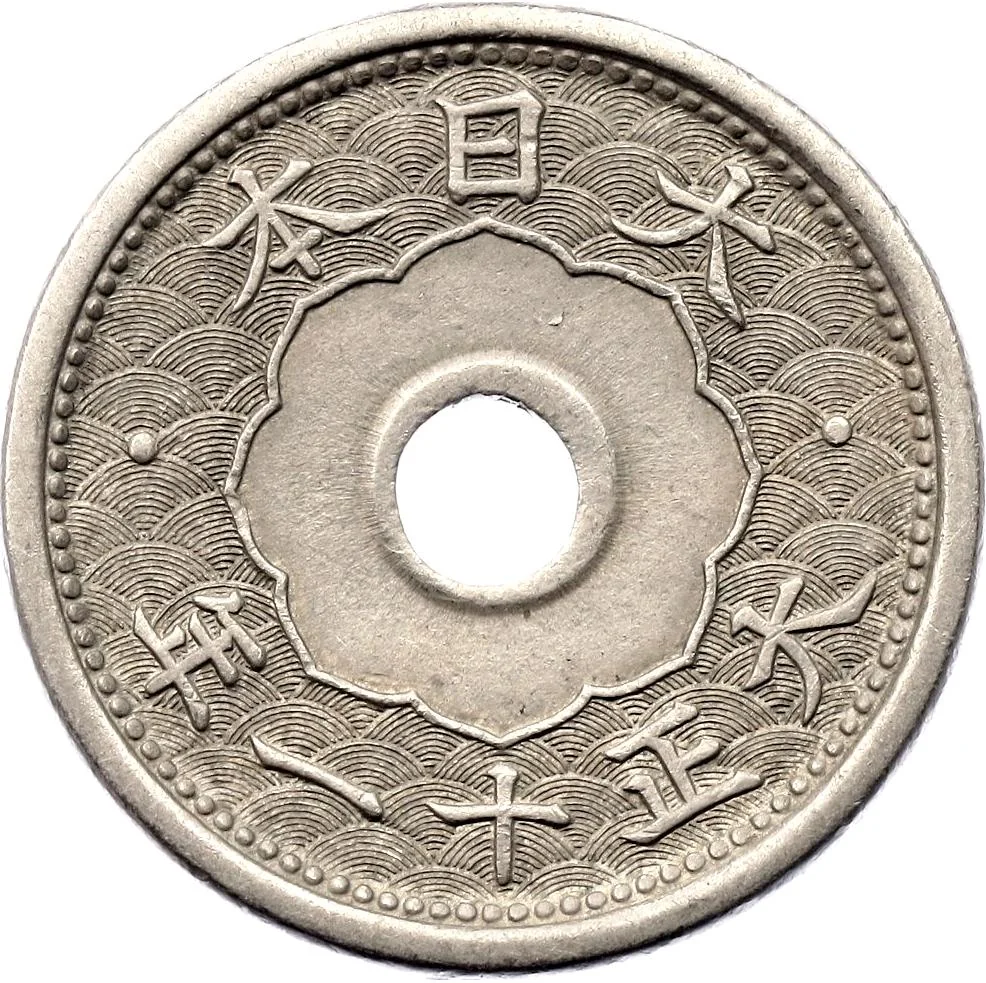
Obverse
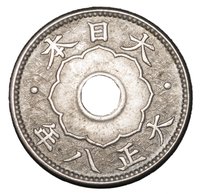
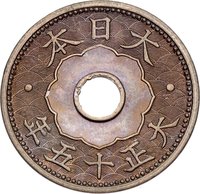
Description:
Floral cartouche encircling text on a wavy background.
Inscription:
· 本 日 大 ·
年 一十 正 大
年 一十 正 大
Translation:
Great Japan;
10th Year of the Great Reign
10th Year of the Great Reign
Language: Japanese
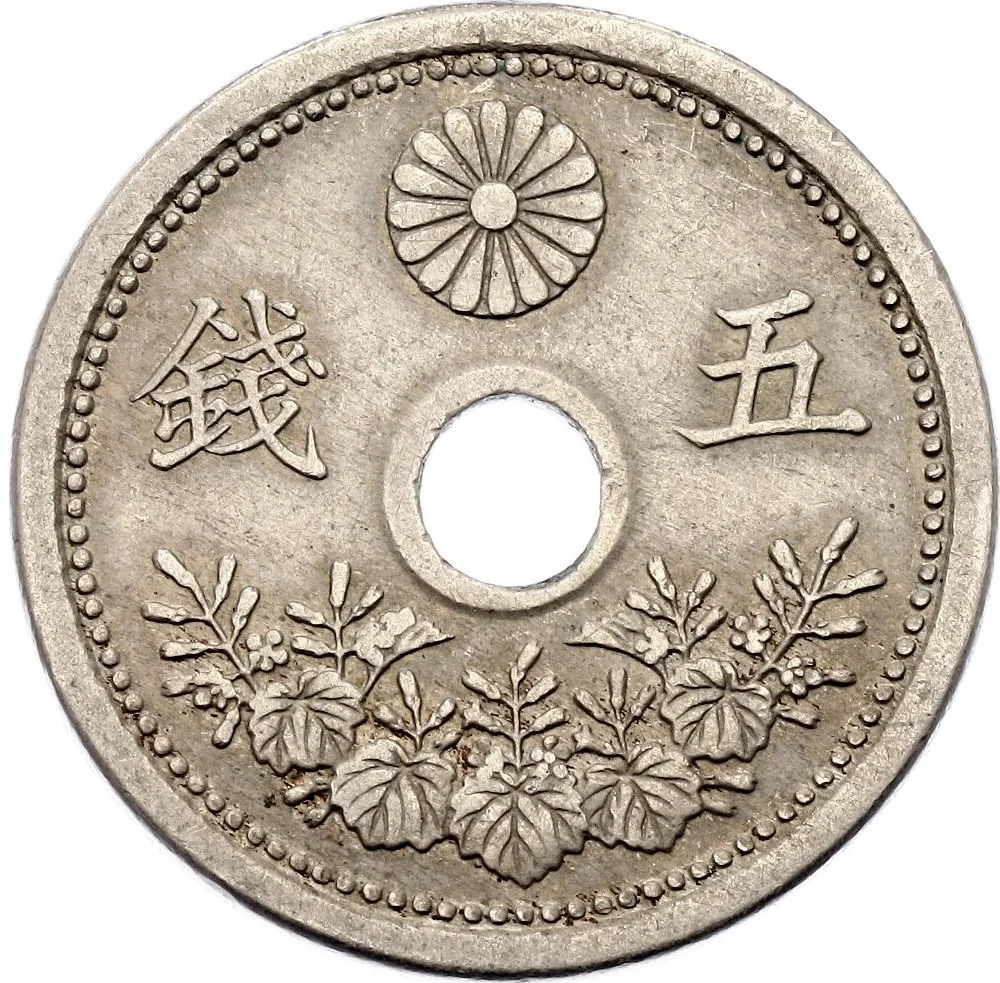
Reverse
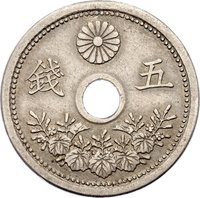
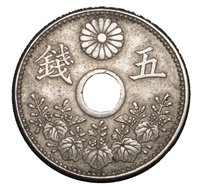
Description:
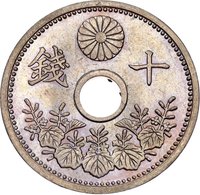
Chrysanthemum and denomination by center hole; paulownia flowers and leaves below.
Inscription:
錢 五
Translation:
Five Cash
Language: Chinese
Edge
Plain
Categories
| Plants> Flower |
| Symbols> Coat of Arms |
Mints
| Name | Mark |
|---|---|
| Japan Mint | — |
Mintings
| Year | Mint Mark | Mintage | Quality | Collection |
|---|---|---|---|---|
| 1920 | — | 100,455,537 | ||
| 1921 | — | 133,020,000 | ||
| 1922 | — | 163,980,000 | ||
| 1923 | — | 80,000,000 |
Historical background
Japan’s currency situation in 1920 was defined by the severe economic and financial crisis that ended the speculative boom of the World War I era. During the war, Japan experienced an export surge as a supplier to Allied nations, generating large trade surpluses and gold reserves. This influx of capital fueled rapid industrial expansion and a speculative bubble in commodities and stocks. The currency, the yen, remained on the gold standard, but the government had suspended gold convertibility in 1917, following the lead of other major nations, allowing for a period of easy credit and monetary expansion.
The bubble burst decisively in March 1920 with the Tokyo Stock Exchange crash, followed by a sharp collapse in commodity prices. This triggered a severe financial panic, known as the Panic of 1920. Banks faced a wave of failures as loans secured against inflated assets turned sour, leading to a severe credit crunch. The currency situation became strained as the Bank of Japan intervened as a lender of last resort, injecting funds to stabilize the banking system. This crisis revealed the underlying fragility of Japan's financial structure and the distortions caused by the wartime boom, leaving the economy with massive bad debts and deflationary pressures.
Consequently, 1920 marked the beginning of a prolonged period of economic difficulty. The government and the Bank of Japan faced the complex task of managing deflation while stabilizing the financial system, all while contemplating a eventual return to the gold standard at the pre-war parity—a move that would later prove disastrously deflationary. The year thus stands as a pivotal transition from wartime prosperity to the financial instability and deflation that would characterize much of the 1920s, setting the stage for the deeper crises of the following decade.
The bubble burst decisively in March 1920 with the Tokyo Stock Exchange crash, followed by a sharp collapse in commodity prices. This triggered a severe financial panic, known as the Panic of 1920. Banks faced a wave of failures as loans secured against inflated assets turned sour, leading to a severe credit crunch. The currency situation became strained as the Bank of Japan intervened as a lender of last resort, injecting funds to stabilize the banking system. This crisis revealed the underlying fragility of Japan's financial structure and the distortions caused by the wartime boom, leaving the economy with massive bad debts and deflationary pressures.
Consequently, 1920 marked the beginning of a prolonged period of economic difficulty. The government and the Bank of Japan faced the complex task of managing deflation while stabilizing the financial system, all while contemplating a eventual return to the gold standard at the pre-war parity—a move that would later prove disastrously deflationary. The year thus stands as a pivotal transition from wartime prosperity to the financial instability and deflation that would characterize much of the 1920s, setting the stage for the deeper crises of the following decade.
🌱 Very Common