

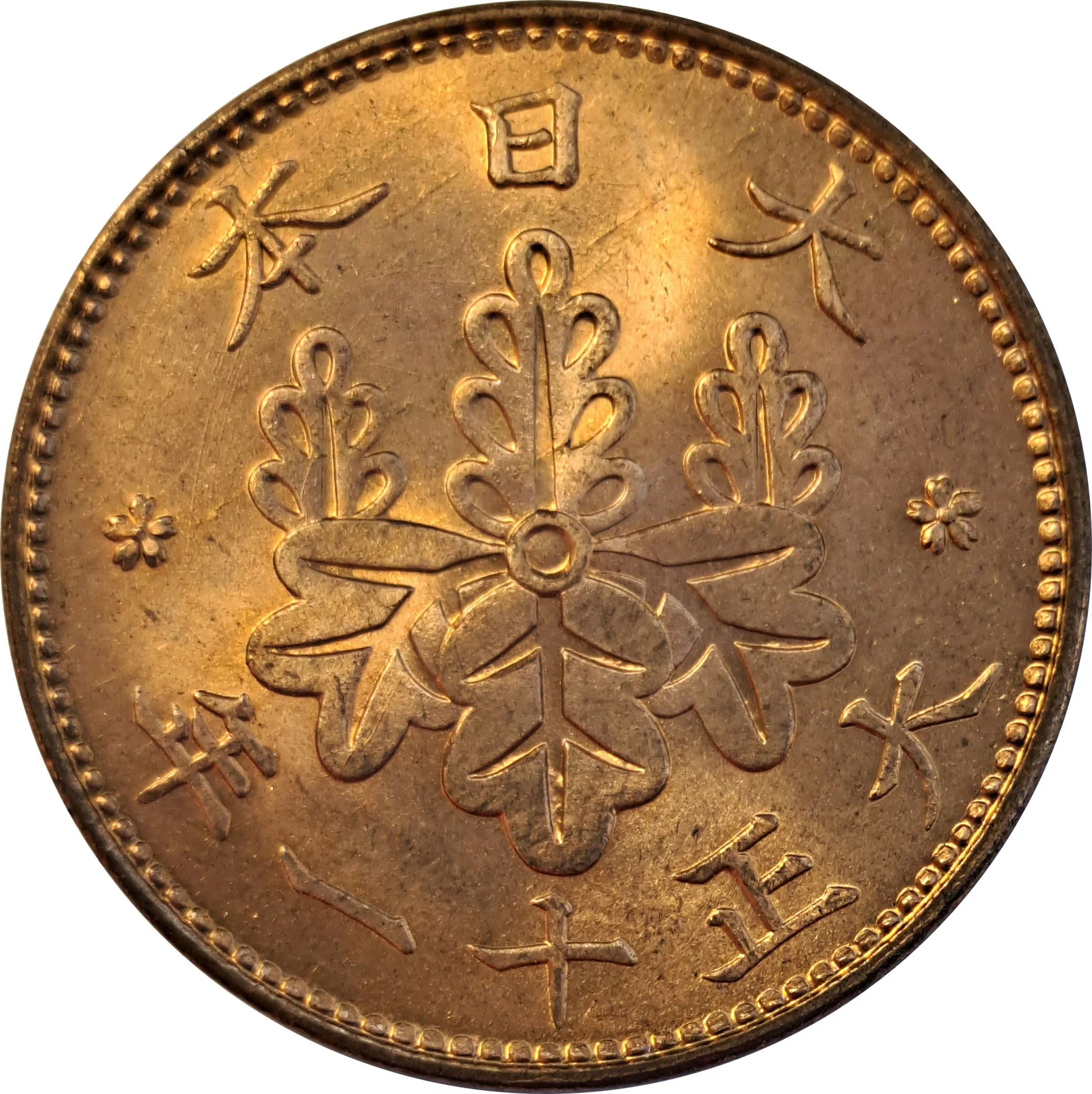

Obverse
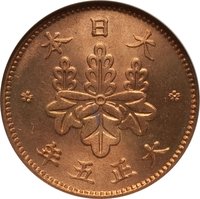
Description:
Paulownia Seal and date.
Inscription:
❀ 本 日 大 ❀
年 一 十 正 大
年 一 十 正 大
Translation:
❀ Great Japan ❀
First Year of Taishō
First Year of Taishō
Language: Classical Chinese
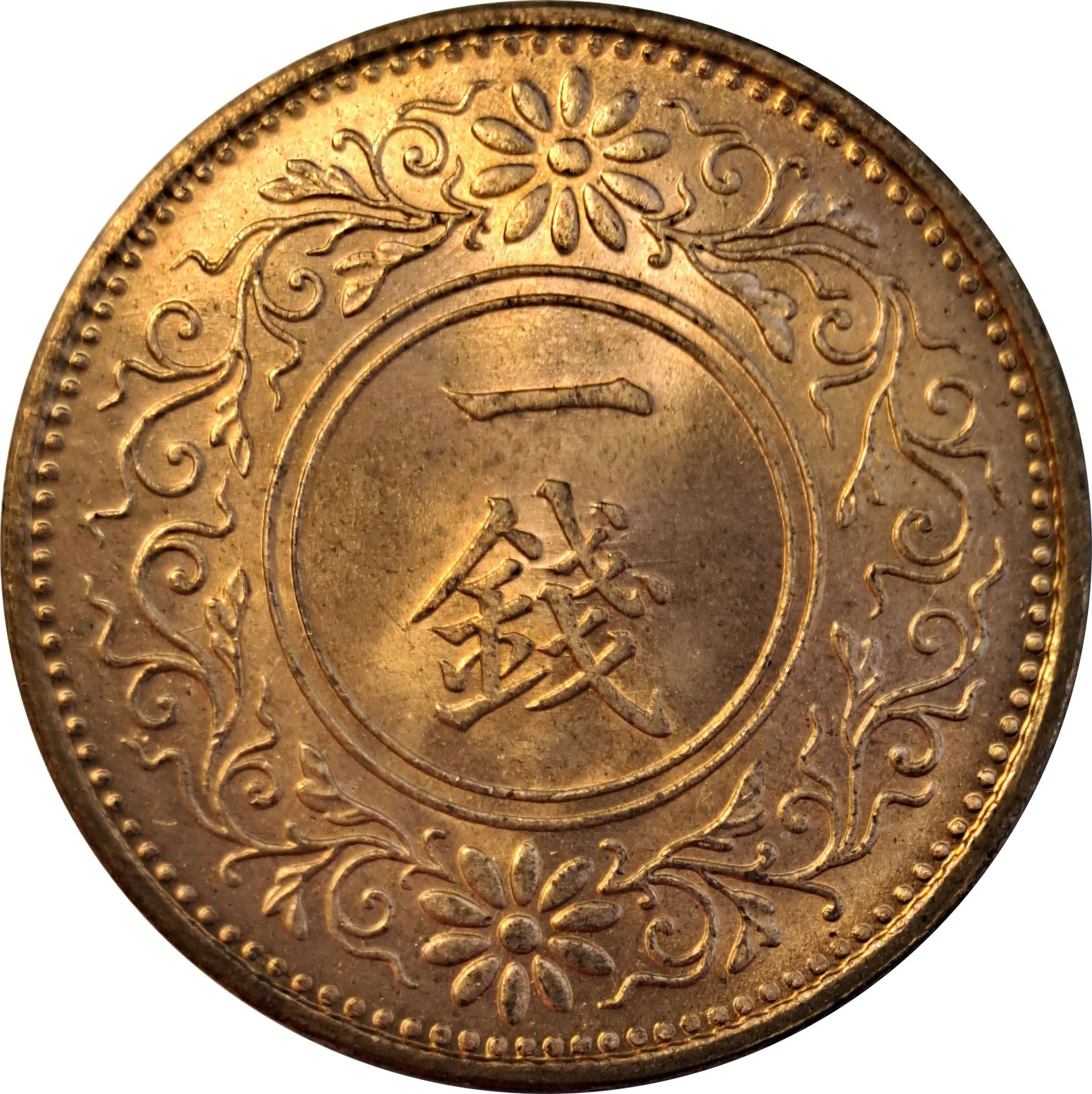
Reverse
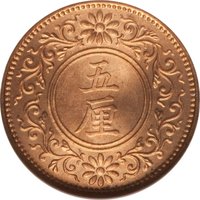
Description:
Circular floral motif.
Inscription:
一
錢
錢
Translation:
One coin.
Language: Classical Chinese
Edge
Plain
Mints
| Name | Mark |
|---|---|
| Japan Mint | — |
Mintings
| Year | Mint Mark | Mintage | Quality | Collection |
|---|---|---|---|---|
| 1916 | — | 19,193,946 | ||
| 1917 | — | 27,183,078 | ||
| 1918 | — | 121,794,756 | ||
| 1919 | — | 209,959,359 | ||
| 1920 | — | 118,829,256 | ||
| 1921 | — | 252,440,000 | ||
| 1922 | — | 253,210,000 | ||
| 1923 | — | 155,500,000 | ||
| 1924 | — | 106,250,000 |
Historical background
In 1916, Japan's currency system was in a period of significant transition and strain, operating under the framework of the Gold Standard, which it had adopted in 1897. The outbreak of World War I in 1914, however, dramatically altered Japan's economic position. As a non-combatant in the European theater (until a late, limited entry in 1914 on the Allied side), Japan experienced an unprecedented economic boom by supplying goods to warring nations and filling gaps in Asian markets. This led to a massive influx of gold and foreign exchange, creating a large balance of payments surplus. Consequently, the Bank of Japan's specie reserves swelled, theoretically providing strong backing for the yen.
Despite this apparent strength, the wartime boom created domestic inflationary pressures and a credit expansion that began to test the limits of the Gold Standard. The government, under Prime Minister Ōkuma Shigenobu and later Terauchi Masatake, faced the challenge of managing this volatile economic windfall. While the official convertibility of yen notes into gold remained legally intact, in practice, the authorities were cautious. They were aware that sudden large-scale conversions could deplete reserves, and they began to employ informal measures to discourage the actual export of gold, effectively creating a "gold embargo" environment to insulate their growing reserves.
Thus, the currency situation in 1916 was one of paradoxical tension: a system legally anchored to gold was being informally managed to retain that very gold. The yen was stable and respected internationally due to Japan's wartime profits, but the foundations were shifting. This period set the stage for the post-war challenges of the 1920s, when Japan would struggle to return to a fully operational Gold Standard, ultimately leading to its abandonment in the early 1930s. The year 1916, therefore, represents a peak of wartime financial confidence, yet one that contained the seeds of future monetary instability.
Despite this apparent strength, the wartime boom created domestic inflationary pressures and a credit expansion that began to test the limits of the Gold Standard. The government, under Prime Minister Ōkuma Shigenobu and later Terauchi Masatake, faced the challenge of managing this volatile economic windfall. While the official convertibility of yen notes into gold remained legally intact, in practice, the authorities were cautious. They were aware that sudden large-scale conversions could deplete reserves, and they began to employ informal measures to discourage the actual export of gold, effectively creating a "gold embargo" environment to insulate their growing reserves.
Thus, the currency situation in 1916 was one of paradoxical tension: a system legally anchored to gold was being informally managed to retain that very gold. The yen was stable and respected internationally due to Japan's wartime profits, but the foundations were shifting. This period set the stage for the post-war challenges of the 1920s, when Japan would struggle to return to a fully operational Gold Standard, ultimately leading to its abandonment in the early 1930s. The year 1916, therefore, represents a peak of wartime financial confidence, yet one that contained the seeds of future monetary instability.
🌱 Very Common