

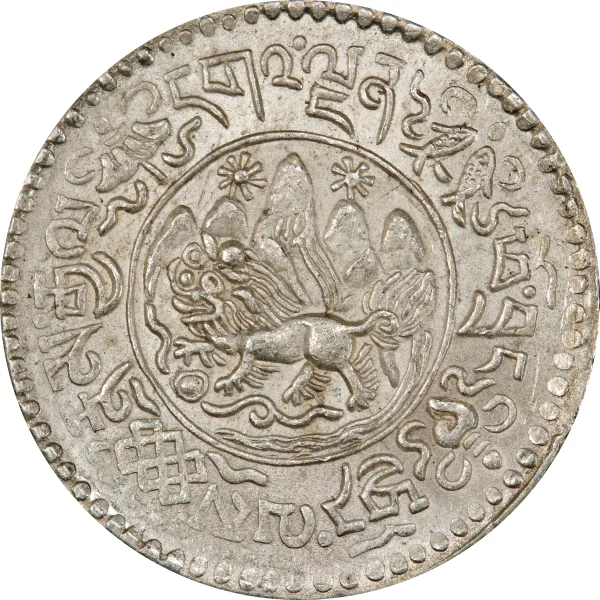
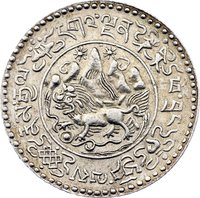
Obverse
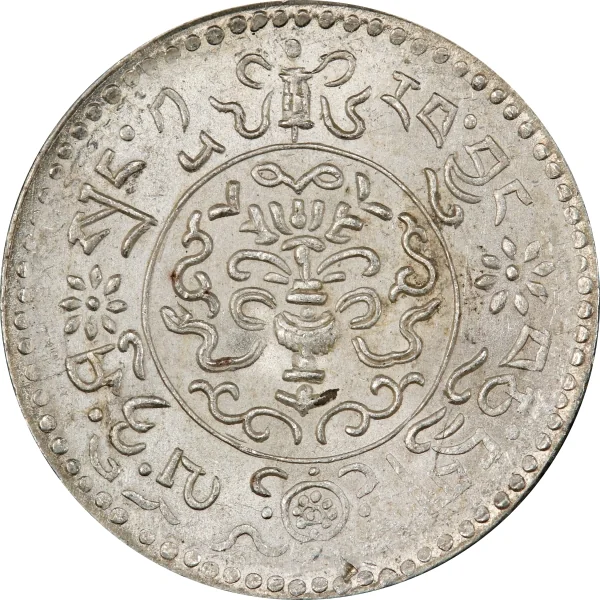
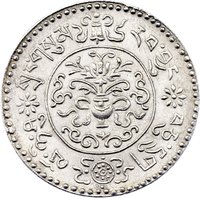
Reverse
Edge
Reeded.
Mints
| Name | Mark |
|---|---|
| Tapchi Electric Machine Factory | — |
Mintings
| Year | Mint Mark | Mintage | Quality | Collection |
|---|---|---|---|---|
| 1936 | — | — | ||
| 1937 | — | — | ||
| 1938 | — | — | ||
| 1946 | — | — |
Historical background
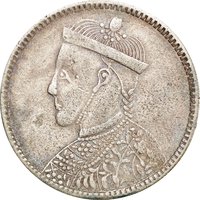
In 1936, Tibet's currency situation reflected its complex political status, caught between de facto independence and the competing claims of external powers. The primary circulating currency was the Tibetan silver srang, a distinctive coin minted by the government of the Dalai Lama in Lhasa. These coins, often referred to as "tangka," bore traditional Buddhist symbols like the snow lion and the kalachakra, and their value was tied to their intrinsic silver content. However, the monetary system was not uniform; older Nepalese-minted mohars and even Chinese silver dollars (dayang) from the late Qing and Republican periods also circulated, particularly in border regions, creating a heterogeneous and locally variable exchange environment.
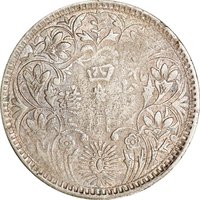
This monetary fragmentation was exacerbated by Tibet's geopolitical isolation and lack of formal international recognition. The Tibetan government struggled with limited minting capacity and a scarcity of silver bullion, leading to occasional debasement of the coinage. Furthermore, the British Indian rupee, backed by the colonial government in Calcutta, held significant influence, especially in southern Tibet along trade routes to India. This created a dual dynamic where Tibetan coins dominated local transactions, while the more stable Indian rupee was preferred for larger trade, particularly in the wool and luxury goods markets, giving British India considerable economic leverage.
The year 1936 fell within a period of heightened tension regarding Tibet's sovereignty. While the Lhasa government exercised full internal control, the Republic of China under Chiang Kai-shek persistently asserted its claim over the region. This political struggle had a direct monetary dimension: Chinese authorities considered Tibetan coinage illegal, while Tibet worked to resist economic integration. Consequently, Tibet's currency in 1936 was not merely a medium of exchange but a symbol of its precarious autonomy—a locally issued instrument operating within a constrained and contested economic space, vulnerable to the pressures of its powerful neighbors.
This monetary fragmentation was exacerbated by Tibet's geopolitical isolation and lack of formal international recognition. The Tibetan government struggled with limited minting capacity and a scarcity of silver bullion, leading to occasional debasement of the coinage. Furthermore, the British Indian rupee, backed by the colonial government in Calcutta, held significant influence, especially in southern Tibet along trade routes to India. This created a dual dynamic where Tibetan coins dominated local transactions, while the more stable Indian rupee was preferred for larger trade, particularly in the wool and luxury goods markets, giving British India considerable economic leverage.
The year 1936 fell within a period of heightened tension regarding Tibet's sovereignty. While the Lhasa government exercised full internal control, the Republic of China under Chiang Kai-shek persistently asserted its claim over the region. This political struggle had a direct monetary dimension: Chinese authorities considered Tibetan coinage illegal, while Tibet worked to resist economic integration. Consequently, Tibet's currency in 1936 was not merely a medium of exchange but a symbol of its precarious autonomy—a locally issued instrument operating within a constrained and contested economic space, vulnerable to the pressures of its powerful neighbors.
⭐ Somewhat Rare