

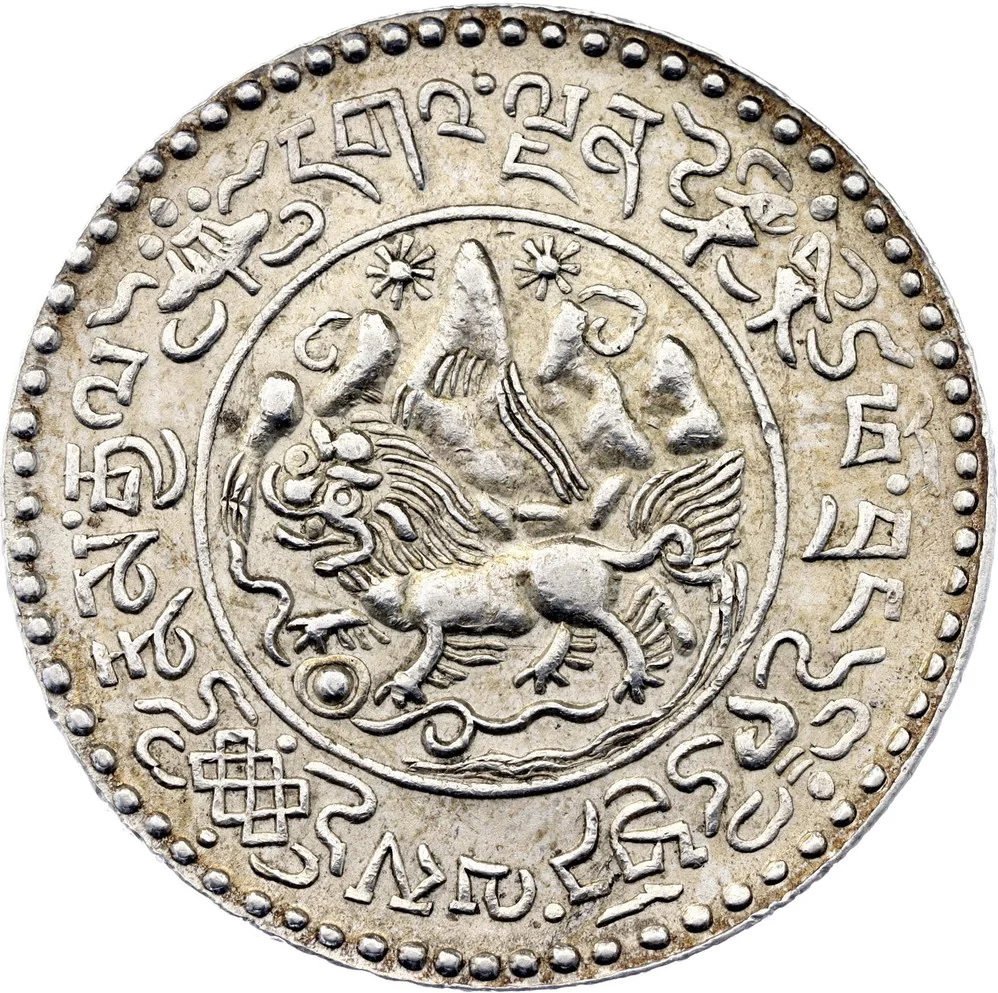
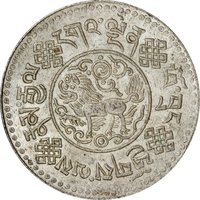
Obverse
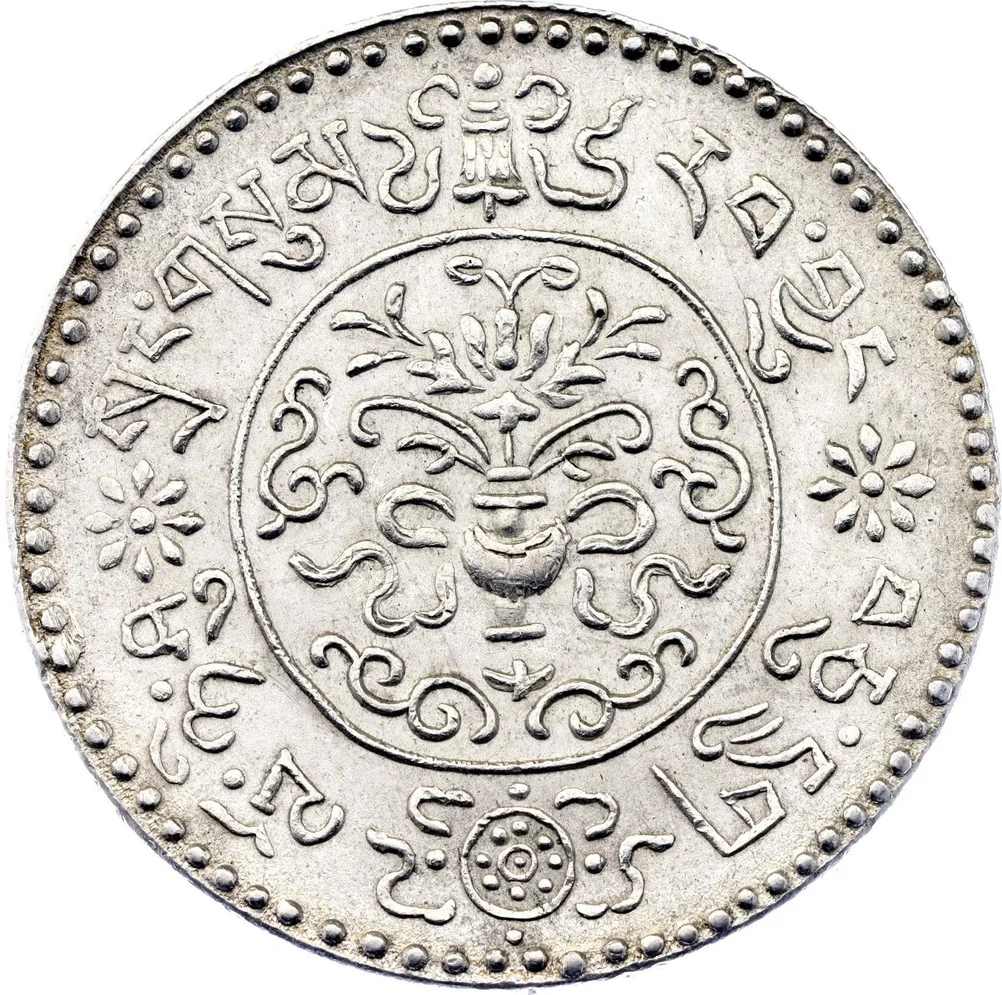
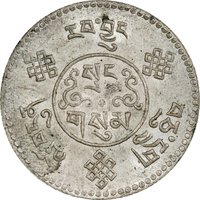
Reverse
Edge
Reeded.
Mints
| Name | Mark |
|---|---|
| Tapchi Electric Machine Factory | — |
Mintings
| Year | Mint Mark | Mintage | Quality | Collection |
|---|---|---|---|---|
| 1935 | — | — | ||
| 1936 | — | — | ||
| 1937 | — | — | ||
| 1938 | — | — | ||
| 1946 | — | — |
Historical background
In 1935, Tibet operated under a complex and fragmented monetary system, reflecting its contested political status. While nominally under Chinese sovereignty, the region was de facto autonomous under the rule of the Ganden Phodrang government in Lhasa. The primary circulating currency was the Tibetan srang, a silver coin first minted in 1909, alongside older Nepali-minted tangka coins and Chinese silver yuan. This created a multi-currency environment where official, historic, and foreign coins circulated simultaneously, often valued by weight and purity rather than face value, leading to inefficiency in trade.
The monetary landscape was further complicated by geographic and political divisions. The Lhasa government's authority and its coinage were strongest in central Tibet (Ü-Tsang). In eastern regions (Kham and Amdo), which experienced greater Chinese influence and military presence, Chinese silver dollars and copper cash coins were more prevalent. This monetary divide mirrored the ongoing political struggle between Lhasa and the Republic of China, which never renounced its claim to Tibet. Furthermore, a chronic shortage of small-denomination coinage for everyday transactions posed a significant problem for the local economy.
Internationally, Tibet's currency had limited reach. The Tibetan srang was not convertible on global markets, and major trade, particularly the lucrative wool exports to British India, was often conducted using Indian rupees or through barter. This reliance underscored Tibet's economic dependency and isolation. Therefore, the currency situation in 1935 was not merely an economic issue but a direct manifestation of Tibet's precarious position—caught between asserting its autonomy, enduring internal fragmentation, and navigating the pressures of its powerful neighbors, China and British India.
The monetary landscape was further complicated by geographic and political divisions. The Lhasa government's authority and its coinage were strongest in central Tibet (Ü-Tsang). In eastern regions (Kham and Amdo), which experienced greater Chinese influence and military presence, Chinese silver dollars and copper cash coins were more prevalent. This monetary divide mirrored the ongoing political struggle between Lhasa and the Republic of China, which never renounced its claim to Tibet. Furthermore, a chronic shortage of small-denomination coinage for everyday transactions posed a significant problem for the local economy.
Internationally, Tibet's currency had limited reach. The Tibetan srang was not convertible on global markets, and major trade, particularly the lucrative wool exports to British India, was often conducted using Indian rupees or through barter. This reliance underscored Tibet's economic dependency and isolation. Therefore, the currency situation in 1935 was not merely an economic issue but a direct manifestation of Tibet's precarious position—caught between asserting its autonomy, enduring internal fragmentation, and navigating the pressures of its powerful neighbors, China and British India.
🌟 Limited