

1 fen – Republic of China
Add to wishlist
Standard circulation coins
Series: 1st series
China
Context
Year: 1916
Chinese republican Year:: 5
Country: China
Issuer: Republic of China
Period:
(1912—1949)
Currency:
(1912—1948)
Demonetized: Yes
Material
Diameter: 26.5 mm
Weight: 6.72 g
Shape: Round with a round hole
Composition: Bronze
Magnetic: No
Technique: Milled
Alignment: Medal alignment
flip
References
Y: #
Numista: #21433
Obverse
Description:
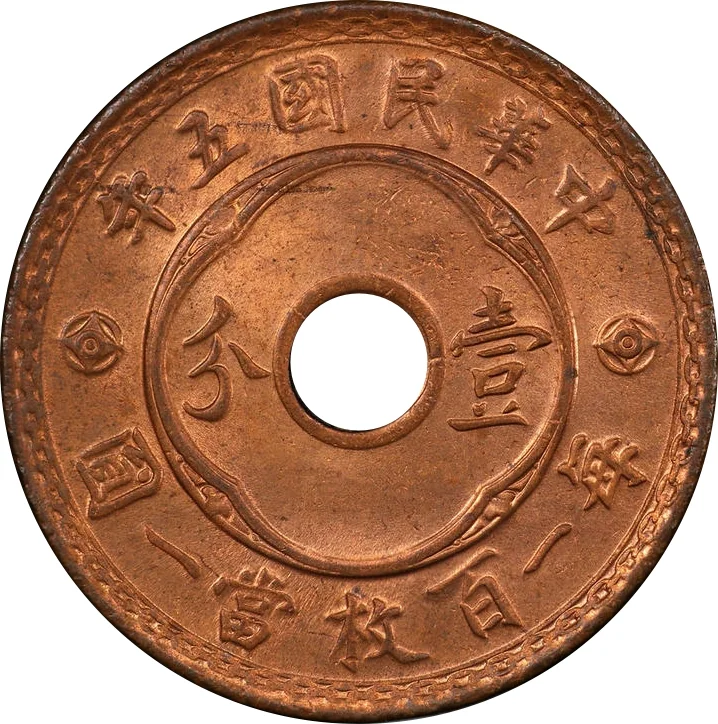
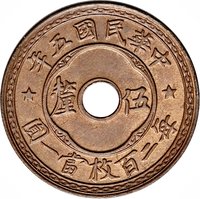
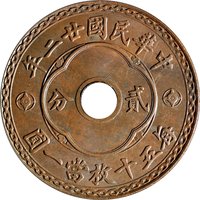
Two Chinese characters inside a rough circle, surrounded by more characters.
Inscription:
年五國民華中
分壹
圓一當枚百一每
分壹
圓一當枚百一每
Translation:
REPUBLIC OF CHINA YEAR 5
ONE CENT
ONE HUNDRED PIECES EQUAL ONE DOLLAR
ONE CENT
ONE HUNDRED PIECES EQUAL ONE DOLLAR
Scripts: Chinese (traditional, regular script)
Language: Chinese
Reverse
Description:
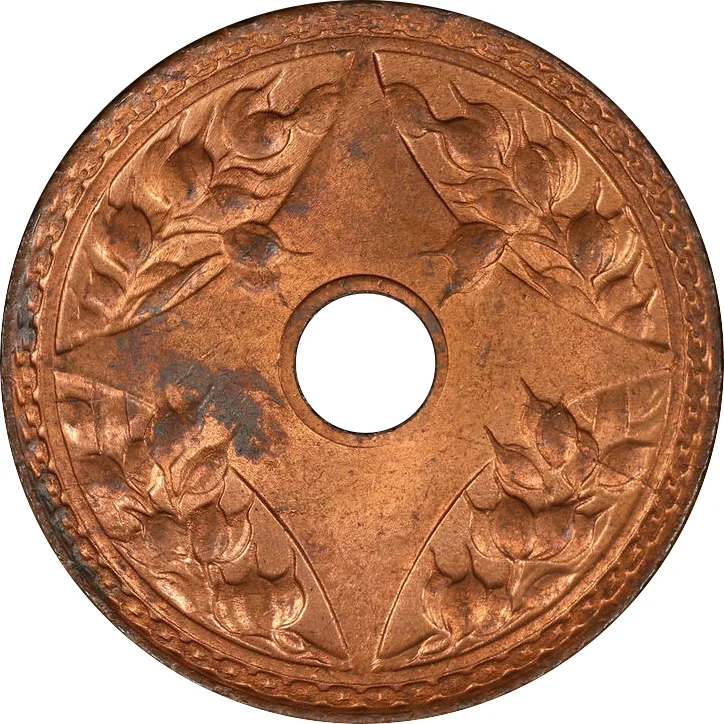
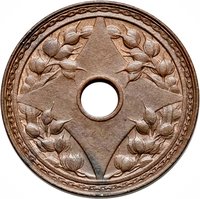
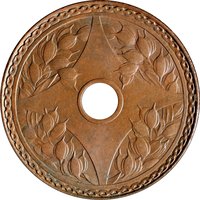
Diamond shape encircled by floral wreaths.
Edge
Plain
Mintings
| Year | Mint Mark | Mintage | Quality | Collection |
|---|---|---|---|---|
| 1916 | — | — |
Historical background
In 1916, the Republic of China was in a state of profound monetary fragmentation and instability, a direct consequence of the political disintegration following the death of Yuan Shikai. The central government in Beijing, weakened by the rising power of regional military governors (warlords), had lost effective control over the nation's currency. This resulted in a chaotic multi-currency system where various provincial authorities, banks, and even military commanders issued their own paper notes, known as tuchao or "military scrip," with little to no standardization or reliable backing.
The primary circulating medium included a confusing array of silver yuan coins, fractional subsidiary copper coins, and a flood of irredeemable banknotes. Silver remained the trusted standard, but its physical scarcity and the prevalence of debased coinage created severe practical problems. More critically, the unchecked printing of paper money by warlords to finance their armies led to rampant inflation and frequent bank runs. The public's trust in paper currency evaporated, leading to severe discounting of notes depending on the perceived strength and credibility of the issuing authority, with values fluctuating wildly between regions.
This monetary chaos severely hampered national commerce and weakened the economy, as merchants faced immense difficulty in assessing value and transferring funds across provincial lines. The situation underscored the complete breakdown of central fiscal authority and was a key symptom of the wider "Warlord Era." While the Beijing government and some major commercial banks like the Bank of China and the Bank of Communications attempted to maintain a national currency, their notes competed with, and were often undermined by, the proliferating local issues, making 1916 a year of extreme financial disunity and uncertainty.
The primary circulating medium included a confusing array of silver yuan coins, fractional subsidiary copper coins, and a flood of irredeemable banknotes. Silver remained the trusted standard, but its physical scarcity and the prevalence of debased coinage created severe practical problems. More critically, the unchecked printing of paper money by warlords to finance their armies led to rampant inflation and frequent bank runs. The public's trust in paper currency evaporated, leading to severe discounting of notes depending on the perceived strength and credibility of the issuing authority, with values fluctuating wildly between regions.
This monetary chaos severely hampered national commerce and weakened the economy, as merchants faced immense difficulty in assessing value and transferring funds across provincial lines. The situation underscored the complete breakdown of central fiscal authority and was a key symptom of the wider "Warlord Era." While the Beijing government and some major commercial banks like the Bank of China and the Bank of Communications attempted to maintain a national currency, their notes competed with, and were often undermined by, the proliferating local issues, making 1916 a year of extreme financial disunity and uncertainty.
🌟 Limited