

2 Fen – Republic of China
Standard circulation coins
Series: 1st series
China
Context
Year: 1933
Chinese republican Year: 22
Country: China 
Issuer: Republic of China
Period:
(1912—1949)
Currency:
(1912—1948)
Demonetized: Yes
Material
Diameter: 33 mm
Weight: 10.5 g
Thickness: 1.9 mm
Shape: Round with a round hole
Composition: Bronze
Magnetic: No
Technique: Milled
Alignment: Medal alignment
flip
References
Y: #Click to copy to clipboard325a
Numista: #21109
Obverse
Description:
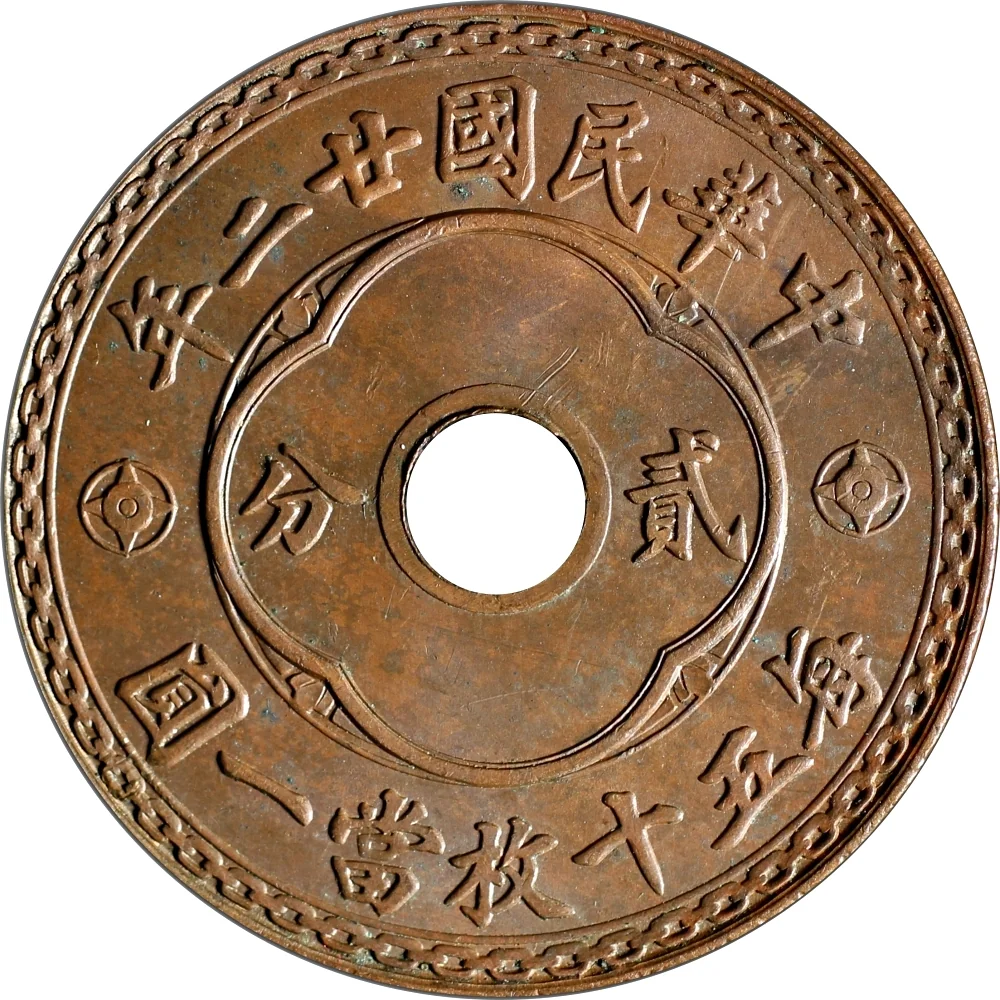
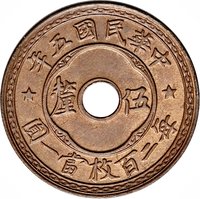
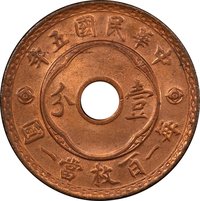
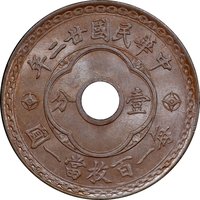
Two Chinese characters inside a rough circle, surrounded by more characters.
Inscription:
年二廿國民華中
分貳
圓一當枚十五每
分貳
圓一當枚十五每
Translation:
Twenty-one Year of the Republic of China
Twenty Cents
Fifteen Pieces Equal One Dollar
Twenty Cents
Fifteen Pieces Equal One Dollar
Language: Chinese
Reverse
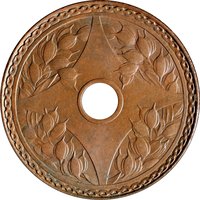
Description:
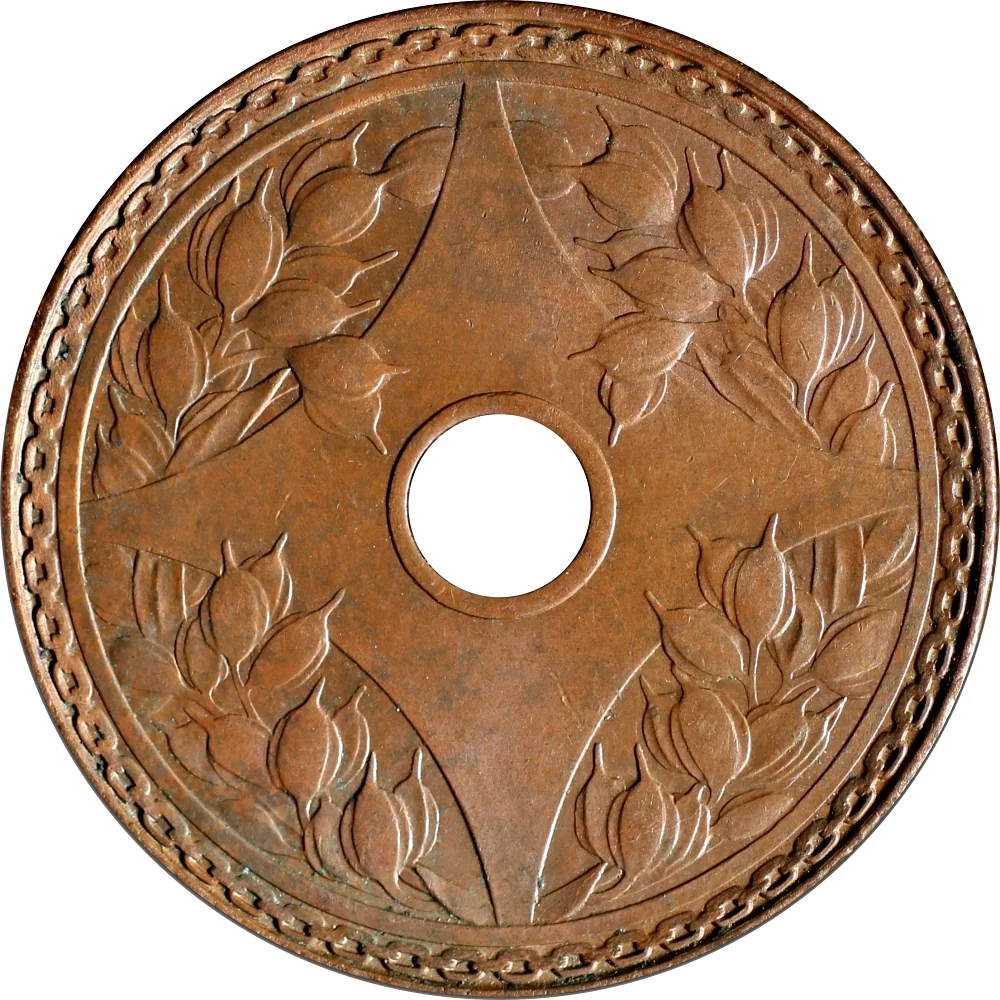
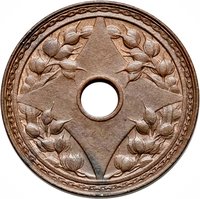
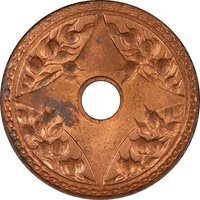
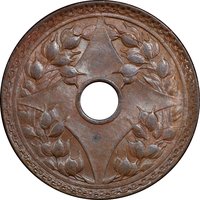
Diamond shape encircled by floral wreaths.
Edge
Plain
Mintings
| Year | Mint Mark | Mintage | Quality | Collection |
|---|---|---|---|---|
| 1933 | — | — |
Historical background
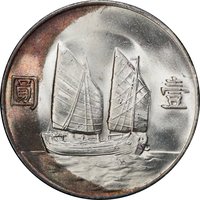
In 1933, the Republic of China was in a state of monetary fragmentation and instability, a legacy of the late Qing dynasty and the warlord era. There was no single, unified national currency. The primary unit of account was the silver yuan, but its physical form and value varied widely. The economy operated on a silver standard, with both official "yuan" coins and banknotes issued by multiple entities—the Central Bank of China, the Bank of China, the Bank of Communications, and numerous provincial and private banks—circulating simultaneously, often at fluctuating discounts. This complex system created significant obstacles for domestic trade and government finance.
The situation was acutely vulnerable to international silver markets. As the world's largest silver-using country, China's money supply and credit conditions were dictated by global silver prices. The U.S. Silver Purchase Act of 1934, which drove up the international price of silver, proved disastrous. It triggered a massive outflow of silver bullion from China, as it became profitable to export. This led to a severe deflationary crisis, a sharp contraction in the money supply, crippling credit, falling prices, and widespread business failures. The economy was being bled of its monetary base simply by the action of foreign policy.
These twin crises of internal fragmentation and external shock forced the Nationalist Government under Chiang Kai-shek to pursue radical reform. The disastrous effects of the silver exodus provided the final impetus to abandon the silver standard altogether. This set the stage for the landmark Currency Reform of 1935, which would demonetize silver, centralize note-issuing authority in four government banks, and introduce a new managed currency—the fabi—backed by foreign exchange reserves rather than silver. Thus, 1933 represents the final, turbulent year of China's silver economy, immediately preceding a forced and revolutionary shift to a government-controlled fiat system.
The situation was acutely vulnerable to international silver markets. As the world's largest silver-using country, China's money supply and credit conditions were dictated by global silver prices. The U.S. Silver Purchase Act of 1934, which drove up the international price of silver, proved disastrous. It triggered a massive outflow of silver bullion from China, as it became profitable to export. This led to a severe deflationary crisis, a sharp contraction in the money supply, crippling credit, falling prices, and widespread business failures. The economy was being bled of its monetary base simply by the action of foreign policy.
These twin crises of internal fragmentation and external shock forced the Nationalist Government under Chiang Kai-shek to pursue radical reform. The disastrous effects of the silver exodus provided the final impetus to abandon the silver standard altogether. This set the stage for the landmark Currency Reform of 1935, which would demonetize silver, centralize note-issuing authority in four government banks, and introduce a new managed currency—the fabi—backed by foreign exchange reserves rather than silver. Thus, 1933 represents the final, turbulent year of China's silver economy, immediately preceding a forced and revolutionary shift to a government-controlled fiat system.
💎 Extremely Rare