

1 Yuan – Fengtien Province
China
Context
Years: 1898–1899
Country: China 
Issuer: Fengtien Province
Ruler: Guangxu
Currency:
(1897—1931)
Demonetized: Yes
Material
References
Y: #Click to copy to clipboard87
Numista: #17683
Value
Bullion value: $63.79
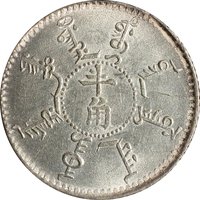
Obverse
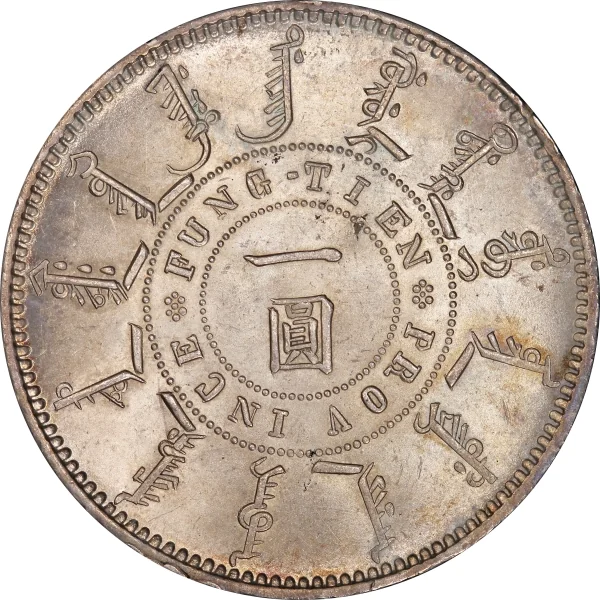
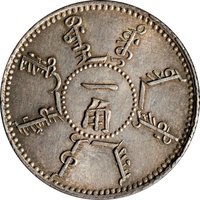
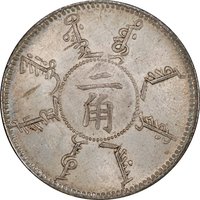
Description:
Chinese characters within English, encircled by Manchu text.
Inscription:
ᡩᠠᡳᠴᡳᠩ ᡤᡠᡵᡠᠨ ᡳ᠋ ᠪᠠᡩᠠᡵᠠᠩᡤᠠ ᡩᠣᡵᠣ ᡳ᠋ ᠣᡵᡳᠨ ᡩᡠᡳᠴᡳ ᠠᠨᡳᠶᠠ ᠠᠪᡴᠠᡳ ᡳᠮᡳᠶᠠᠩᡤᠠ ᡨᡝᡨᡠᠨ ᡧᡠᡵᡩᡝᡵᡝ ᡴᡡᠸᠠᡵᠠᠨ ᠸᡝᡳᡵᡝᡥᡝ
FUNG-TIEN PROVINCE
一
圓
FUNG-TIEN PROVINCE
一
圓
Translation:
Great Qing Empire, Badaranga Doro, Orin Duici Aniya, Abkai Imiyangga Teten, Surdere Kūwaran, Weirehe
FUNG-TIEN PROVINCE
One
Dollar
FUNG-TIEN PROVINCE
One
Dollar
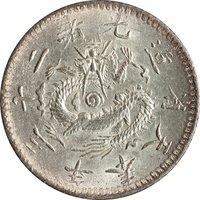
Reverse
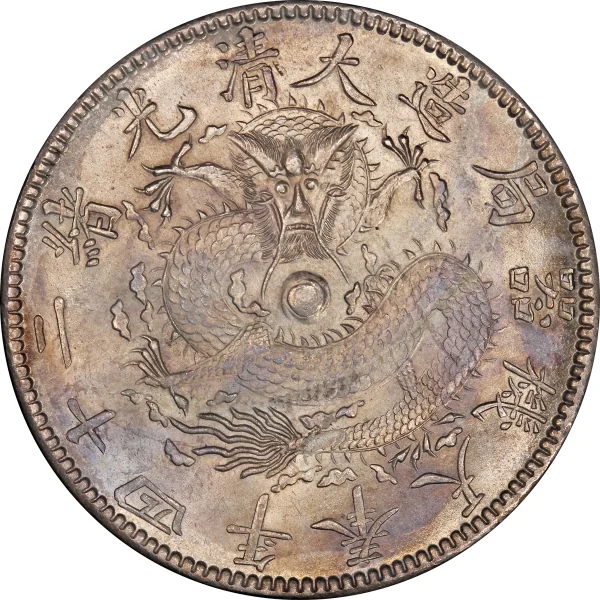
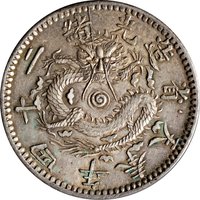
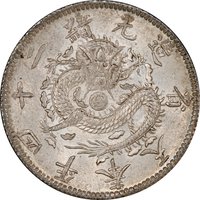
Description:
Dragon encircling a pearl, surrounded by English text.
Inscription:
清大
造局器械天奉年四十二緒光
造局器械天奉年四十二緒光
Translation:
Manufactured by the Clear and Great
Ordnance Bureau, Instrument and Armament.
In the 42nd Year of the Tianfeng Era,
Guangxu.
Ordnance Bureau, Instrument and Armament.
In the 42nd Year of the Tianfeng Era,
Guangxu.
Language: Chinese
Edge
Reeded.
Mintings
| Year | Mint Mark | Mintage | Quality | Collection |
|---|---|---|---|---|
| 1898 | — | — | ||
| 1899 | — | — |
Historical background
In 1898, Fengtien Province (modern Liaoning) existed within a complex and fragmented monetary system, typical of late Qing China but intensified by the region's unique geopolitical position. The primary circulating medium was the Fengtien tiao, a unit of account representing a string of standard copper-alloy cash coins. However, the physical supply of these coins was insufficient, leading to widespread use of privately minted and often debased copper coins, as well as large-denomination cash notes issued by local native banks (qianzhuang). Simultaneously, silver circulated by weight in the form of sycee (shoe-shaped ingots), measured in the local Fengping tael, creating a bimetallic system where exchange rates between copper and silver were volatile and locally determined.
This monetary landscape was further complicated by the accelerating influx of foreign currencies due to imperial encroachment. The Russian ruble, backed by the Russian-controlled Chinese Eastern Railway under construction through the region, was becoming a dominant currency for large transactions, especially in northern Fengtien and the treaty port of Newchwang (Yingkou). Japan, having established a sphere of influence in southern Manchuria after the First Sino-Japanese War (1894-95), was also increasing its economic presence, laying the groundwork for the future introduction of the Japanese yen. This created a situation of competing monetary sovereignties, where Russian, Japanese, and local Chinese currencies all vied for use.
The fundamental instability stemmed from the absence of a unified, trusted standard. The provincial mint attempted to regulate the coinage, but could not control the volume of private issues or foreign imports. The result was chronic inflation of the copper currency, severe exchange rate fluctuations that hampered trade, and significant transaction costs for money changers. This chaotic environment reflected the weakening authority of the Qing state in a strategically vital province, making it a financial battleground for imperial powers and setting the stage for the more formalized foreign financial control that would follow in the early 20th century.
This monetary landscape was further complicated by the accelerating influx of foreign currencies due to imperial encroachment. The Russian ruble, backed by the Russian-controlled Chinese Eastern Railway under construction through the region, was becoming a dominant currency for large transactions, especially in northern Fengtien and the treaty port of Newchwang (Yingkou). Japan, having established a sphere of influence in southern Manchuria after the First Sino-Japanese War (1894-95), was also increasing its economic presence, laying the groundwork for the future introduction of the Japanese yen. This created a situation of competing monetary sovereignties, where Russian, Japanese, and local Chinese currencies all vied for use.
The fundamental instability stemmed from the absence of a unified, trusted standard. The provincial mint attempted to regulate the coinage, but could not control the volume of private issues or foreign imports. The result was chronic inflation of the copper currency, severe exchange rate fluctuations that hampered trade, and significant transaction costs for money changers. This chaotic environment reflected the weakening authority of the Qing state in a strategically vital province, making it a financial battleground for imperial powers and setting the stage for the more formalized foreign financial control that would follow in the early 20th century.
💎 Extremely Rare