

½ Jiao – Fengtien Province
China
Context
Year: 1899
Chinese - Guangxu era Year: 25
Country: China 
Issuer: Fengtien Province
Ruler: Guangxu
Currency:
(1897—1931)
Subdivision: ½ Jiao = 5 Fen
Demonetized: Yes
Material
References
Y: #Click to copy to clipboard83
Numista: #32213
Value
Bullion value: $3.38
Obverse
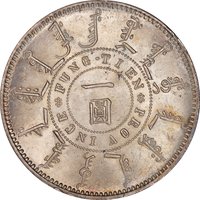
Description:
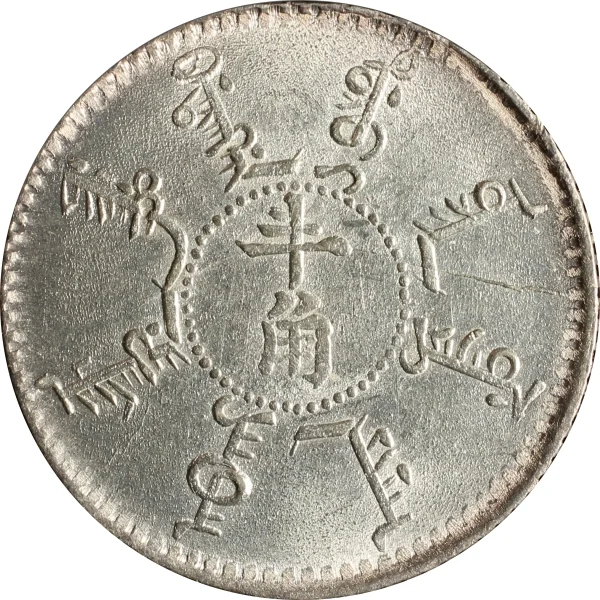
Manchu text encircling two Chinese characters.
Inscription:
ᠪᠠᡩᠠᡵᠠᠩᡤᠠ ᡩᠣᡵᠣ ᡳ᠋ ᠣᡵᡳᠨ ᠰᡠᠨᠵᠠᠴᡳ ᠠᠨᡳᠶᠠ ᠠᠪᡴᠠᡳ ᡳᠮᡳᠶᠠᠩᡤᠠ ᠸᡝᡳᡵᡝᡥᡝ
半
角
半
角
Translation:
Badarangga doro i orin sunjaci aniya abkai imiyangga weihe
Scripts: Chinese (simplified), Mongolian / Manchu
Language: Manchu
Reverse
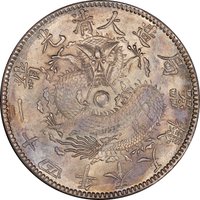
Description:
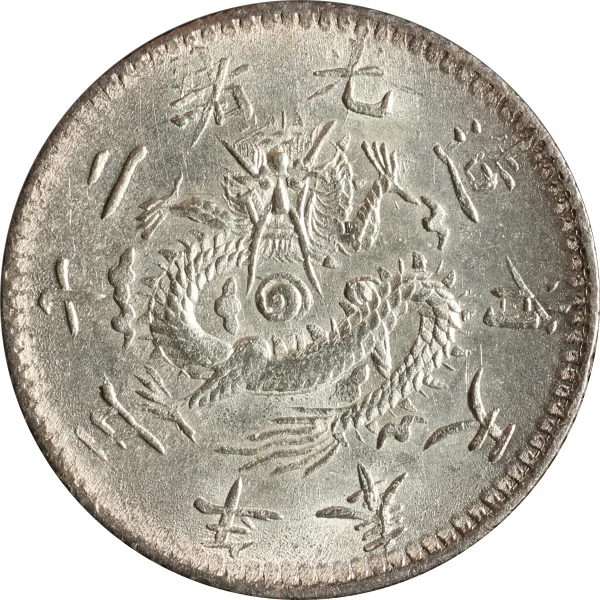
Dragon encircling a central pearl.
Inscription:
造省天奉年五十二緒光
Translation:
Cast in the fifty-second year of the Guangxu era of the Great Qing.
Scripts: Chinese (traditional, regular script)
Language: Classical Chinese
Edge
Reeded.
Categories
| Mythology> Fantastic animal |
Mintings
| Year | Mint Mark | Mintage | Quality | Collection |
|---|---|---|---|---|
| 1899 | — | — |
Historical background
In 1899, Fengtien Province (modern Liaoning) and the wider region of Manchuria were under the complex and inflationary monetary system of the late Qing Dynasty, characterized by a chaotic multi-currency environment. The primary mediums of exchange included official silver taels (by weight and purity), copper cash coins for daily small transactions, and a growing volume of foreign silver dollars, particularly the Mexican Eagle dollar, which circulated widely due to its standardized weight and reliability. Alongside these, various privately issued bank notes from native qianzhuang (money shops) and piaohao (remittance shops) further complicated the landscape, their value heavily dependent on the issuer's credibility and leading to significant regional disparities and exchange-rate confusion.
This monetary disarray was exacerbated by the province's strategic and economic importance. As the gateway to Manchuria, Fengtien was experiencing increased foreign commercial and political influence, particularly from Russia and Japan, who were vying for railway and mining concessions following the First Sino-Japanese War (1894-95). Russian rubles and, soon after, Japanese yen began to circulate in their spheres of influence, creating monetary enclaves and further undermining Qing monetary sovereignty. The local economy also faced pressures from massive government expenditures related to post-war indemnities and military modernization, which strained the central treasury and contributed to debasement and volatility.
Consequently, the currency situation in Fengtien in 1899 was one of fragmented and declining confidence, marked by fluctuating exchange rates between silver, copper, and paper, which hampered trade and taxation. This instability reflected the broader weakness of the Qing state and set the stage for the more radical monetary transformations that would follow in the early 20th century, including the introduction of provincial coinage and the intense "currency wars" between imperial powers in the region.
This monetary disarray was exacerbated by the province's strategic and economic importance. As the gateway to Manchuria, Fengtien was experiencing increased foreign commercial and political influence, particularly from Russia and Japan, who were vying for railway and mining concessions following the First Sino-Japanese War (1894-95). Russian rubles and, soon after, Japanese yen began to circulate in their spheres of influence, creating monetary enclaves and further undermining Qing monetary sovereignty. The local economy also faced pressures from massive government expenditures related to post-war indemnities and military modernization, which strained the central treasury and contributed to debasement and volatility.
Consequently, the currency situation in Fengtien in 1899 was one of fragmented and declining confidence, marked by fluctuating exchange rates between silver, copper, and paper, which hampered trade and taxation. This instability reflected the broader weakness of the Qing state and set the stage for the more radical monetary transformations that would follow in the early 20th century, including the introduction of provincial coinage and the intense "currency wars" between imperial powers in the region.
✨ Legendary