

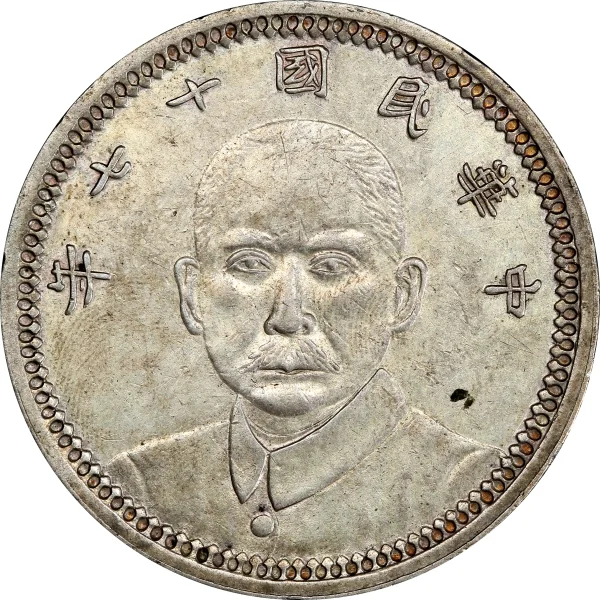
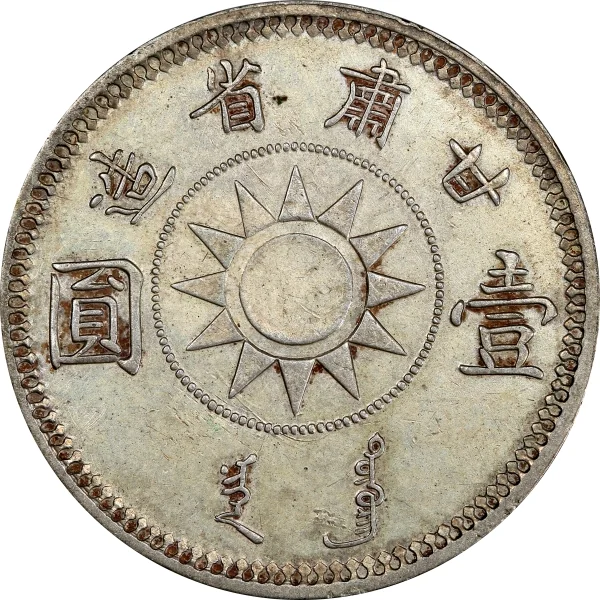
1 Yuan – Kansu Province
China
Context
Year: 1928
Chinese republican Year: 17
Country: China 
Issuer: Kansu Province
Period:
(1912—1949)
Currency:
(1920—1949)
Demonetized: Yes
Material
References
Y: #Click to copy to clipboard410
Numista: #16010
Value
Bullion value: $77.31
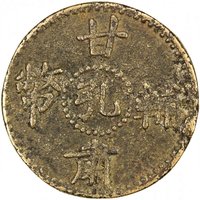
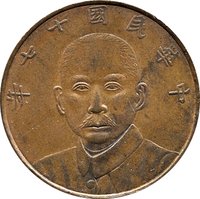
Obverse
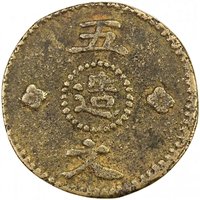
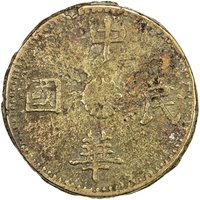
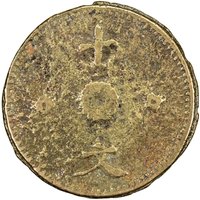
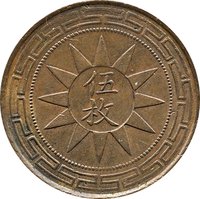
Reverse
Edge
Reeded.
Categories
| Person> Politician |
| Mustache/Beard |
Mintings
| Year | Mint Mark | Mintage | Quality | Collection |
|---|---|---|---|---|
| 1928 | — | — |
Historical background
In 1928, Kansu (present-day Gansu) Province was mired in a severe and complex currency crisis, emblematic of the wider financial disintegration of China under the Nanjing Decade. The national currency system was fragmented, with warlords, provincial banks, and even large merchants issuing their own paper notes. In Kansu, this took the form of a flood of unbacked provincial scrip, often printed by local military commanders to fund their armies and administrations. These notes, known as Gansu Piao, rapidly depreciated due to a lack of silver reserve backing and constant over-issuance, leading to rampant inflation that devastated the local agrarian economy.
The situation was exacerbated by Kansu's geographical isolation and profound poverty, which limited trade and the inflow of hard currency like silver dollars. The province was also a corridor for the ongoing conflicts between regional warlords, Ma clique factions, and remnants of the Guominjun, whose movements further disrupted commerce and fiscal stability. As trust in paper currency collapsed, many communities, particularly in rural areas, reverted to barter or the use of physical silver coins and copper cash for transactions, creating a dual monetary system that further complicated economic life.
This chaotic currency environment severely impacted the populace, as soldiers and officials were often paid in the worthless local scrip, which merchants then refused to accept at face value. The resulting de facto wage cuts and price instability fueled widespread resentment and social unrest. The crisis in Kansu was a microcosm of the central government's inability to project monetary sovereignty, a problem that would persist until the national currency reforms of 1935, which had limited and delayed effect in such remote, strife-torn provinces.
The situation was exacerbated by Kansu's geographical isolation and profound poverty, which limited trade and the inflow of hard currency like silver dollars. The province was also a corridor for the ongoing conflicts between regional warlords, Ma clique factions, and remnants of the Guominjun, whose movements further disrupted commerce and fiscal stability. As trust in paper currency collapsed, many communities, particularly in rural areas, reverted to barter or the use of physical silver coins and copper cash for transactions, creating a dual monetary system that further complicated economic life.
This chaotic currency environment severely impacted the populace, as soldiers and officials were often paid in the worthless local scrip, which merchants then refused to accept at face value. The resulting de facto wage cuts and price instability fueled widespread resentment and social unrest. The crisis in Kansu was a microcosm of the central government's inability to project monetary sovereignty, a problem that would persist until the national currency reforms of 1935, which had limited and delayed effect in such remote, strife-torn provinces.
💎 Extremely Rare