

10 Yuan – Taiwan
China
Context


Material
References
Y: #Click to copy to clipboard553
Numista: #1587
Value
Exchange value: 10 TWD
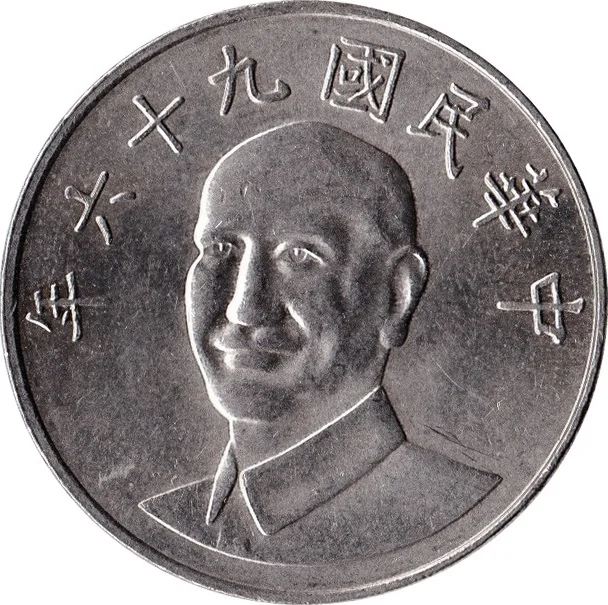
Obverse
Description:
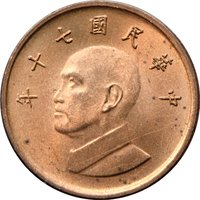
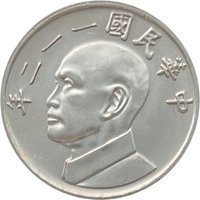
Chiang Kai-shek bust facing left.
Inscription:
年六十九國民華中
Translation:
Sixty-nine years of the Republic of China.
Scripts: Chinese (traditional, regular script)
Language: Chinese
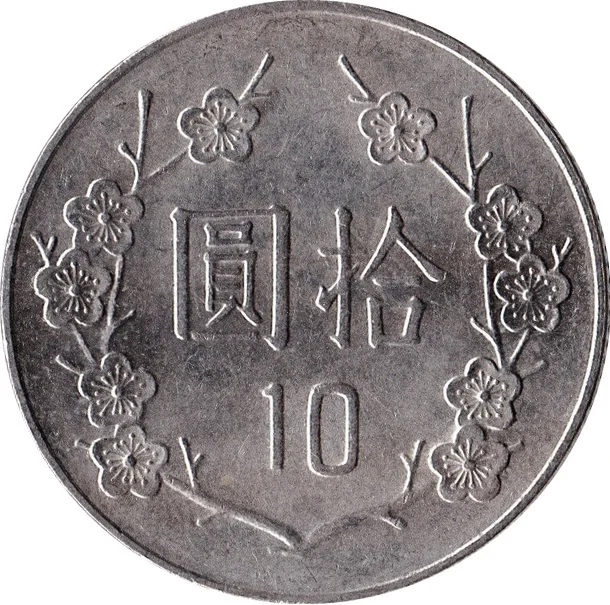
Reverse
Description:
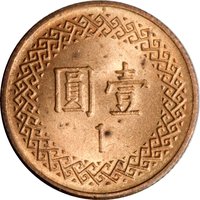
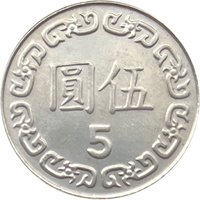
Center Chinese symbol, 10 below.
Inscription:
圓拾
10
10
Translation:
Ten Yuan
Scripts: Chinese (traditional, regular script)
Language: Chinese
Edge
Milled
Categories
| Person> Politician |
| Plants> Flower |
Mints
| Name | Mark |
|---|---|
| Central Mint of Taiwan | — |
Mintings
| Year | Mint Mark | Mintage | Quality | Collection |
|---|---|---|---|---|
| 1981 | — | 123,000,000 | ||
| 1981 | — | — | Proof | |
| 1982 | — | 361,000,000 | ||
| 1983 | — | 196,000,000 | ||
| 1984 | — | 220,000,000 | ||
| 1985 | — | 200,000,000 | ||
| 1986 | — | 100,000,000 | ||
| 1987 | — | 90,000,000 | ||
| 1988 | — | 100,000,000 | ||
| 1989 | — | — | ||
| 1990 | — | — | ||
| 1991 | — | — | ||
| 1992 | — | — | ||
| 1993 | — | — | Proof | |
| 1993 | — | — | ||
| 1994 | — | — | ||
| 1994 | — | — | Proof | |
| 1995 | — | — | Proof | |
| 1995 | — | — | ||
| 1996 | — | — | ||
| 1996 | — | — | Proof | |
| 1997 | — | — | ||
| 1997 | — | — | Proof | |
| 1998 | — | — | Proof | |
| 1999 | — | — | Proof | |
| 2000 | — | — | In sets | |
| 2000 | — | — | Proof | |
| 2001 | — | — | In sets | |
| 2001 | — | — | Proof | |
| 2002 | — | — | Proof | |
| 2003 | — | — | ||
| 2003 | — | — | Proof | |
| 2004 | — | — | ||
| 2004 | — | — | Proof | |
| 2005 | — | — | ||
| 2006 | — | — | ||
| 2007 | — | — | ||
| 2008 | — | — | ||
| 2009 | — | — | ||
| 2010 | — | — |
Historical background
In 1981, Taiwan's currency situation was characterized by a period of managed stability and export-driven growth under a tightly controlled exchange rate regime. The New Taiwan Dollar (NTD) was pegged to the U.S. dollar at a fixed rate of approximately NT$36 to US$1, a policy maintained by the Central Bank of China (CBC) to provide predictability for the island's booming export sector. This era followed the economic "miracle" of the 1970s, and the primary monetary focus was on controlling inflation—which had spiked during the 1979 oil crisis—and maintaining a competitive exchange rate to sustain the rapid industrial expansion.
The financial system was still heavily regulated, with the CBC exercising strict control over interest rates and capital flows. A dual exchange rate system, which had separated currency flows for trade and financial transactions, had only recently been unified in 1979, marking a significant step toward liberalization. However, significant pressures were building. Taiwan's consistent trade surpluses, particularly with the United States, led to large accumulations of foreign exchange reserves. This created underlying inflationary pressures and growing international pressure, especially from the U.S., to revalue the currency and allow it to appreciate to help reduce the trade imbalance.
Consequently, 1981 stood at a crossroads between the old system of direct control and the forces demanding change. While the official peg remained, the groundwork was being laid for a more flexible exchange rate system. The immense foreign reserves and external pressures would eventually force a shift, leading to a managed float and a gradual appreciation of the NTD later in the decade. Thus, the currency situation in 1981 was one of apparent surface stability, masking the substantial economic forces that would soon necessitate major policy reforms.
The financial system was still heavily regulated, with the CBC exercising strict control over interest rates and capital flows. A dual exchange rate system, which had separated currency flows for trade and financial transactions, had only recently been unified in 1979, marking a significant step toward liberalization. However, significant pressures were building. Taiwan's consistent trade surpluses, particularly with the United States, led to large accumulations of foreign exchange reserves. This created underlying inflationary pressures and growing international pressure, especially from the U.S., to revalue the currency and allow it to appreciate to help reduce the trade imbalance.
Consequently, 1981 stood at a crossroads between the old system of direct control and the forces demanding change. While the official peg remained, the groundwork was being laid for a more flexible exchange rate system. The immense foreign reserves and external pressures would eventually force a shift, leading to a managed float and a gradual appreciation of the NTD later in the decade. Thus, the currency situation in 1981 was one of apparent surface stability, masking the substantial economic forces that would soon necessitate major policy reforms.
Series: 1981 Taiwan circulation coins
🌱 Very Common