

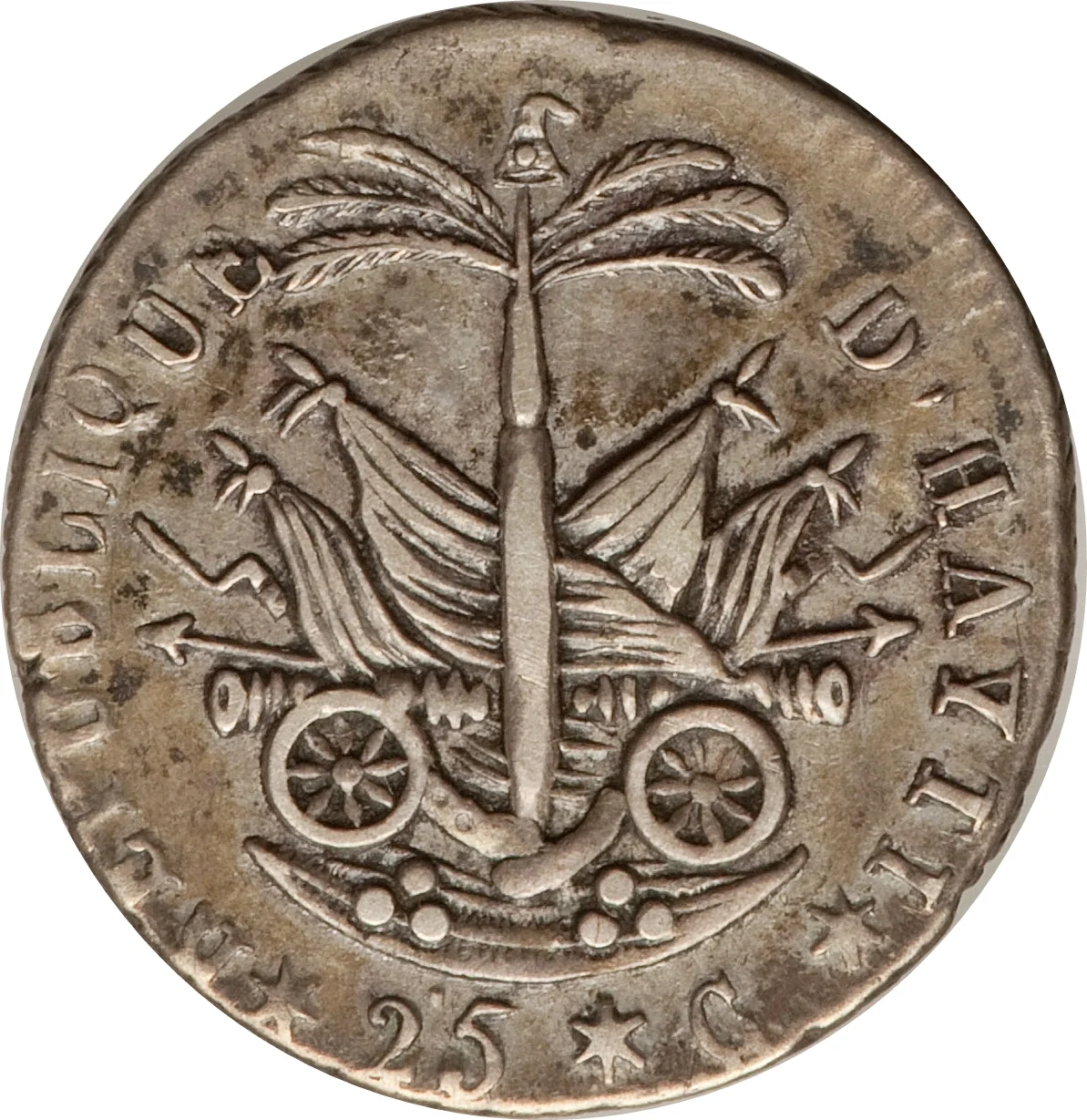
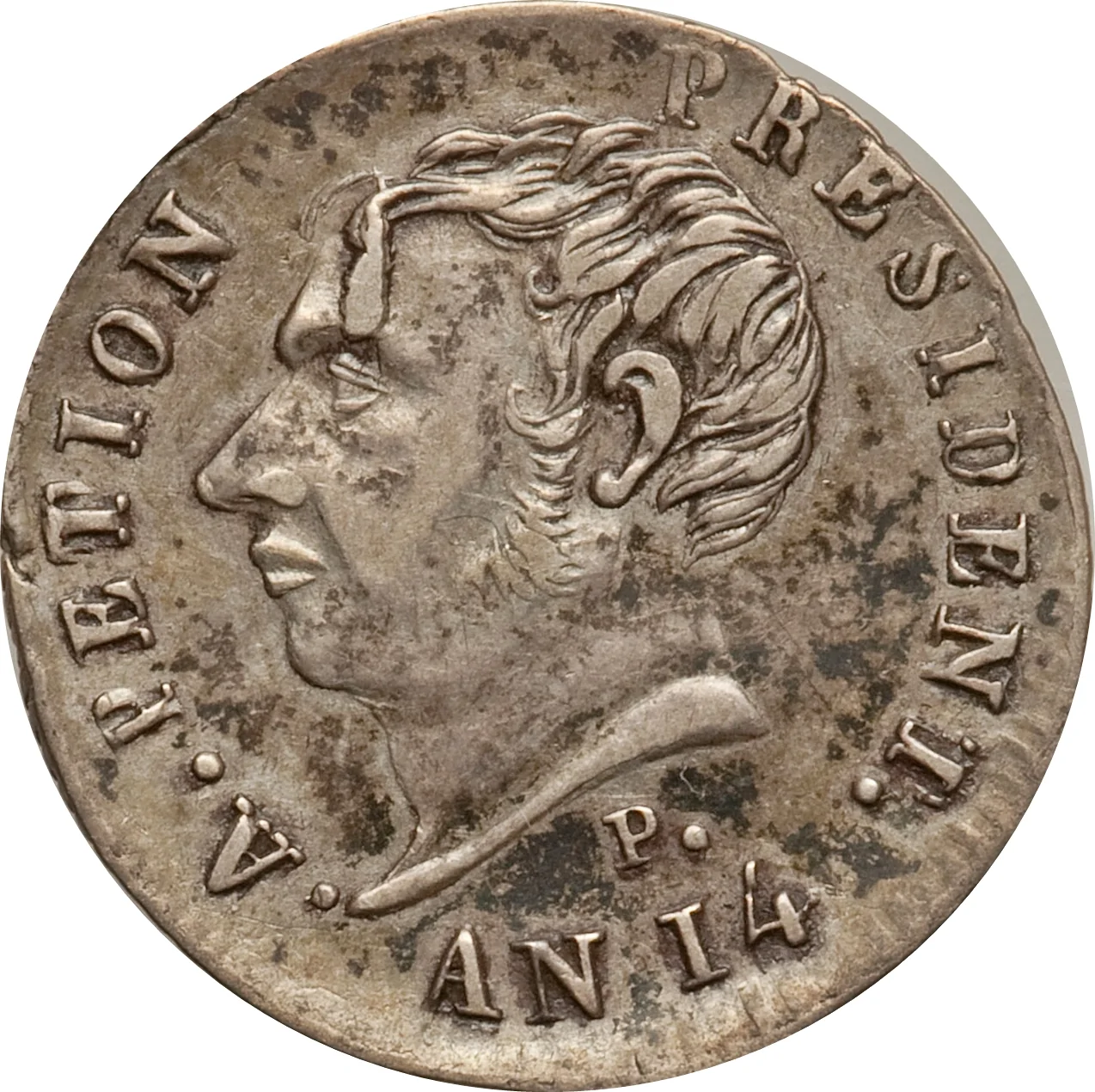
25 Centimes – Haiti
Haiti
Context
Year: 1817
Haitian republican Year: 14
Issuer: Haiti 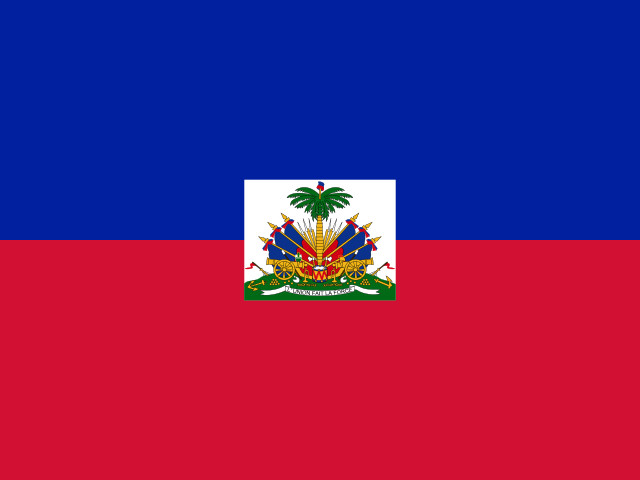
Ruler: Alexandre Pétion
Currency:
(1813—1870)
Demonetized: Yes
Material
References
KM: #Click to copy to clipboard15.1
Numista: #10345
Value
Bullion value: $6.66
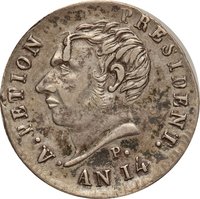
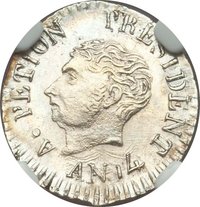
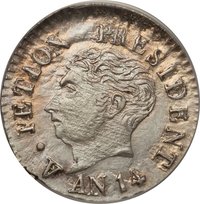
Obverse
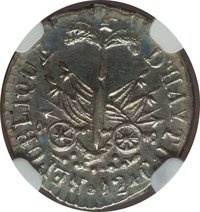
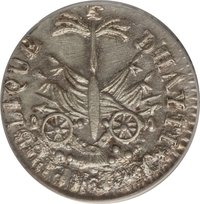
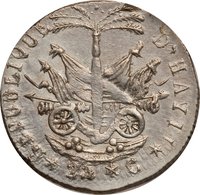
Reverse
Edge
Milled
Mintings
| Year | Mint Mark | Mintage | Quality | Collection |
|---|---|---|---|---|
| 1817 | — | — | ||
| 1817 | — | — | BU |
Historical background
In 1817, Haiti’s currency situation was a direct legacy of its revolutionary birth and the crippling economic isolation imposed upon it. Having declared independence from France in 1804, the nation was still led by King Henry Christophe in the northern Kingdom of Haiti, while the south was under President Alexandre Pétion’s Republic. Both states faced the immense challenge of building a functioning economy without international recognition or access to foreign credit. The French indemnity of 1825, which would later formalize Haiti’s financial strangulation, was already being negotiated in secret, casting a long shadow. The primary circulating currency remained the Haitian gourde, which had been established to replace the old colonial livre, but its stability and value were severely undermined by a lack of specie (gold and silver coinage) and a collapsing agricultural export economy.
The fundamental problem was a catastrophic shortage of hard currency. Years of warfare had drained the treasury, and the world’s major powers, fearing the example of a successful slave revolt, enforced a commercial and financial boycott. This blockade made it nearly impossible to earn foreign exchange through exports of coffee, sugar, and other goods. Consequently, the government resorted to printing paper money to finance its operations, a practice begun under Pétion in the south. This led to rapid depreciation and inflation, as the paper notes were not backed by sufficient reserves. In the north, Christophe attempted a more rigid, state-controlled system to maintain value, but the underlying scarcity of precious metal plagued both regimes.
This monetary instability reflected and exacerbated the young nation’s deeper crises. The depreciating currency discouraged savings and investment, while making it difficult to pay civil servants and soldiers, fostering internal discontent. It also handicapped efforts to rebuild the plantation infrastructure, as landowners and farmers lacked a reliable medium for trade and investment. Thus, in 1817, Haiti’s currency was not merely an economic instrument but a symbol of its precarious sovereignty—a struggling system caught between the demands of national construction and the relentless external pressures designed to ensure its economic, and thus political, failure.
The fundamental problem was a catastrophic shortage of hard currency. Years of warfare had drained the treasury, and the world’s major powers, fearing the example of a successful slave revolt, enforced a commercial and financial boycott. This blockade made it nearly impossible to earn foreign exchange through exports of coffee, sugar, and other goods. Consequently, the government resorted to printing paper money to finance its operations, a practice begun under Pétion in the south. This led to rapid depreciation and inflation, as the paper notes were not backed by sufficient reserves. In the north, Christophe attempted a more rigid, state-controlled system to maintain value, but the underlying scarcity of precious metal plagued both regimes.
This monetary instability reflected and exacerbated the young nation’s deeper crises. The depreciating currency discouraged savings and investment, while making it difficult to pay civil servants and soldiers, fostering internal discontent. It also handicapped efforts to rebuild the plantation infrastructure, as landowners and farmers lacked a reliable medium for trade and investment. Thus, in 1817, Haiti’s currency was not merely an economic instrument but a symbol of its precarious sovereignty—a struggling system caught between the demands of national construction and the relentless external pressures designed to ensure its economic, and thus political, failure.
⭐ Somewhat Rare