

Haiti
Context
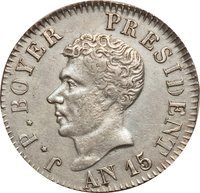
Year: 1818
Haitian republican Year: 15
Issuer: Haiti 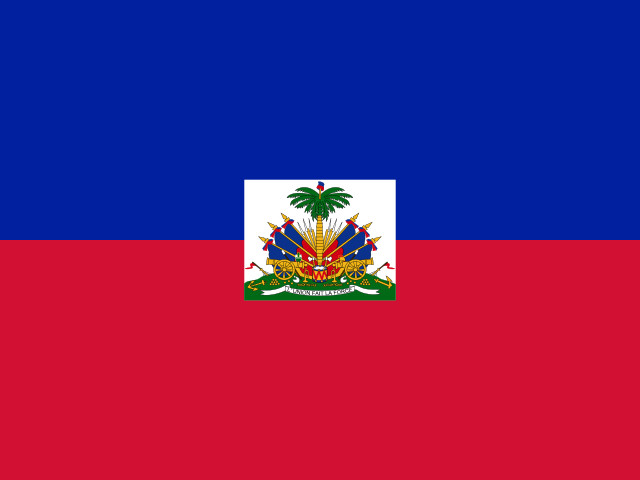
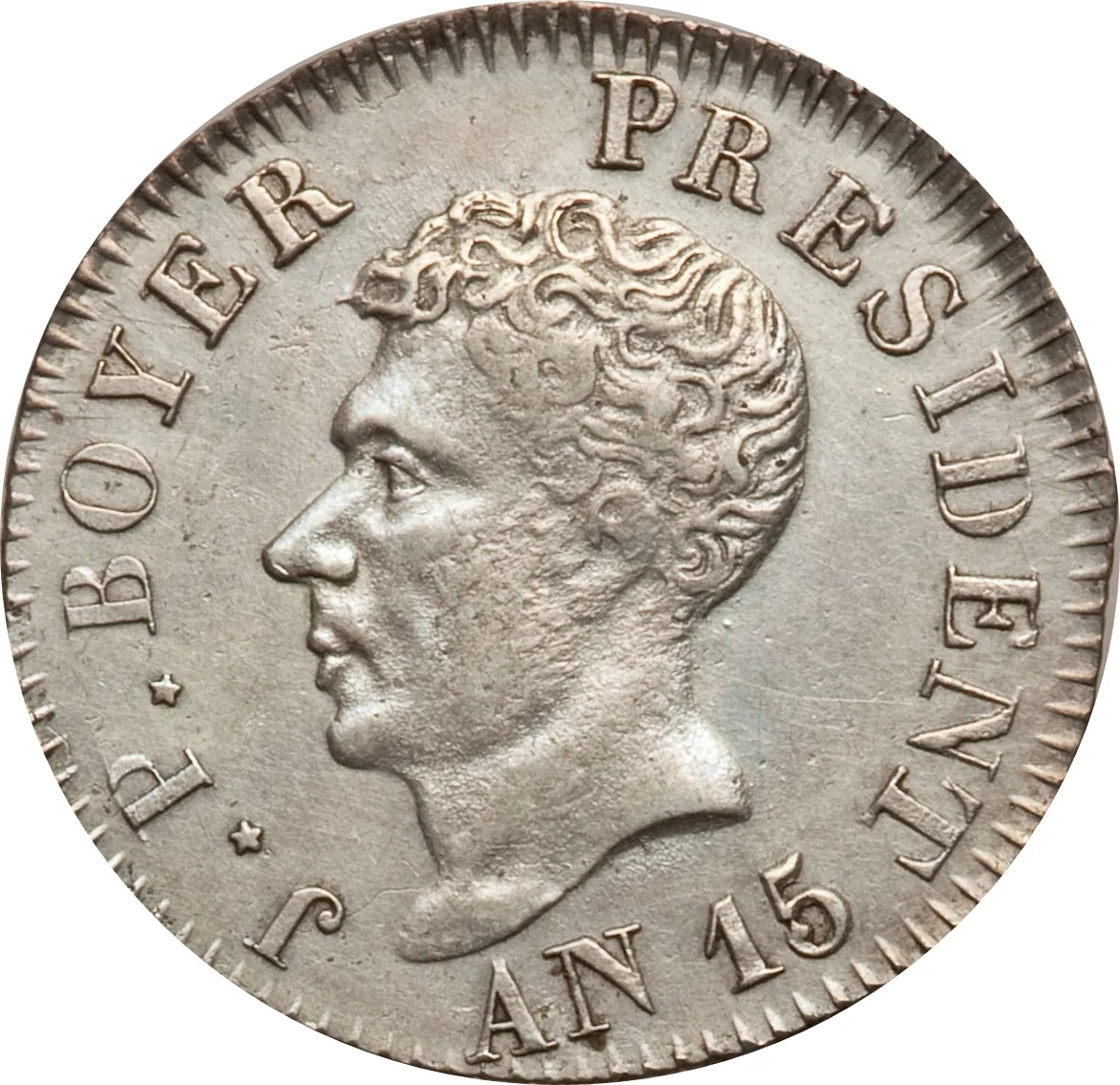
Ruler: Jean-Pierre Boyer
Currency:
(1813—1870)
Demonetized: Yes
Material
References
KM: #Click to copy to clipboard16
Numista: #28955
Value
Bullion value: $6.68
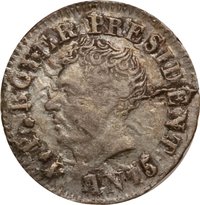
Obverse
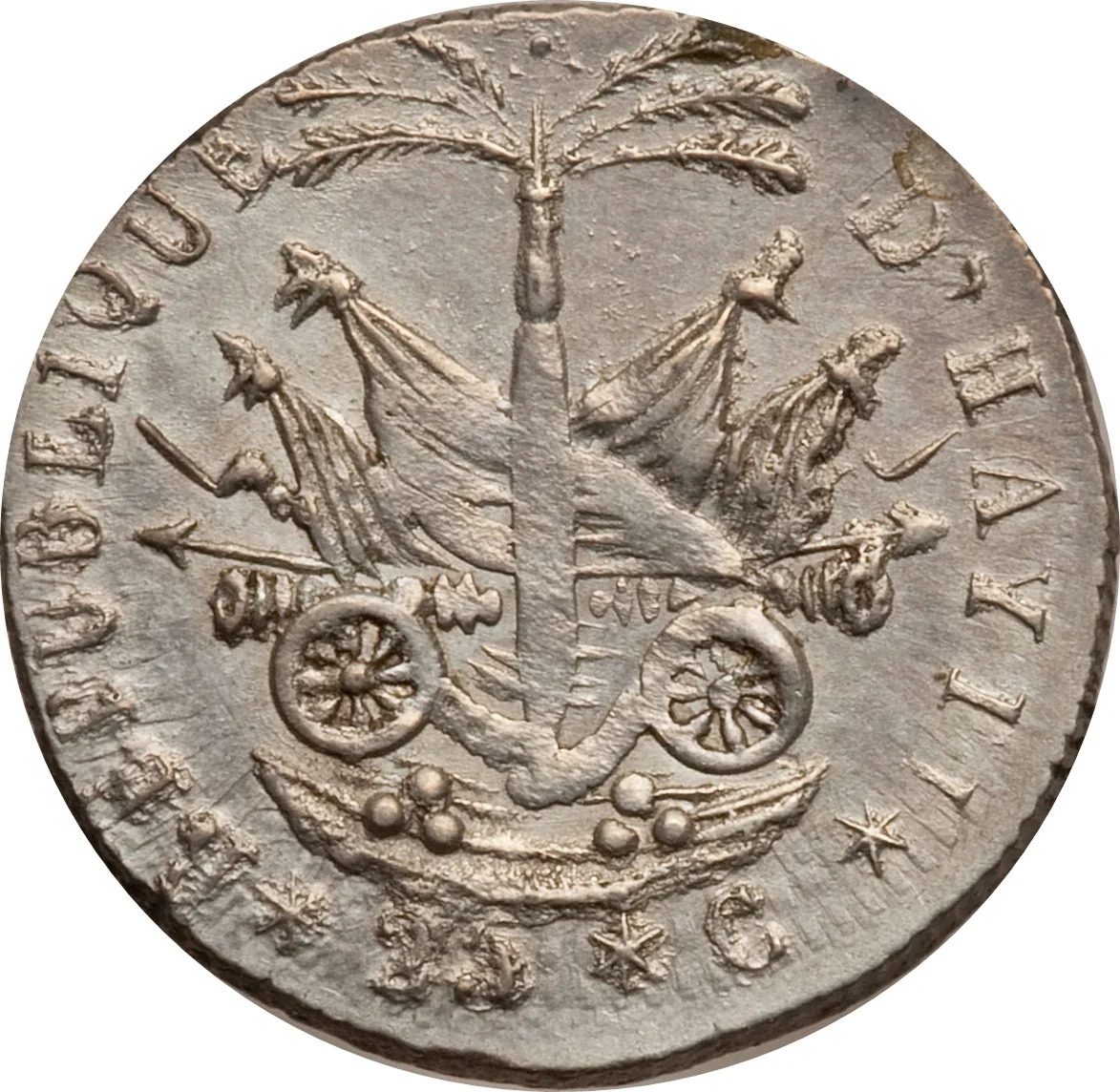
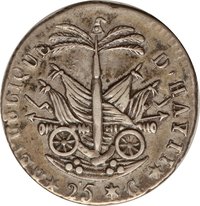
Reverse
Edge
Plain
Mintings
| Year | Mint Mark | Mintage | Quality | Collection |
|---|---|---|---|---|
| 1818 | — | — |
Historical background
In 1818, Haiti’s currency situation was a direct legacy of its revolutionary birth and international isolation. Having declared independence from France in 1804, the nation was burdened by a massive indemnity demanded by France in 1825 for recognition, the shadow of which already strained economic planning. Furthermore, a crippling trade embargo imposed by major powers like France, Britain, and the United States, which refused to recognize the Black republic, severely limited access to foreign capital and goods. This isolation forced Haiti into economic autarky, relying on its own dwindling agricultural output from a plantation system that was struggling after the abolition of slavery.
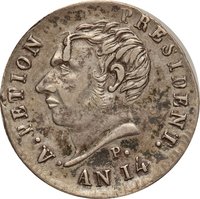
Internally, the monetary system was chaotic and unstable. The economy operated on a confusing dual system of livre tournois (the old French colonial currency) and the Haitian gourde, which was theoretically pegged to the French franc. However, chronic shortages of specie (coinage) led to widespread circulation of low-quality foreign coins, particularly Spanish and Spanish-American pieces of eight, which were often clipped or debased. The government of President Alexandre Pétion (1806-1818), who died in March of that year, had struggled with fiscal shortfalls, often resorting to printing paper money without sufficient reserves, leading to inflation and a deep public distrust of government-issued currency.
This fragile financial environment set the stage for the reign of Pétion’s successor, President Jean-Pierre Boyer, who unified the country in 1820. The currency woes of 1818 were a central challenge he inherited, directly impacting his ability to fund the state, rebuild infrastructure, and ultimately negotiate the disastrous French indemnity agreement. The lack of a stable, sovereign currency symbolized Haiti’s broader struggle to establish economic independence and stability in a hostile Atlantic world that was economically and politically opposed to its very existence.
Internally, the monetary system was chaotic and unstable. The economy operated on a confusing dual system of livre tournois (the old French colonial currency) and the Haitian gourde, which was theoretically pegged to the French franc. However, chronic shortages of specie (coinage) led to widespread circulation of low-quality foreign coins, particularly Spanish and Spanish-American pieces of eight, which were often clipped or debased. The government of President Alexandre Pétion (1806-1818), who died in March of that year, had struggled with fiscal shortfalls, often resorting to printing paper money without sufficient reserves, leading to inflation and a deep public distrust of government-issued currency.
This fragile financial environment set the stage for the reign of Pétion’s successor, President Jean-Pierre Boyer, who unified the country in 1820. The currency woes of 1818 were a central challenge he inherited, directly impacting his ability to fund the state, rebuild infrastructure, and ultimately negotiate the disastrous French indemnity agreement. The lack of a stable, sovereign currency symbolized Haiti’s broader struggle to establish economic independence and stability in a hostile Atlantic world that was economically and politically opposed to its very existence.
💎 Extremely Rare