

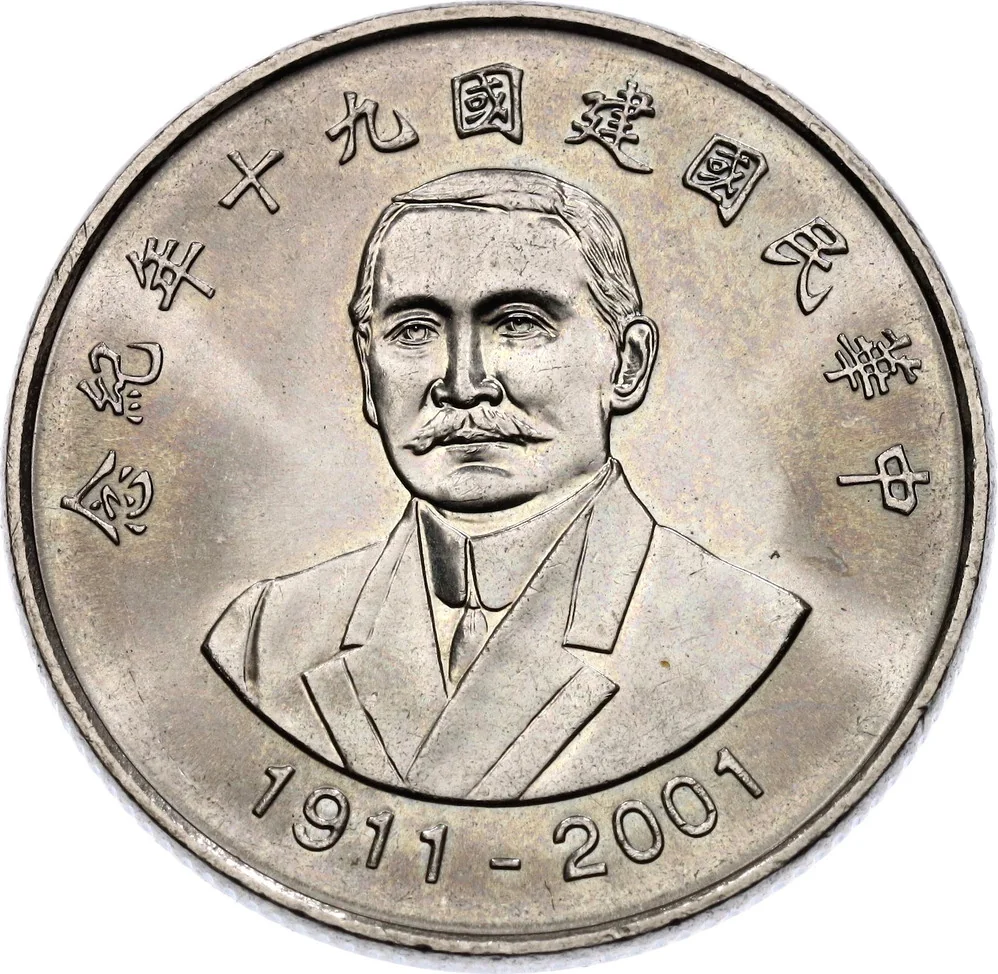
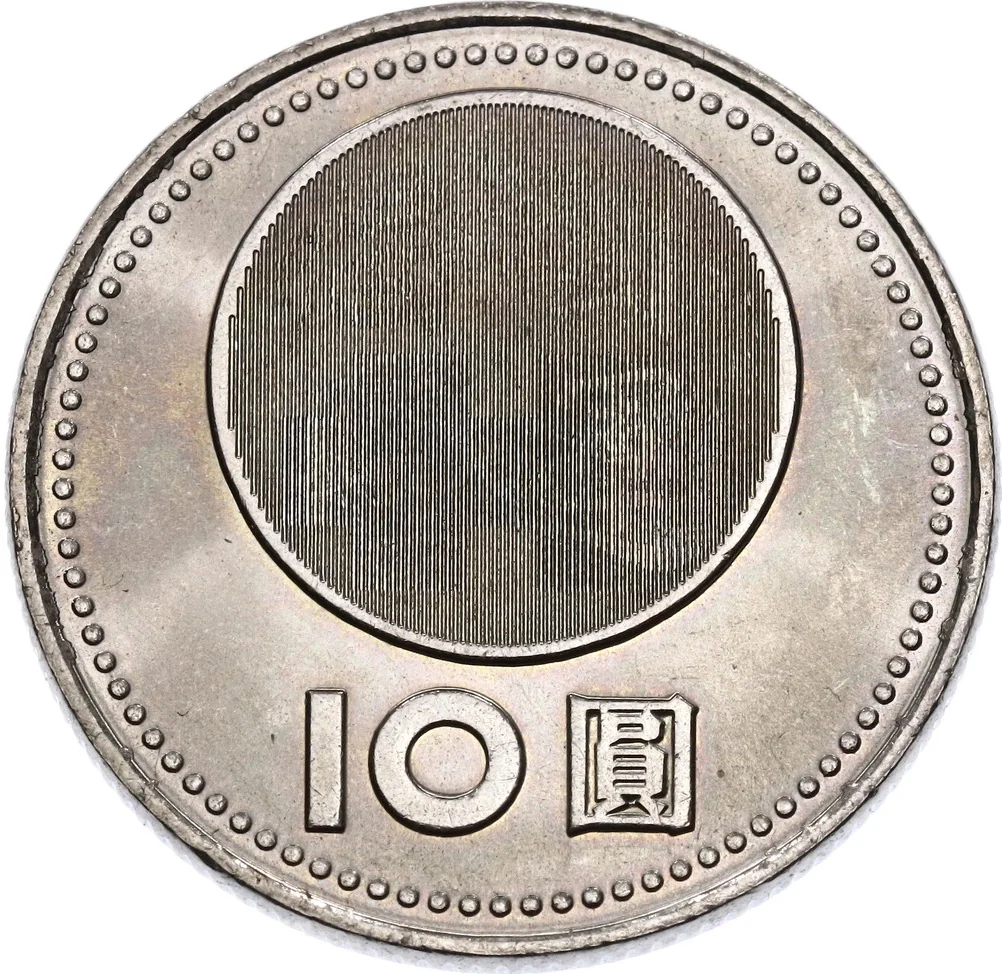
10 yuan (Republic of China) – Taiwan
Add to wishlist
Circulating commemorative coins
Commemoration: 90th Anniversary of Republic of China
China
Context
Year: 2001
Chinese republican Year:: 90
Country: China
Issuer: Taiwan
Period:
(since 1949)
Currency:
(since 1949)
Total mintage: 30,000,000
Material
Diameter: 26 mm
Weight: 7.5 g
Thickness: 1.7 mm
Shape: Round
Techniques: Latent image, Milled
Alignment: Medal alignment
flip
References
Y: #
Numista: #10250
Value
Exchange value: 10 TWD
Inflation-adjusted value: 16.27 TWD
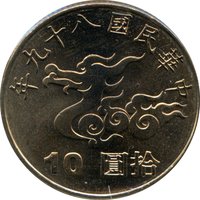
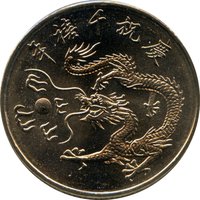
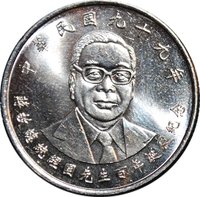
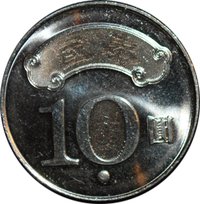
Obverse
Reverse
Edge
Reeded
Categories
| Event> National day |
| Person> Politician |
Mints
| Name | Mark |
|---|---|
| Central Mint of Taiwan | — |
Mintings
| Year | Mint Mark | Mintage | Quality | Collection |
|---|---|---|---|---|
| 2001 | — | 30,000,000 |
Historical background
In 2001, Taiwan's currency, the New Taiwan Dollar (NTD), operated within a managed float system overseen by the Central Bank of the Republic of China (Taiwan). The primary monetary policy focus that year was navigating the economic fallout from the global technology downturn and a sharp domestic economic slowdown, which saw GDP growth plummet to -1.3%—a stark contrast to the 5.8% growth of the previous year. This recession was largely triggered by a collapse in demand for Taiwan's crucial electronics exports, particularly from the United States, following the dot-com bubble burst.
Against this backdrop, the central bank, led by Governor Perng Fai-nan, pursued a policy of gradual and moderate depreciation of the NTD to support struggling exporters. The currency weakened from around NT$33.0 to the US dollar at the start of the year to approximately NT$35.0 by year's end. This deliberate depreciation was managed carefully to avoid capital flight and maintain stability, as the bank balanced the need for export competitiveness with concerns over imported inflation and the stability of the financial system, which was also burdened by a growing non-performing loan problem.
The currency management in 2001 was therefore characterized by a defensive and stabilizing stance. The central bank frequently intervened in the foreign exchange market to smooth volatility and prevent a disorderly decline, while also cutting key interest rates seven times throughout the year to stimulate the domestic economy. This combination of monetary easing and controlled depreciation aimed to cushion the export sector and foster a recovery, setting the stage for a return to positive growth in 2002 as global demand began to gradually rebound.
Against this backdrop, the central bank, led by Governor Perng Fai-nan, pursued a policy of gradual and moderate depreciation of the NTD to support struggling exporters. The currency weakened from around NT$33.0 to the US dollar at the start of the year to approximately NT$35.0 by year's end. This deliberate depreciation was managed carefully to avoid capital flight and maintain stability, as the bank balanced the need for export competitiveness with concerns over imported inflation and the stability of the financial system, which was also burdened by a growing non-performing loan problem.
The currency management in 2001 was therefore characterized by a defensive and stabilizing stance. The central bank frequently intervened in the foreign exchange market to smooth volatility and prevent a disorderly decline, while also cutting key interest rates seven times throughout the year to stimulate the domestic economy. This combination of monetary easing and controlled depreciation aimed to cushion the export sector and foster a recovery, setting the stage for a return to positive growth in 2002 as global demand began to gradually rebound.
🌱 Common