

10 Yuan – Taiwan
Circulating commemorative coins
Commemoration: Millennium
China
Context
Year: 2000
Chinese republican Year: 89
Country: China 
Issuer: Taiwan 
Period:
(since 1949)
Currency:
(since 1949)
Total mintage: 50,675,000
Material
References
Y: #Click to copy to clipboard560
Numista: #10249
Value
Exchange value: 10 TWD
Inflation-adjusted value: 16.33 TWD
Obverse
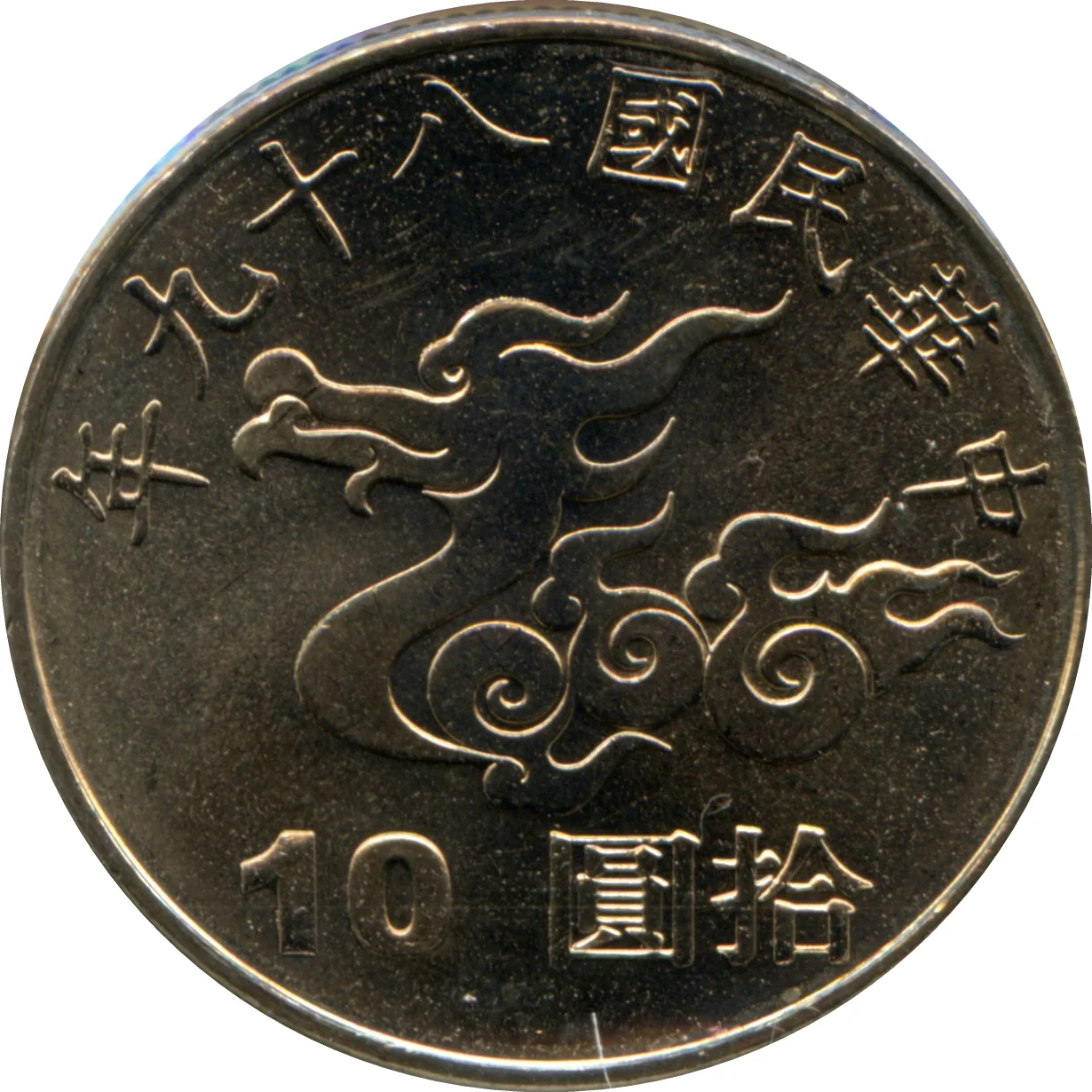
Description:
Millennium dragon symbol for Taiwan, with date above and denomination below.
Inscription:
年九十八國民華中
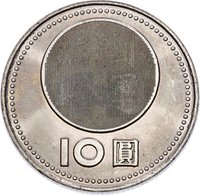
10 圓拾
10 圓拾
Translation:
REPUBLIC OF CHINA YEAR 98
TEN DOLLARS 10
TEN DOLLARS 10
Language: Chinese
Reverse
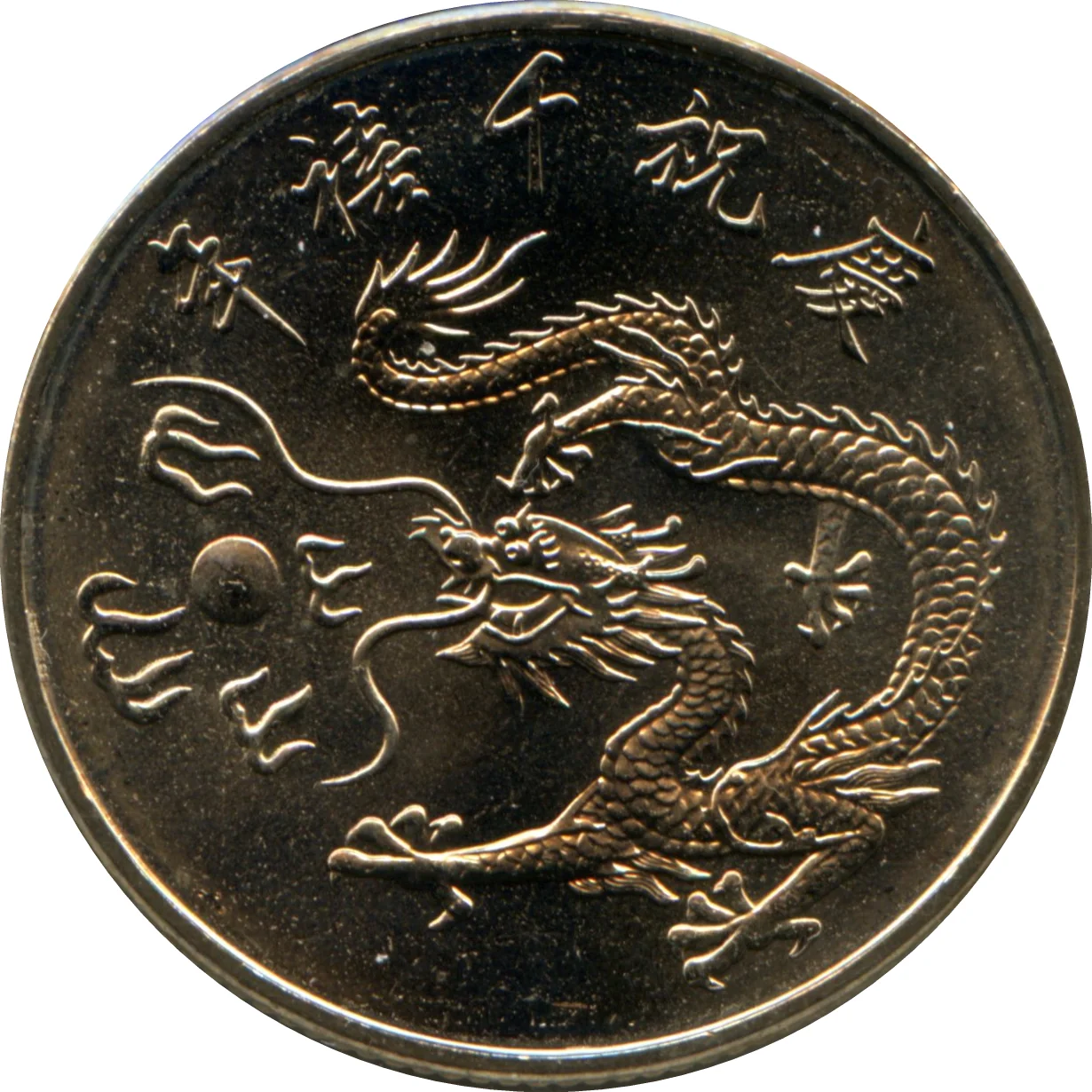
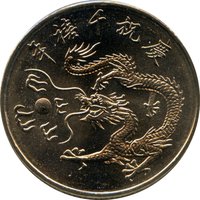
Description:
Mythical fire-breathing reptile.
Inscription:
慶祝千禧年
Translation:
Celebrate the Millennium
Language: Chinese
Edge
Reeded
Categories
| Mythology> Fantastic animal |
| Astrology> Chinese calendar |
| Event> Millennium |
Mints
| Name | Mark |
|---|---|
| Central Mint of Taiwan | — |
Mintings
| Year | Mint Mark | Mintage | Quality | Collection |
|---|---|---|---|---|
| 2000 | — | 50,675,000 |
Historical background
In the year 2000, Taiwan's currency, the New Taiwan Dollar (NTD or TWD), operated within a managed float system overseen by the Central Bank of the Republic of China (Taiwan). The primary macroeconomic context was one of recovery and adjustment following the 1997 Asian Financial Crisis. While Taiwan had weathered that storm better than many regional neighbors due to its strong foreign exchange reserves and lower short-term foreign debt, the crisis period had seen significant pressure on the NTD, leading the central bank to intervene heavily to stabilize its value. By 2000, the immediate turmoil had subsided, but the economy was transitioning amidst a global technology boom, with Taiwan's crucial semiconductor and electronics export sectors driving growth.
Politically, the year marked a significant milestone with the election of Chen Shui-bian from the Democratic Progressive Party (DPP) in March, ending over five decades of Kuomintang (KMT) administration. This first peaceful transfer of power created initial uncertainty in financial markets, including brief volatility in the currency and stock markets, as investors assessed potential policy shifts. However, the central bank, under Governor Perng Fai-nan, maintained its consistent and conservative approach, prioritizing exchange rate stability and controlling inflation. The NTD traded in a relatively stable range, averaging around 30.5 to 31.5 against the US dollar for much of the year, as the monetary authority aimed to support export competitiveness without triggering destabilizing capital flows.
The broader currency "situation" was thus characterized by cautious management amid dual forces: a robust export-led economic rebound and evolving political dynamics. The central bank's interventions in the forex market were routine, aimed at smoothing excessive fluctuations rather than targeting a fixed rate. There were no major currency crises in 2000; instead, the focus was on maintaining stability to facilitate Taiwan's deepening integration into global supply chains, particularly in information technology. The stability of the NTD during this period of political transition underscored the institutional strength and technocratic independence of Taiwan's monetary authorities.
Politically, the year marked a significant milestone with the election of Chen Shui-bian from the Democratic Progressive Party (DPP) in March, ending over five decades of Kuomintang (KMT) administration. This first peaceful transfer of power created initial uncertainty in financial markets, including brief volatility in the currency and stock markets, as investors assessed potential policy shifts. However, the central bank, under Governor Perng Fai-nan, maintained its consistent and conservative approach, prioritizing exchange rate stability and controlling inflation. The NTD traded in a relatively stable range, averaging around 30.5 to 31.5 against the US dollar for much of the year, as the monetary authority aimed to support export competitiveness without triggering destabilizing capital flows.
The broader currency "situation" was thus characterized by cautious management amid dual forces: a robust export-led economic rebound and evolving political dynamics. The central bank's interventions in the forex market were routine, aimed at smoothing excessive fluctuations rather than targeting a fixed rate. There were no major currency crises in 2000; instead, the focus was on maintaining stability to facilitate Taiwan's deepening integration into global supply chains, particularly in information technology. The stability of the NTD during this period of political transition underscored the institutional strength and technocratic independence of Taiwan's monetary authorities.
🌱 Common