

1 Jiao – Kwangtung Province
China
Context
Year: 1929
Chinese republican Year: 18
Country: China 
Issuer: Kwangtung Province
Period:
(1912—1949)
Currency:
(1900—1949)
Demonetized: Yes
Total mintage: 48,960,000
Material
References
Y: #Click to copy to clipboard425
Numista: #26648
Value
Bullion value: $5.44
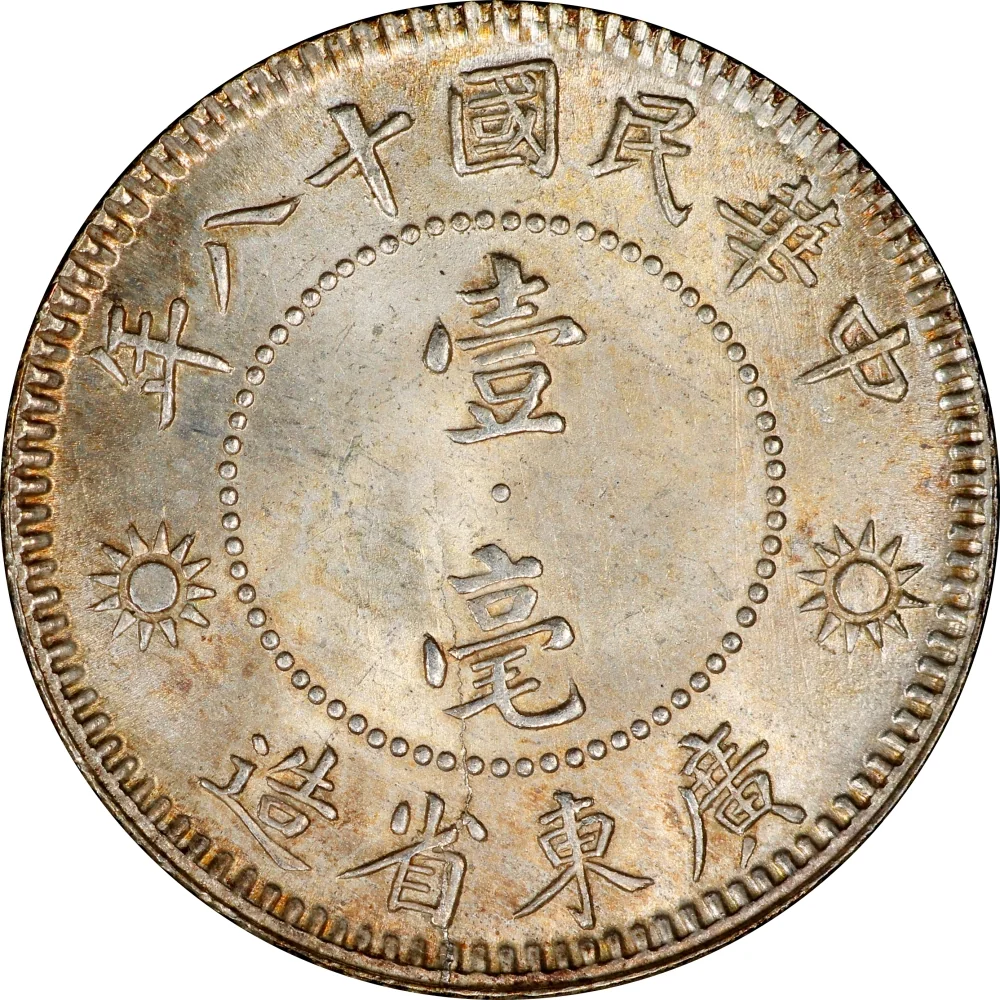
Obverse
Description:
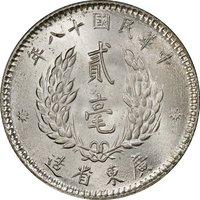
Two Chinese characters among many.
Inscription:
年八十國民華中
壹
毫
造省東廣
壹
毫
造省東廣
Translation:
EIGHTIETH YEAR OF THE REPUBLIC OF CHINA
KWANGTUNG PROVINCE
ONE
MACE
KWANGTUNG PROVINCE
ONE
MACE
Language: Chinese
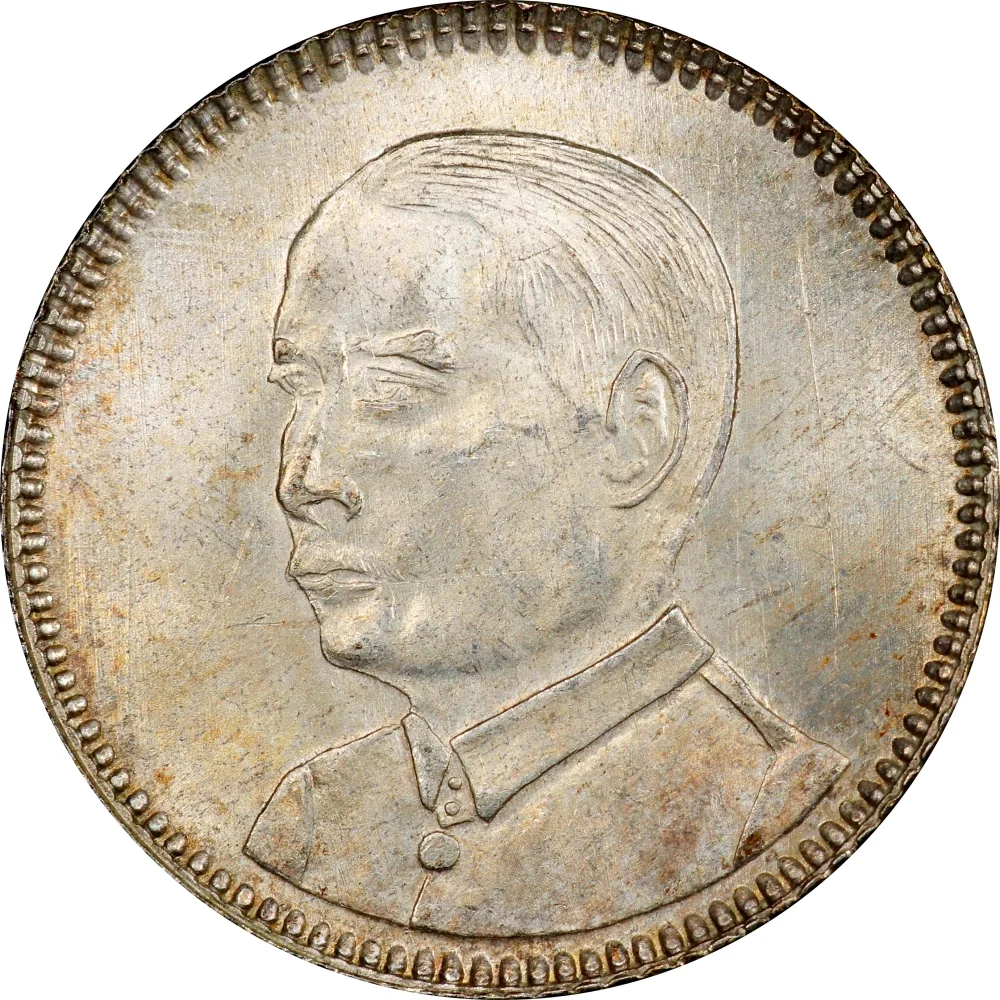
Reverse
Description:
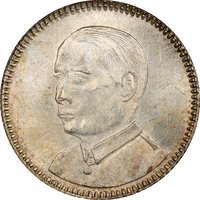
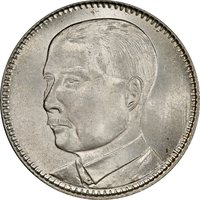
Sun Yat-sen bust in left-facing profile on a blank field with denticled border.
Edge
Reeded.
Categories
| Person> Politician |
| Mustache/Beard |
Mintings
| Year | Mint Mark | Mintage | Quality | Collection |
|---|---|---|---|---|
| 1929 | — | 48,960,000 |
Historical background
In 1929, Kwangtung (Guangdong) Province was embroiled in a complex and chaotic currency situation, a direct legacy of the warlord era and the incomplete unification under the Nanjing government. The provincial economy was saturated with a bewildering variety of circulating media. These included the national currency (fabi) issued by the Central Bank of China, the older "Guangdong dollars" or "Great Foreign Currency" issued by the former Provincial Bank, and a massive quantity of "Small Foreign Currency" – low-denomination banknotes and subsidiary coinage that were heavily discounted and prone to counterfeiting. This fragmentation created severe exchange rate confusion and hindered trade.
The core of the instability lay with the Kwangtung Provincial Bank, which had been re-established by the powerful provincial governor, Chen Jitang, who ruled the region with significant autonomy. While nominally under the Nanjing government, Chen used the provincial bank to finance his military and industrial projects, issuing unbacked paper currency to cover deficits. This led to persistent inflation and a sharp divergence between the value of local notes and the national currency. The situation was exacerbated by the widespread circulation of Hong Kong dollars and Mexican silver dollars in the Pearl River Delta, which were often preferred for large transactions due to their perceived stability compared to the depreciating local paper.
Consequently, the province suffered from a classic "bad money drives out good" dynamic, where hoarding of silver and stable currencies was common. Merchants and the public faced daily uncertainty, and exchange shops profited from the complex arbitrage. This monetary disarray was a key indicator of the limited reach of central financial authority in 1929 and reflected the ongoing struggle between Chiang Kai-shek's Nanjing government and semi-independent regional powers like Chen Jitang, for whom control over currency was a fundamental tool of political and economic power.
The core of the instability lay with the Kwangtung Provincial Bank, which had been re-established by the powerful provincial governor, Chen Jitang, who ruled the region with significant autonomy. While nominally under the Nanjing government, Chen used the provincial bank to finance his military and industrial projects, issuing unbacked paper currency to cover deficits. This led to persistent inflation and a sharp divergence between the value of local notes and the national currency. The situation was exacerbated by the widespread circulation of Hong Kong dollars and Mexican silver dollars in the Pearl River Delta, which were often preferred for large transactions due to their perceived stability compared to the depreciating local paper.
Consequently, the province suffered from a classic "bad money drives out good" dynamic, where hoarding of silver and stable currencies was common. Merchants and the public faced daily uncertainty, and exchange shops profited from the complex arbitrage. This monetary disarray was a key indicator of the limited reach of central financial authority in 1929 and reflected the ongoing struggle between Chiang Kai-shek's Nanjing government and semi-independent regional powers like Chen Jitang, for whom control over currency was a fundamental tool of political and economic power.
⭐ Somewhat Rare