

5 sen – Japan
Add to wishlist
Japan
Context
Material
Diameter: 20.6 mm
Weight: 4.67 g
Thickness: 1.5 mm
Shape: Round
Composition: Copper-nickel
Technique: Milled
Alignment: Coin alignment
flip
References
Y: #
Numista: #13951
Value
Exchange value: 0.05 JPY
Obverse
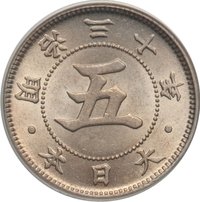
Description:
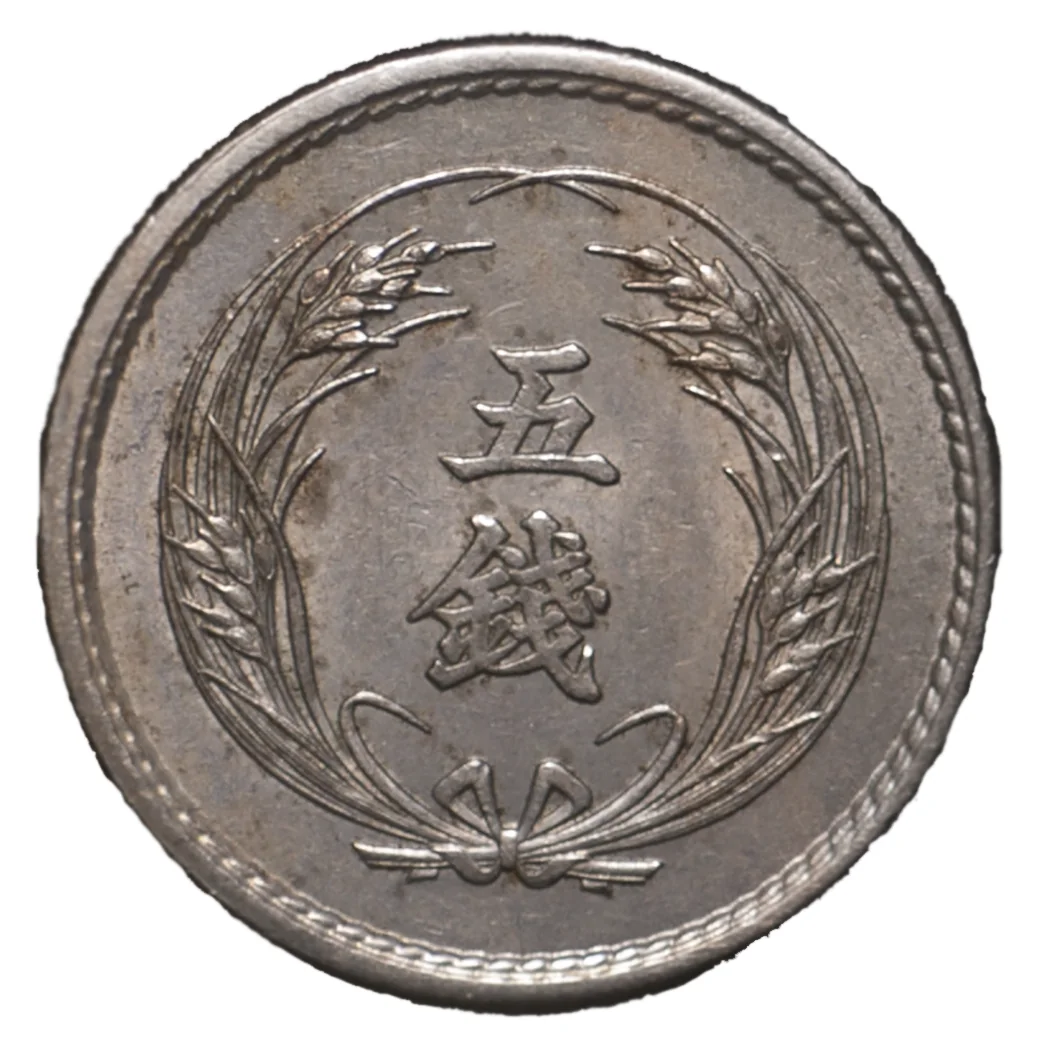
Rice wreath offering
Inscription:
五
錢
錢
Translation:
Five Cash
Language: Classical Chinese
Reverse
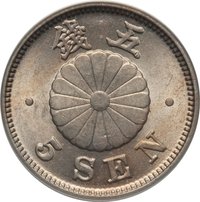
Description:
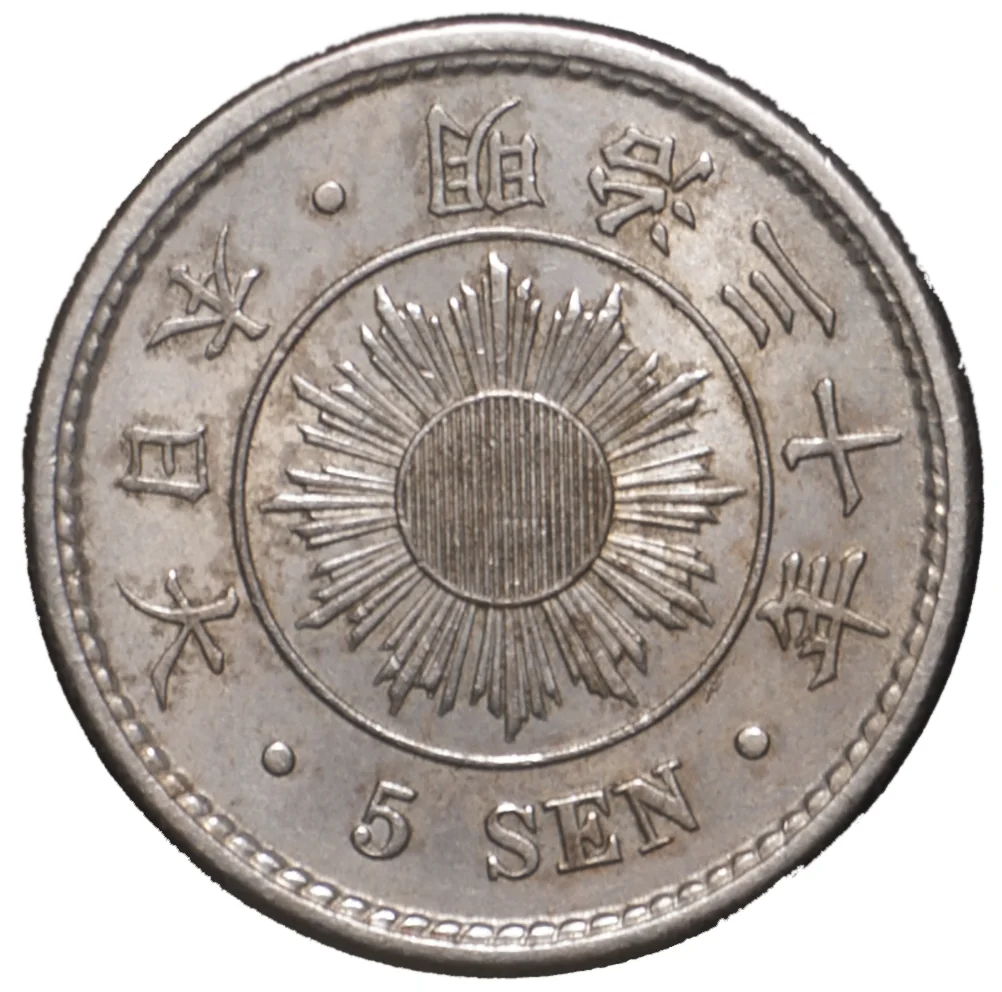
Sun in beaded circle, legends surround.
Inscription:
年一十三治明 · 本日大 ·
· 5 SEN ·
· 5 SEN ·
Translation:
Thirteen years of Meiji reign; Large 1;
5 Sen.
5 Sen.
Language: Japanese
Edge
Plain
Mints
| Name | Mark |
|---|---|
| Japan Mint | — |
Mintings
| Year | Mint Mark | Mintage | Quality | Collection |
|---|---|---|---|---|
| 1897 | — | 4,167,020 | ||
| 1898 | — | 18,197,271 | ||
| 1899 | — | 10,658,052 | ||
| 1900 | — | 2,426,632 | ||
| 1901 | — | 7,124,824 | ||
| 1902 | — | 2,448,544 | ||
| 1903 | — | 372,000 | ||
| 1904 | — | 1,628,000 | ||
| 1905 | — | 6,000,000 | ||
| 1909 | — | — |
Historical background
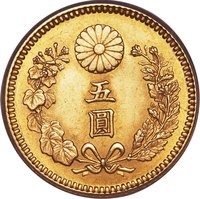
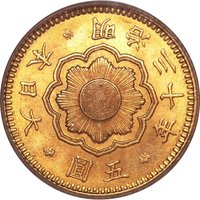
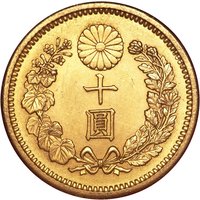
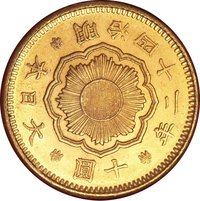
In 1897, Japan undertook a pivotal monetary reform by adopting the gold standard, a move that fundamentally reshaped its currency system and integrated its economy with the global financial order. This decision was driven by the pressing need to stabilize the yen, which had experienced significant depreciation following the Sino-Japanese War (1894-95), and to facilitate international trade and borrowing. The catalyst for the shift was the substantial indemnity of 230 million taels of silver paid by China under the Treaty of Shimonoseki, which Japan strategically converted into gold reserves, primarily through British financial markets, to establish the necessary bullion foundation.
The core of the 1897 Currency Act was the redefinition of the yen, pegging it at 0.75 grams of pure gold, which halved its gold value from the pre-war parity. This devaluation, while acknowledging the currency's weakened state, also aimed to boost export competitiveness. The silver yen coins, which had been the standard, were demoted to subsidiary currency, and new gold coins became the central unit of account. This transition effectively moved Japan away from the de facto silver standard that had subjected its currency to the volatile fluctuations of global silver prices, a instability exacerbated by the collapse of silver values in the 1890s.
The successful adoption of the gold standard in 1897 marked Japan's emergence as a modern financial power, enhancing its creditworthiness and attracting foreign capital crucial for its ongoing industrialization and military expansion. It locked the yen into a stable exchange rate regime with major Western powers, streamlining trade and investment flows. This reform, therefore, was not merely a financial technicality but a strategic geopolitical act, signaling Japan's determination to be recognized as an equal member of the imperialist world order and providing the monetary stability for its subsequent rapid economic growth and imperial ambitions in the early 20th century.
The core of the 1897 Currency Act was the redefinition of the yen, pegging it at 0.75 grams of pure gold, which halved its gold value from the pre-war parity. This devaluation, while acknowledging the currency's weakened state, also aimed to boost export competitiveness. The silver yen coins, which had been the standard, were demoted to subsidiary currency, and new gold coins became the central unit of account. This transition effectively moved Japan away from the de facto silver standard that had subjected its currency to the volatile fluctuations of global silver prices, a instability exacerbated by the collapse of silver values in the 1890s.
The successful adoption of the gold standard in 1897 marked Japan's emergence as a modern financial power, enhancing its creditworthiness and attracting foreign capital crucial for its ongoing industrialization and military expansion. It locked the yen into a stable exchange rate regime with major Western powers, streamlining trade and investment flows. This reform, therefore, was not merely a financial technicality but a strategic geopolitical act, signaling Japan's determination to be recognized as an equal member of the imperialist world order and providing the monetary stability for its subsequent rapid economic growth and imperial ambitions in the early 20th century.
Series: 1897 Japan circulation coins
🌱 Common