

500 Yen (Local Autonomy Law) – Japan
Circulating commemorative coins
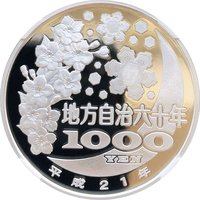
Commemoration: 60th anniversary of Local Autonomy Law
Japan
Context
Year: 2009
Japanese - Heisei era Year: 21
Issuer: Japan 
Ruler: Heisei
Currency:
(since 1871)
Total mintage: 1,830,000
Material
Diameter: 26.5 mm
Weight: 7.1 g
Thickness: 1.8 mm
Shape: Round
Techniques: Latent image, Milled
Alignment: Medal alignment
flip
References
Y: #Click to copy to clipboard147
Numista: #13740
Value
Exchange value: 500 JPY = $3.20
Inflation-adjusted value: 561.78 JPY
Obverse
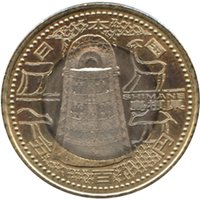
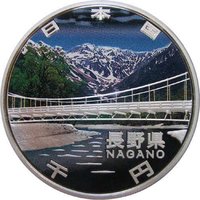
Description:
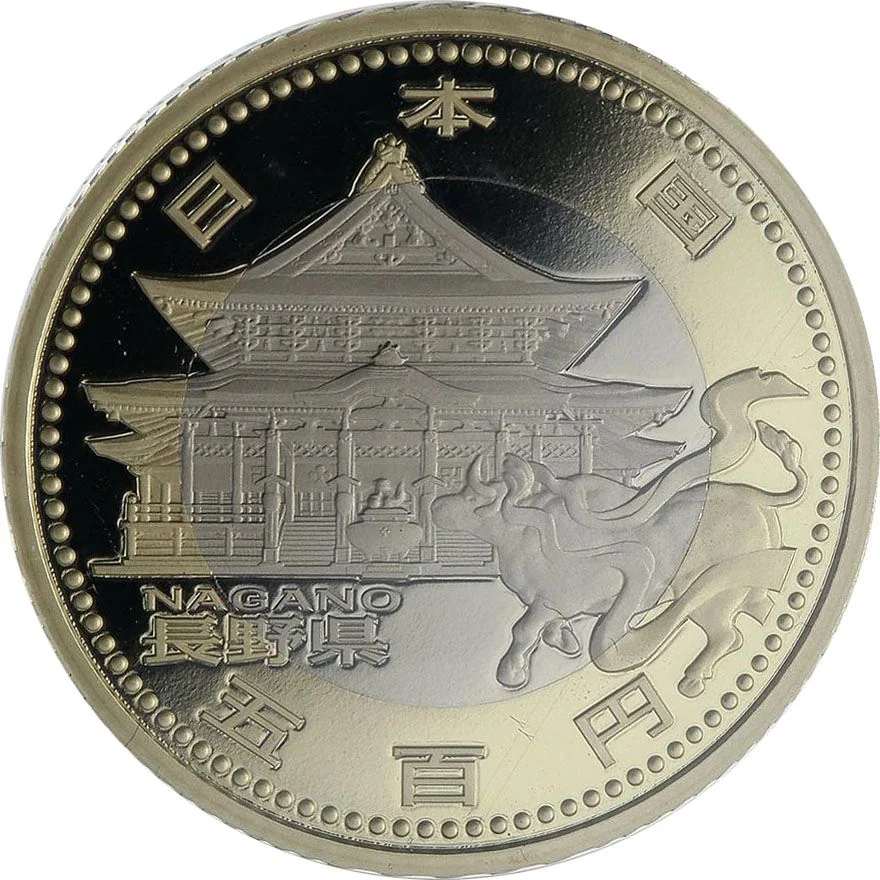
Zenkoji Temple's sacred ox, a manifestation of Kannon.
Inscription:
日 本 国
NAGANO
長野県
五 百 円
NAGANO
長野県
五 百 円
Translation:
JAPAN
NAGANO
500 YEN
NAGANO
500 YEN
Language: Japanese
Reverse
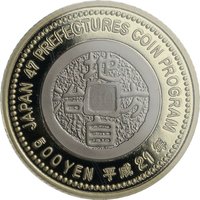
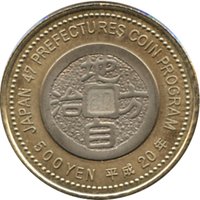
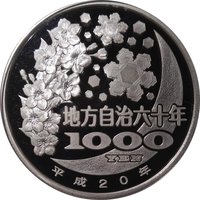
Description:
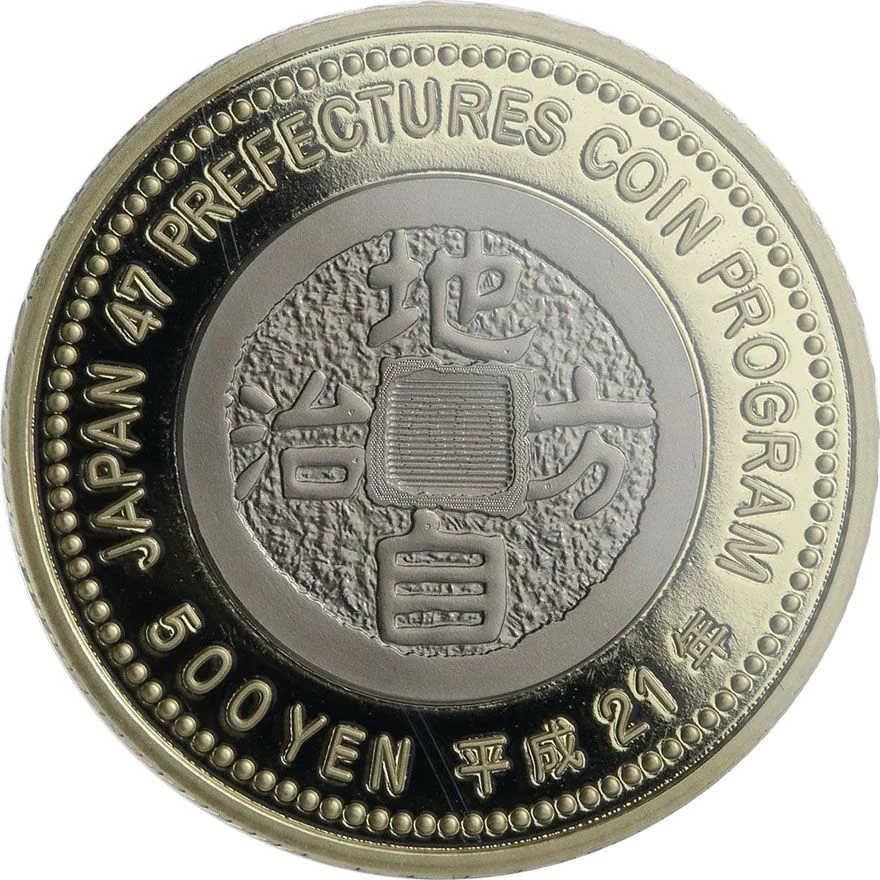
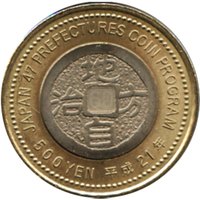
Old coin: Mon symbol with latent images in square hole, encircled by legends.
Inscription:
JAPAN 47 PREFECTURES COIN PROGRAM
地
方(47/60)自
治
500 YEN 平成 21 年
地
方(47/60)自
治
500 YEN 平成 21 年
Translation:
Japan 47 Prefectures Coin Program
Local (47/60) Autonomy
500 Yen, Heisei 21 Year
Local (47/60) Autonomy
500 Yen, Heisei 21 Year
Language: Japanese
Edge
Slanted reeding with two different pitches
Categories
| Building> Religious building |
| Currency> Coin depiction |
| Animal> Cow |
Mints
| Name | Mark |
|---|---|
| Japan Mint | — |
Mintings
| Year | Mint Mark | Mintage | Quality | Collection |
|---|---|---|---|---|
| 2009 | — | 1,800,000 | ||
| 2009 | — | 30,000 | Proof |
Historical background
In 2009, Japan was grappling with the severe aftermath of the global financial crisis, which had triggered a sharp appreciation of the yen as a "safe-haven" currency. The yen's surge, reaching a 13-year high against the dollar in late 2008, severely damaged the country's export-dependent economy. Major corporations like Toyota and Sony faced plummeting overseas profits, leading to historic losses and widespread job cuts. This created a deflationary trap, where falling prices and a strong currency discouraged spending and investment, threatening to deepen a recession that was already one of the worst among advanced economies.
The government and the Bank of Japan (BOJ) responded with aggressive but largely conventional measures. The BOJ had already cut its benchmark interest rate to 0.1% in late 2008, leaving little room for traditional monetary easing. In 2009, it focused on quantitative easing (QE) policies, such as purchasing commercial paper and corporate bonds to provide liquidity and stabilize financial markets. However, these actions were perceived as insufficient to halt the yen's climb or decisively combat deflation. Public debt, already the highest in the industrialized world, constrained fiscal policy, even as the new Democratic Party of Japan government launched stimulus packages.
This period set the critical stage for the more radical monetary experiments that would follow in the next decade. The persistent strength of the yen, entrenched deflation, and the limited impact of existing tools in 2009 highlighted the perceived need for a dramatic shift in policy. The experiences of this year directly paved the way for the "Abenomics" program in 2012, which would introduce unprecedented levels of monetary easing under BOJ Governor Haruhiko Kuroda, explicitly targeting a weaker yen and 2% inflation to break Japan's long-standing economic stagnation.
The government and the Bank of Japan (BOJ) responded with aggressive but largely conventional measures. The BOJ had already cut its benchmark interest rate to 0.1% in late 2008, leaving little room for traditional monetary easing. In 2009, it focused on quantitative easing (QE) policies, such as purchasing commercial paper and corporate bonds to provide liquidity and stabilize financial markets. However, these actions were perceived as insufficient to halt the yen's climb or decisively combat deflation. Public debt, already the highest in the industrialized world, constrained fiscal policy, even as the new Democratic Party of Japan government launched stimulus packages.
This period set the critical stage for the more radical monetary experiments that would follow in the next decade. The persistent strength of the yen, entrenched deflation, and the limited impact of existing tools in 2009 highlighted the perceived need for a dramatic shift in policy. The experiences of this year directly paved the way for the "Abenomics" program in 2012, which would introduce unprecedented levels of monetary easing under BOJ Governor Haruhiko Kuroda, explicitly targeting a weaker yen and 2% inflation to break Japan's long-standing economic stagnation.
🌟 Uncommon