

40 para – Ottoman Empire
Add to wishlist
Turkey
Context
Years: 1855–1861
Islamic (Hijri) Year:: 1255
Country: Turkey
Issuer: Ottoman Empire
Ruler: Abdulmejid I
Currency:
(1844—1923)
Demonetized: Yes
Total mintage: 44,170,000
Material
References
KM: #
Numista: #10137
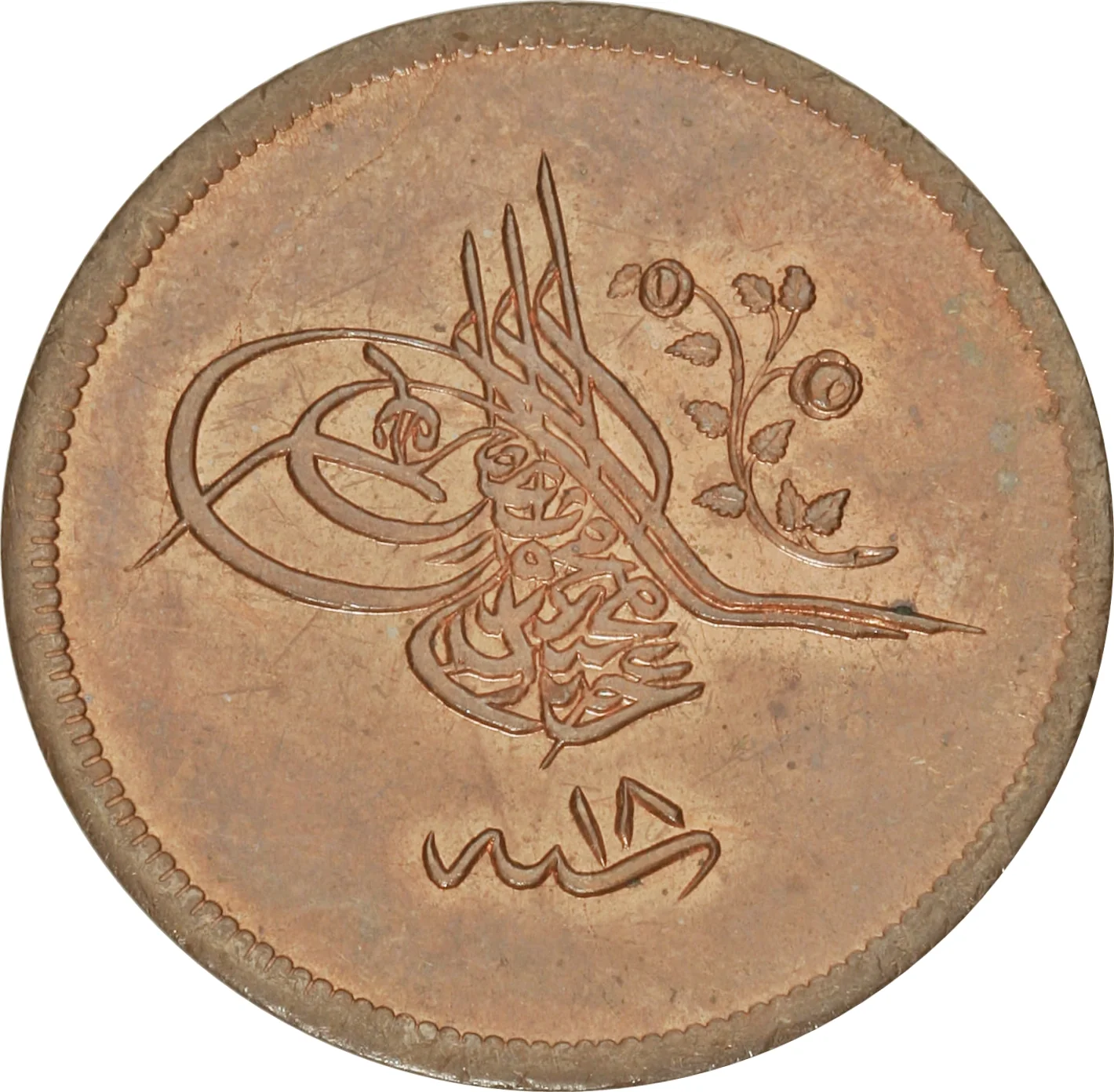
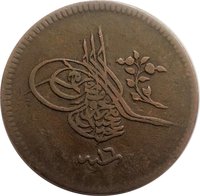
Obverse
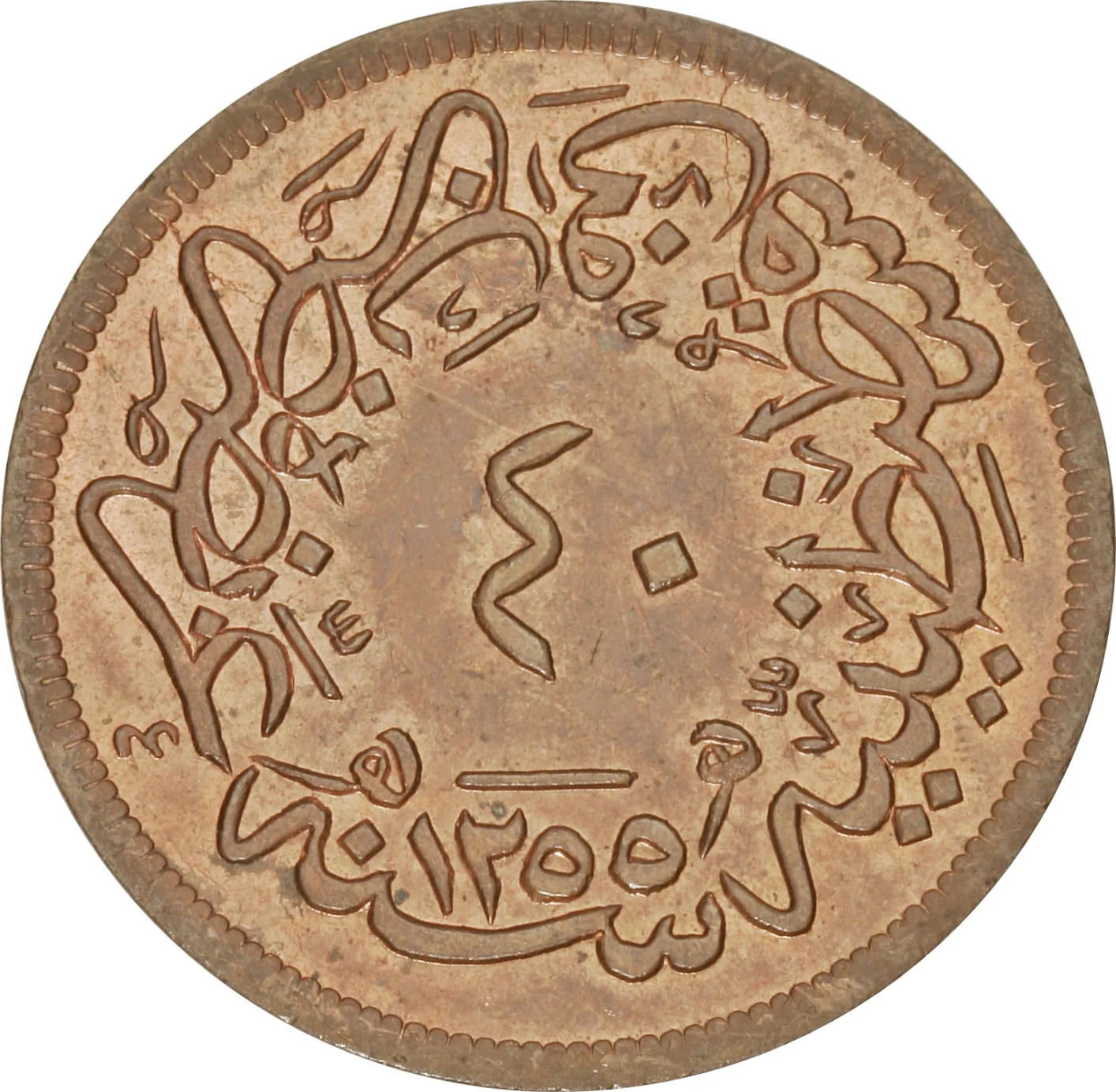
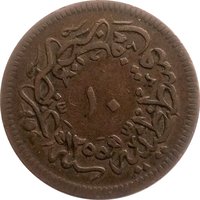
Reverse
Edge
Plain
Mints
| Name | Mark |
|---|---|
| Constantinople | — |
Mintings
| Year | Mint Mark | Mintage | Quality | Collection |
|---|---|---|---|---|
| 1855 | — | 1,450,000 | ||
| 1856 | — | 3,950,000 | ||
| 1857 | — | 11,300,000 | ||
| 1858 | — | 14,030,000 | ||
| 1859 | — | 9,300,000 | ||
| 1860 | — | 4,140,000 | ||
| 1861 | — | — |
Historical background
By 1855, the Ottoman Empire's currency system was in a state of profound crisis, exacerbated by the immense financial strain of the Crimean War (1853-1856). The empire had long operated on a bimetallic system of gold altın and silver kuruş, but chronic budget deficits led to severe debasement. The government repeatedly reduced the silver content of the kuruş to finance its expenditures, creating a wide and unstable gap between the face value of coins and their intrinsic metallic worth. This practice eroded public trust and caused rampant inflation, severely disrupting both domestic trade and international commerce.
The war effort against Russia pushed the fragile financial structure to its breaking point. The need to pay and supply a large modern army, coupled with the loss of traditional revenue streams, forced the Ottoman state to seek its first major external loans from European allies, notably Britain and France, in 1854 and 1855. These loans, while providing immediate relief, came with stringent conditions and marked the beginning of the Ottoman Empire's descent into a debt trap that would culminate in state bankruptcy two decades later. The influx of foreign capital also intensified the circulation of various European gold coins alongside devalued Ottoman issues, further complicating the monetary landscape.
Consequently, the currency situation in 1855 was characterized by a chaotic multiplicity of coins with fluctuating values, a collapsing standard of value, and a state treasury dependent on unsustainable foreign borrowing. This instability set the stage for the major monetary reforms that would follow the war, most notably the introduction of the gold-based Ottoman Lira (Lira-ı Osmani) in 1844, but its full implementation and acceptance remained a struggle well beyond 1855 due to the entrenched legacy of debasement and the lack of fiscal discipline. The period thus represents a pivotal moment where wartime exigencies laid bare the systemic weaknesses of Ottoman finance.
The war effort against Russia pushed the fragile financial structure to its breaking point. The need to pay and supply a large modern army, coupled with the loss of traditional revenue streams, forced the Ottoman state to seek its first major external loans from European allies, notably Britain and France, in 1854 and 1855. These loans, while providing immediate relief, came with stringent conditions and marked the beginning of the Ottoman Empire's descent into a debt trap that would culminate in state bankruptcy two decades later. The influx of foreign capital also intensified the circulation of various European gold coins alongside devalued Ottoman issues, further complicating the monetary landscape.
Consequently, the currency situation in 1855 was characterized by a chaotic multiplicity of coins with fluctuating values, a collapsing standard of value, and a state treasury dependent on unsustainable foreign borrowing. This instability set the stage for the major monetary reforms that would follow the war, most notably the introduction of the gold-based Ottoman Lira (Lira-ı Osmani) in 1844, but its full implementation and acceptance remained a struggle well beyond 1855 due to the entrenched legacy of debasement and the lack of fiscal discipline. The period thus represents a pivotal moment where wartime exigencies laid bare the systemic weaknesses of Ottoman finance.
🌱 Common