

10 para – Ottoman Empire
Add to wishlist
Turkey
Context
Years: 1853–1859
Islamic (Hijri) Year:: 1255
Country: Turkey
Issuer: Ottoman Empire
Ruler: Abdulmejid I
Currency:
(1844—1923)
Demonetized: Yes
Total mintage: 82,780,000
Material
Diameter: 27.3 mm
Weight: 7.93 g
Thickness: 1.6 mm
Shape: Round
Composition: Copper
Standard: Silver quarter ounce
Magnetic: No
Alignment: Medal alignment
flip
References
KM: #
Numista: #19337
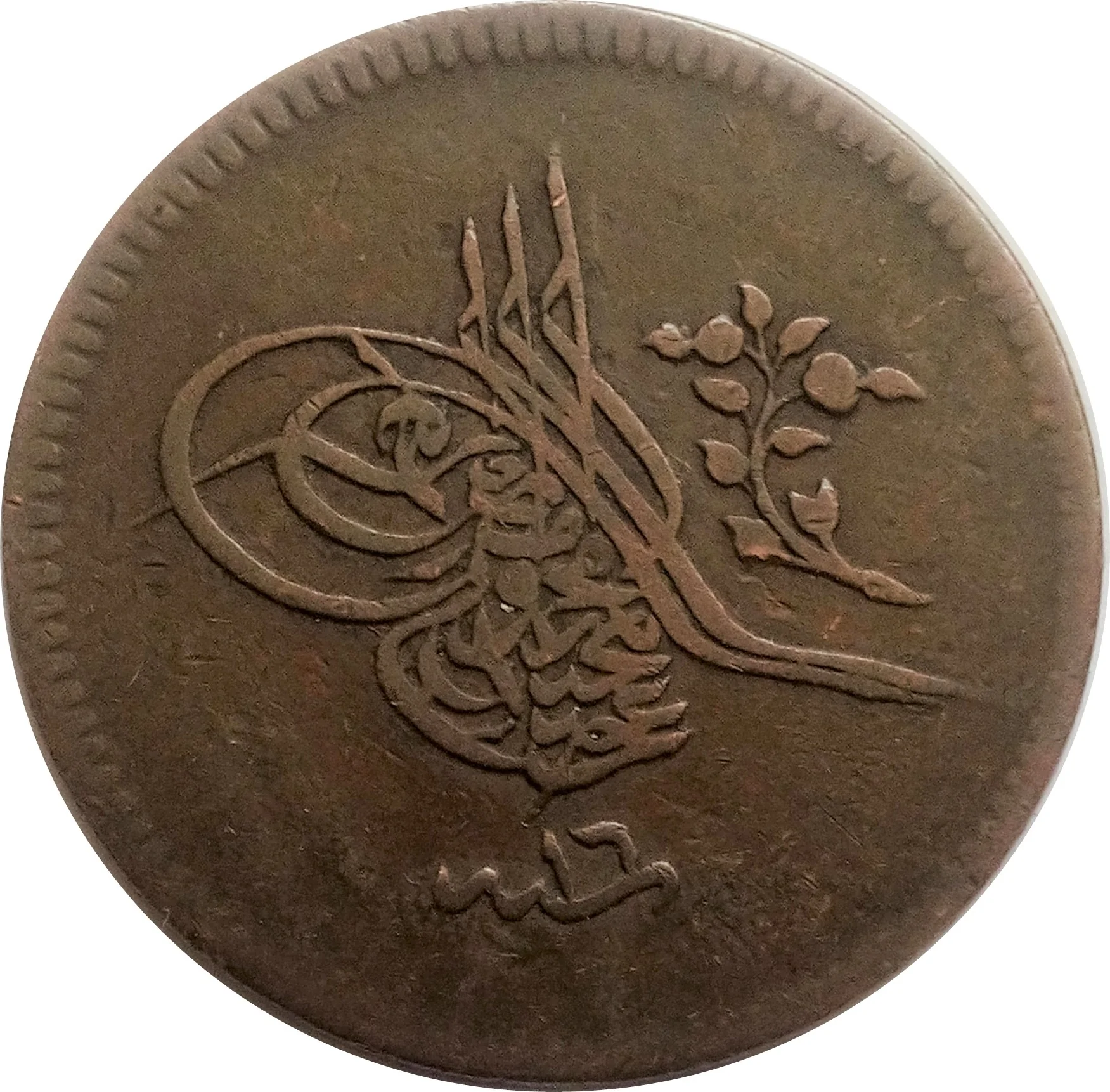
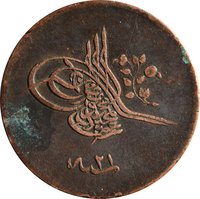
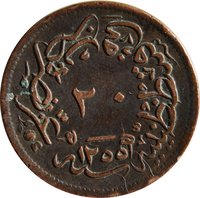
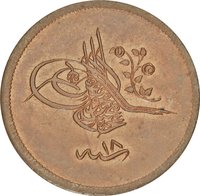
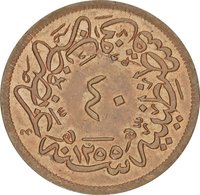
Obverse
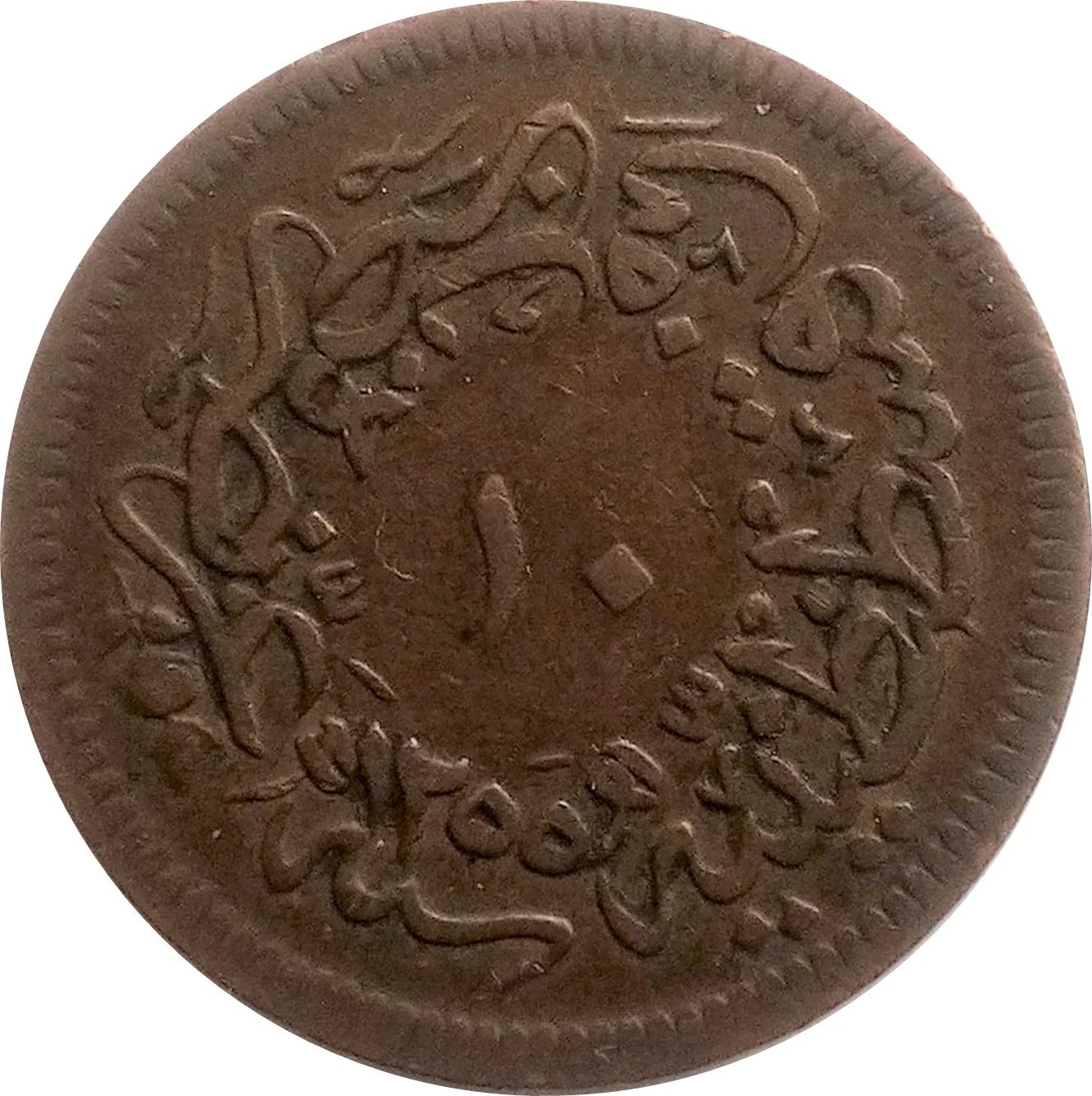
Reverse
Edge
Plain
Mints
| Name | Mark |
|---|---|
| Constantinople | — |
Mintings
| Year | Mint Mark | Mintage | Quality | Collection |
|---|---|---|---|---|
| 1853 | — | 750,000 | ||
| 1854 | — | 9,120,000 | ||
| 1855 | — | 9,110,000 | ||
| 1856 | — | 1,900,000 | ||
| 1857 | ١٩ | — | ||
| 1857 | — | 33,600,000 | ||
| 1858 | — | 20,800,000 | ||
| 1859 | — | 7,500,000 |
Historical background
By 1853, the Ottoman Empire's monetary system was a complex and fragile patchwork, reflecting both its long economic decline and its deepening integration into the European-dominated global economy. The primary unit was the kuruş (piastre), a silver coin, but the state treasury operated on the gold lira. This bimetallic system was chronically unstable due to fluctuating global prices of silver and gold, leading to frequent discrepancies between the two standards. Furthermore, decades of budget deficits to finance military and administrative costs had forced the state to repeatedly debase the silver kuruş, reducing its precious metal content to generate short-term revenue. This practice eroded public trust in the coinage and fueled inflation, as the nominal value of coins increasingly diverged from their intrinsic metal worth.
Compounding this internal weakness was the overwhelming circulation of foreign currencies, particularly in major port cities and trade centers. European gold coins like the British sovereign, French franc, and Austrian thaler were widely used for large transactions and international trade, often holding more trust than Ottoman issues. Most significantly, the Spanish/Mexican silver dollar (and its Ottoman imitation, the riyal guruş) served as a dominant trade currency in the Eastern Mediterranean. This de facto "dollarization" undermined Ottoman monetary sovereignty, as the state had little control over the supply and value of the most reliable currencies in its own economy. The Ottoman Bank, established in 1856 but anticipated in financial reforms, was not yet in existence, so the empire lacked a central institution to regulate currency or provide stability.
This precarious monetary environment formed a critical backdrop to the political and military crisis of 1853, which would erupt into the Crimean War. The Ottoman state's financial frailty limited its capacity to modernize its military and administer its provinces effectively, making it vulnerable to external pressure from Russia and dependent on support from Britain and France. The war itself would soon force the empire into its first major foreign debt in 1854, a step that would further surrender fiscal autonomy to European creditors. Thus, on the eve of conflict, the Ottoman currency system was not merely an economic issue but a stark indicator of imperial weakness and a key factor driving the empire toward increased financial dependency on European powers.
Compounding this internal weakness was the overwhelming circulation of foreign currencies, particularly in major port cities and trade centers. European gold coins like the British sovereign, French franc, and Austrian thaler were widely used for large transactions and international trade, often holding more trust than Ottoman issues. Most significantly, the Spanish/Mexican silver dollar (and its Ottoman imitation, the riyal guruş) served as a dominant trade currency in the Eastern Mediterranean. This de facto "dollarization" undermined Ottoman monetary sovereignty, as the state had little control over the supply and value of the most reliable currencies in its own economy. The Ottoman Bank, established in 1856 but anticipated in financial reforms, was not yet in existence, so the empire lacked a central institution to regulate currency or provide stability.
This precarious monetary environment formed a critical backdrop to the political and military crisis of 1853, which would erupt into the Crimean War. The Ottoman state's financial frailty limited its capacity to modernize its military and administer its provinces effectively, making it vulnerable to external pressure from Russia and dependent on support from Britain and France. The war itself would soon force the empire into its first major foreign debt in 1854, a step that would further surrender fiscal autonomy to European creditors. Thus, on the eve of conflict, the Ottoman currency system was not merely an economic issue but a stark indicator of imperial weakness and a key factor driving the empire toward increased financial dependency on European powers.
🌱 Common