

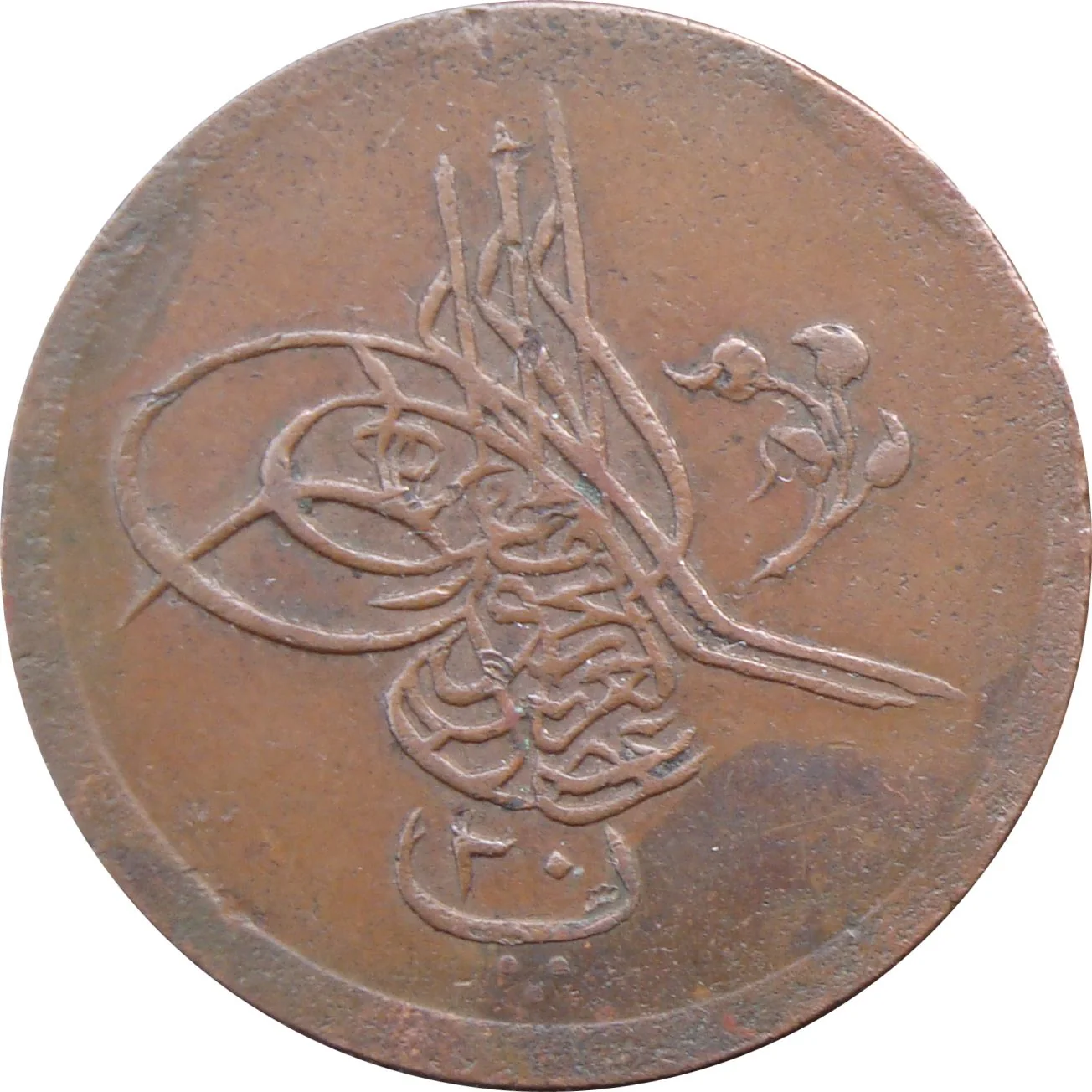
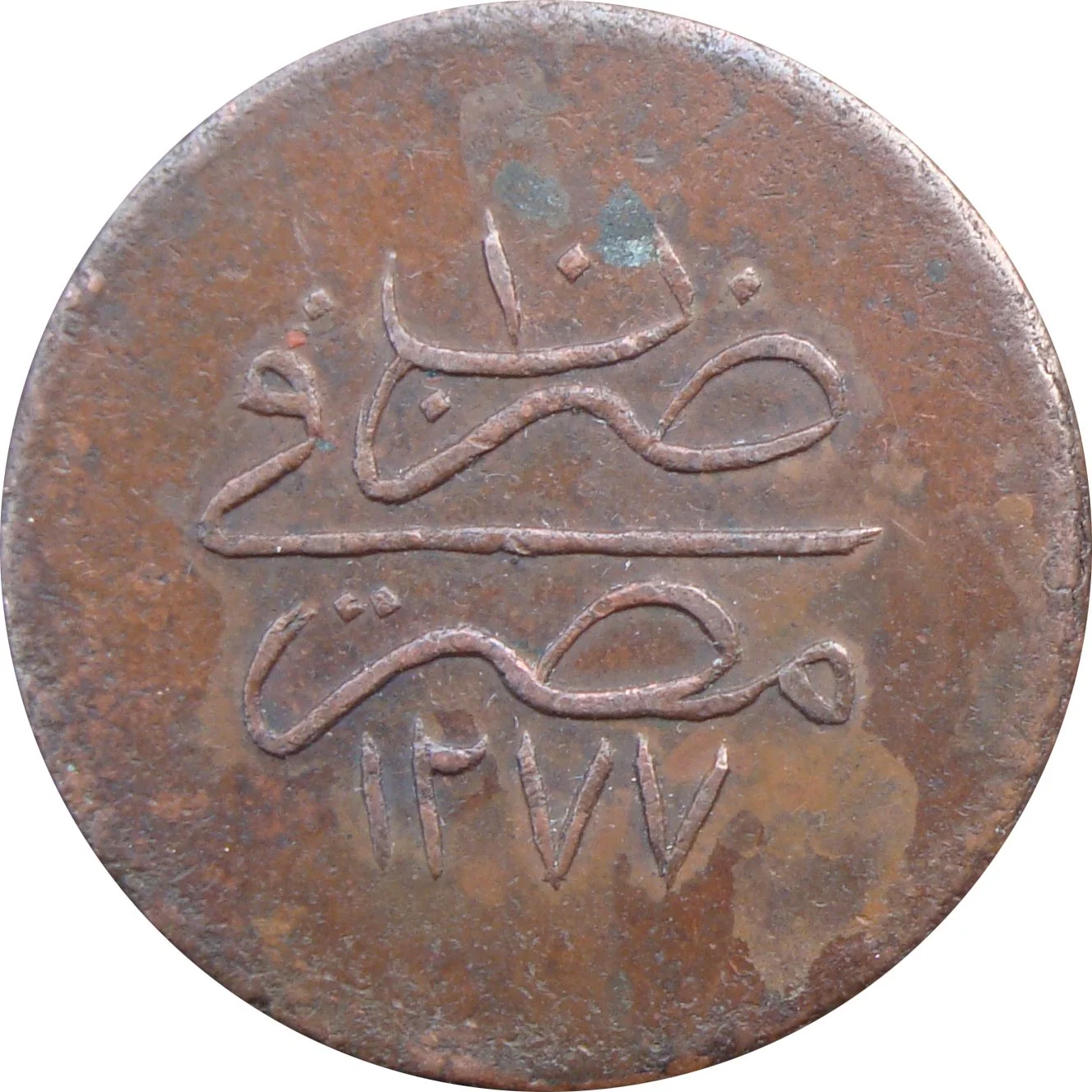
20 para – Egypt
Add to wishlist
Egypt
Context
Years: 1866–1870
Islamic (Hijri) Year:: 1277
Issuer: Egypt
Ruler: Abdülaziz
Currency:
(1834—1916)
Demonetized: Yes
Total mintage: 6,450,200
Material
References
KM: #
Numista: #6526
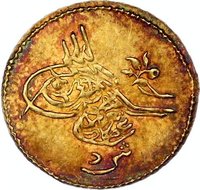
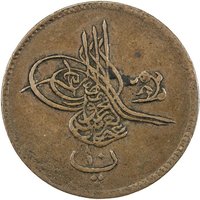
Obverse
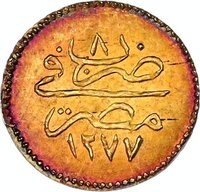
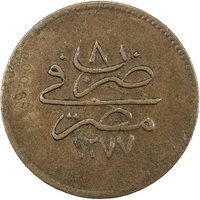
Reverse
Edge
Plain
Mintings
| Year | Mint Mark | Mintage | Quality | Collection |
|---|---|---|---|---|
| 1866 | — | — | ||
| 1867 | — | 2,395,000 | ||
| 1868 | — | 3,089,000 | ||
| 1869 | — | 966,000 | ||
| 1870 | — | 200 |
Historical background
In 1866, Egypt's currency situation was a complex and strained system, heavily burdened by the fiscal policies of the Khedivate under Isma'il Pasha. The official currency was the Egyptian pound (geneih), which was pegged to and theoretically equivalent to the British gold sovereign. However, the reality was a chaotic multi-currency environment. Alongside limited gold coinage, a plethora of silver and copper coins circulated, including Turkish piastres, Spanish dollars, and various European currencies, leading to confusing and fluctuating exchange rates in daily commerce. This monetary fragmentation reflected Egypt's deep integration into international trade and finance, but it also created significant administrative and economic inefficiencies.
The underlying pressure stemmed from Khedive Isma'il's ambitious modernisation and infrastructure projects, most notably the Suez Canal, which was nearing completion. These ventures were funded by massive loans from European creditors, leading to a rapid accumulation of sovereign debt. While not yet at the crisis point of the 1870s, the financial strain was already manifesting. The government increasingly resorted to issuing fiduciary paper money, known as qanun notes, to cover its expenses. These notes, while convenient for large transactions, were not fully trusted by the public and often traded at a discount to their face value in gold, revealing early cracks in state credit.
Consequently, the currency situation of 1866 was one of transition and underlying vulnerability. Egypt was attempting to operate a modern gold-standard currency while grappling with pre-monetary diversity and the fiscal demands of a developmental state. The reliance on paper currency and foreign borrowing to bridge the gap between monetary theory and fiscal reality set a dangerous precedent, placing the Egyptian pound under indirect but growing pressure from European bondholders. This period laid the groundwork for the severe debt crisis and eventual European financial control that would define the following decade.
The underlying pressure stemmed from Khedive Isma'il's ambitious modernisation and infrastructure projects, most notably the Suez Canal, which was nearing completion. These ventures were funded by massive loans from European creditors, leading to a rapid accumulation of sovereign debt. While not yet at the crisis point of the 1870s, the financial strain was already manifesting. The government increasingly resorted to issuing fiduciary paper money, known as qanun notes, to cover its expenses. These notes, while convenient for large transactions, were not fully trusted by the public and often traded at a discount to their face value in gold, revealing early cracks in state credit.
Consequently, the currency situation of 1866 was one of transition and underlying vulnerability. Egypt was attempting to operate a modern gold-standard currency while grappling with pre-monetary diversity and the fiscal demands of a developmental state. The reliance on paper currency and foreign borrowing to bridge the gap between monetary theory and fiscal reality set a dangerous precedent, placing the Egyptian pound under indirect but growing pressure from European bondholders. This period laid the groundwork for the severe debt crisis and eventual European financial control that would define the following decade.
🌟 Uncommon