

5 qirsh – Egypt
Add to wishlist
Egypt
Context
Years: 1862–1874
Islamic (Hijri) Year:: 1277
Issuer: Egypt
Ruler: Abdülaziz
Currency:
(1834—1916)
Demonetized: Yes
Material
References
KM: #
Numista: #15232
Value
Bullion value: $51.32
Obverse
Description:
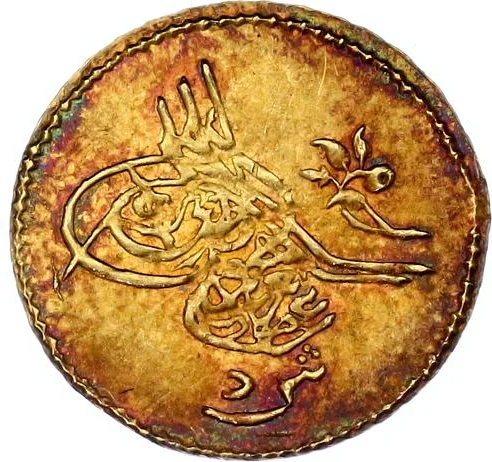
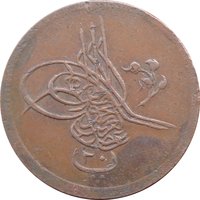
Tughra and floral right. Value below.
Script: Arabic
Reverse
Description:
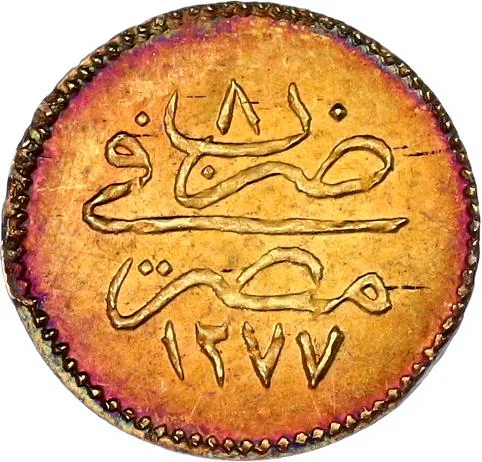
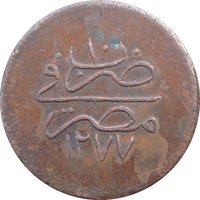
Reign Year Mint Accession Year
Script: Arabic
Edge
Mintings
| Year | Mint Mark | Mintage | Quality | Collection |
|---|---|---|---|---|
| 1862 | — | — | ||
| 1863 | — | — | ||
| 1864 | — | — | ||
| 1865 | — | — | ||
| 1866 | — | — | ||
| 1867 | — | — | ||
| 1868 | — | — | ||
| 1869 | — | — | ||
| 1870 | — | — | ||
| 1871 | — | — | ||
| 1872 | — | — | ||
| 1873 | — | — | ||
| 1874 | — | — |
Historical background
In 1862, Egypt's currency situation was characterized by a complex and unstable dual system, heavily influenced by the fiscal policies of the Khedivate under Said Pasha and his successor, Ismail Pasha, who ascended to power in 1863. The official currency was the Egyptian pound (guinée), which was pegged to both gold and silver bimetallically, but in practice, the economy relied heavily on a chaotic circulation of foreign coins, particularly the Austrian Maria Theresa thaler and the Spanish dollar (piastre). This created significant exchange rate volatility and hampered domestic trade, as the value of these myriad coins fluctuated against the government's stated parity.
The root of this monetary disorder lay in decades of deficit spending by the Egyptian state, which financed ambitious modernization projects and its growing autonomy within the Ottoman Empire through foreign loans. To meet immediate obligations, the government frequently resorted to debasing the copper and silver coinage used in everyday transactions, leading to a severe loss of public confidence. Consequently, foreign merchants and banks operating in Egypt insisted on transactions in stable foreign specie, further entrenching the dual system and draining precious metal reserves from the local economy.
This precarious financial environment set the stage for the profound reforms that would follow under Khedive Ismail. The currency chaos of 1862 was a clear symptom of the deeper fiscal mismanagement that would culminate in the construction of the Suez Canal and, ultimately, lead to Egypt's crippling debt crisis, European financial control, and the British occupation in 1882. Thus, the monetary situation of this period was not merely a technical economic issue but a fundamental indicator of the state's financial health and its vulnerable position within the global imperial order.
The root of this monetary disorder lay in decades of deficit spending by the Egyptian state, which financed ambitious modernization projects and its growing autonomy within the Ottoman Empire through foreign loans. To meet immediate obligations, the government frequently resorted to debasing the copper and silver coinage used in everyday transactions, leading to a severe loss of public confidence. Consequently, foreign merchants and banks operating in Egypt insisted on transactions in stable foreign specie, further entrenching the dual system and draining precious metal reserves from the local economy.
This precarious financial environment set the stage for the profound reforms that would follow under Khedive Ismail. The currency chaos of 1862 was a clear symptom of the deeper fiscal mismanagement that would culminate in the construction of the Suez Canal and, ultimately, lead to Egypt's crippling debt crisis, European financial control, and the British occupation in 1882. Thus, the monetary situation of this period was not merely a technical economic issue but a fundamental indicator of the state's financial health and its vulnerable position within the global imperial order.
💎 Extremely Rare