

1 rumi tek altın – Ottoman Empire
Add to wishlist
Turkey
Context
Years: 1816–1822
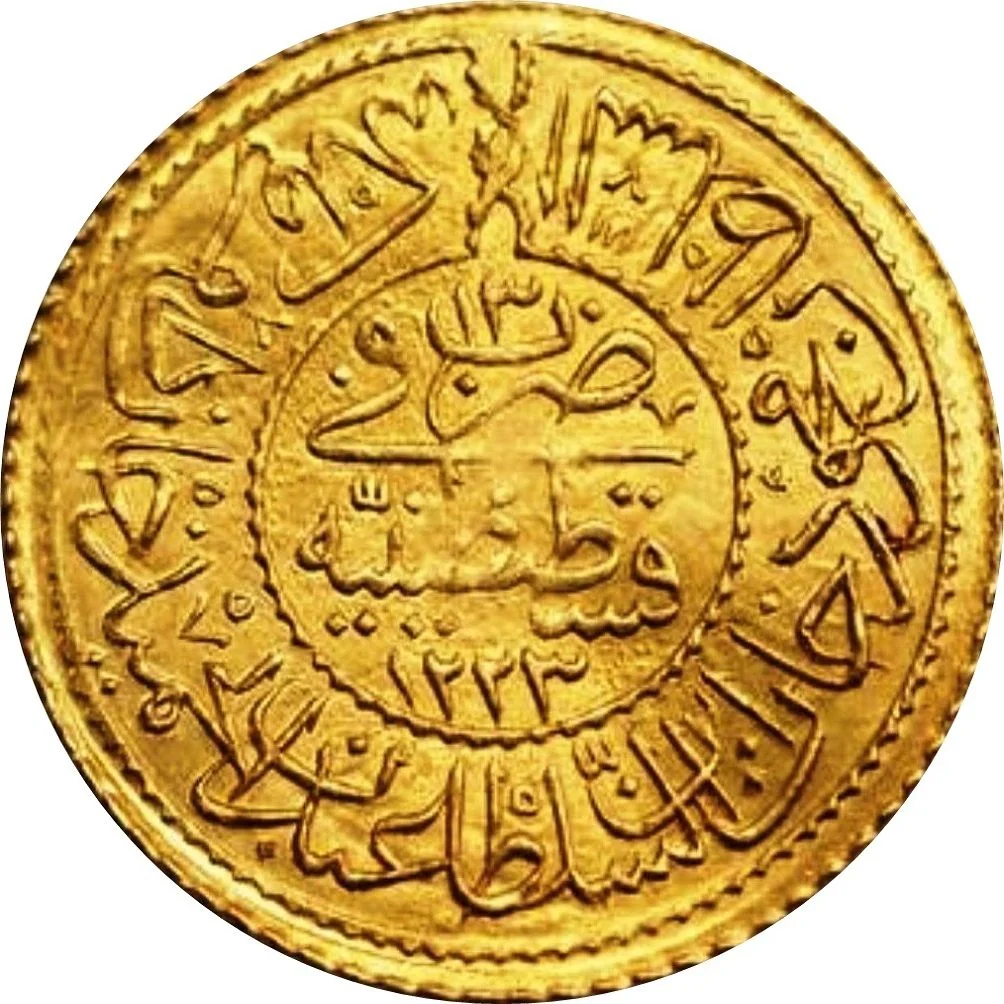
Islamic (Hijri) Year:: 1223
Country: Turkey
Issuer: Ottoman Empire
Ruler: Mahmud II
Currency:
(1688—1844)
Demonetized: Yes
Material
References
KM: #
Numista: #52505
Value
Bullion value: $330.57
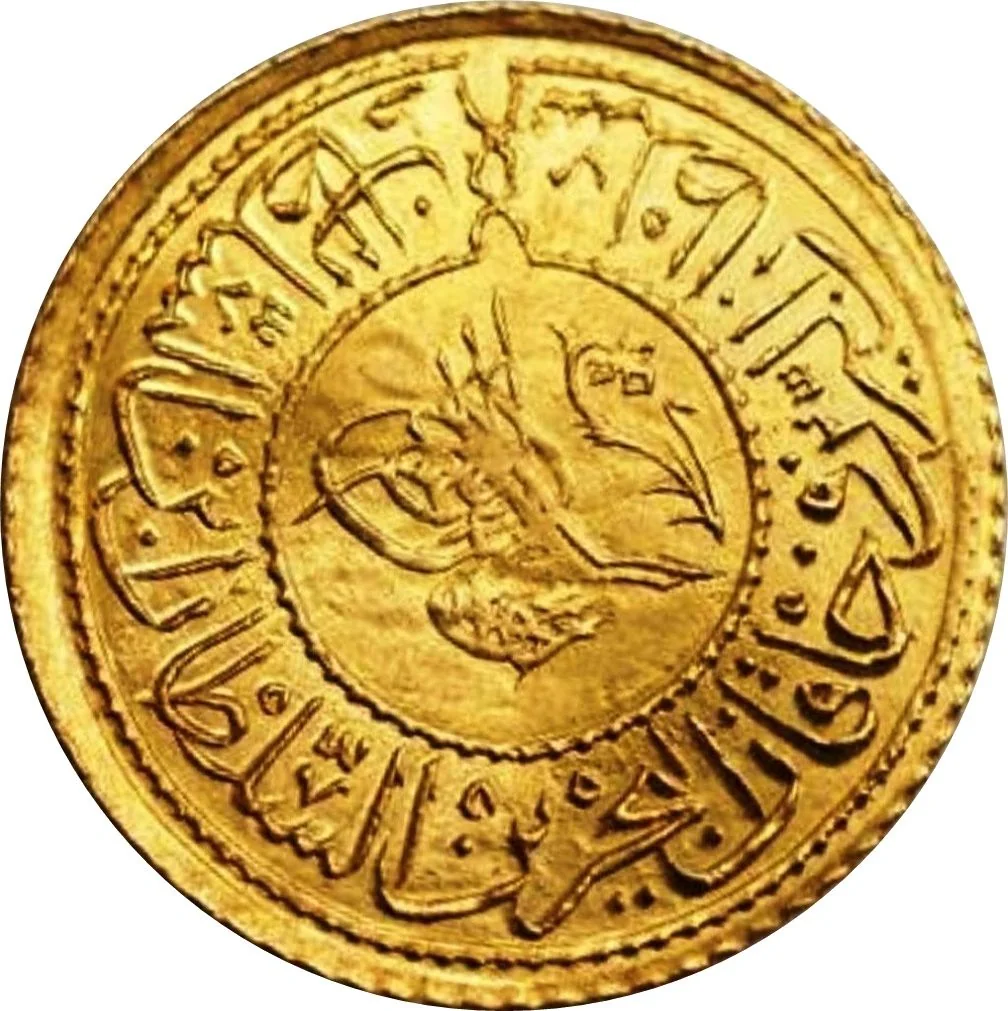
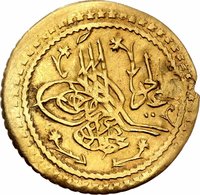
Obverse
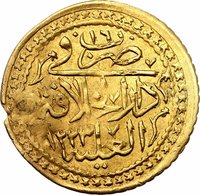
Reverse
Edge
Lettering:السلطان محمود خان ابن السلطان عبدالحميد خان دامر ملكه
Legend:
السلطان محمود خان ابن السلطان عبدالحميد خان دامر ملكه
Translation:
The Sultan Mahmud Khan, son of the Sultan Abd al-Hamid Khan, may his reign endure.
Language: Arabic
Mints
| Name | Mark |
|---|---|
| Constantinople | — |
Mintings
| Year | Mint Mark | Mintage | Quality | Collection |
|---|---|---|---|---|
| 1816 | — | — | ||
| 1817 | — | — | ||
| 1818 | — | — | ||
| 1819 | — | — | ||
| 1820 | — | — | ||
| 1821 | — | — | ||
| 1822 | — | — |
Historical background
In 1816, the Ottoman Empire's currency system was in a state of profound disarray and transition, emblematic of its wider political and fiscal struggles. The empire operated on a bimetallic system, with the gold altın (or lira) and the silver kuruş as the primary units, alongside a plethora of debased copper mangır for small change. However, decades of military defeats, territorial losses, and the costly need to maintain a modern army had drained the treasury. To finance deficits, the state had resorted to chronic debasement, repeatedly reducing the silver content of the kuruş. This led to a severe loss of confidence, wild fluctuations in exchange rates between coins, and a wide circulation of foreign currencies like the Austrian thaler and Spanish dollar, which were often preferred for their stable metal content.
The year 1816 itself fell within the reign of Sultan Mahmud II (1808-1839), who was acutely aware of the need for centralization and reform. While his more famous monetary reform, the introduction of the gold lirat, would come in 1844, the groundwork was being laid in this period. The immediate challenge was stabilizing the silver kuruş. The empire was also grappling with the economic dominance of European powers through the Capitulations, which granted foreign merchants favorable tax rates and legal privileges, further undermining Ottoman economic sovereignty and complicating monetary policy.
Consequently, the monetary landscape was one of confusion and fragmentation. Prices were unstable, tax collection was problematic as the real value of collected currency eroded, and long-distance trade was hampered by complex exchange calculations. This situation weakened the central authority, as provincial governors and local powers often issued their own coinage. Thus, in 1816, the Ottoman currency system was not only a financial crisis but also a symbol of the empire's struggle to maintain its integrity against internal fragmentation and external pressure, setting the stage for the radical reforms Mahmud II would later pursue.
The year 1816 itself fell within the reign of Sultan Mahmud II (1808-1839), who was acutely aware of the need for centralization and reform. While his more famous monetary reform, the introduction of the gold lirat, would come in 1844, the groundwork was being laid in this period. The immediate challenge was stabilizing the silver kuruş. The empire was also grappling with the economic dominance of European powers through the Capitulations, which granted foreign merchants favorable tax rates and legal privileges, further undermining Ottoman economic sovereignty and complicating monetary policy.
Consequently, the monetary landscape was one of confusion and fragmentation. Prices were unstable, tax collection was problematic as the real value of collected currency eroded, and long-distance trade was hampered by complex exchange calculations. This situation weakened the central authority, as provincial governors and local powers often issued their own coinage. Thus, in 1816, the Ottoman currency system was not only a financial crisis but also a symbol of the empire's struggle to maintain its integrity against internal fragmentation and external pressure, setting the stage for the radical reforms Mahmud II would later pursue.
💎 Extremely Rare