

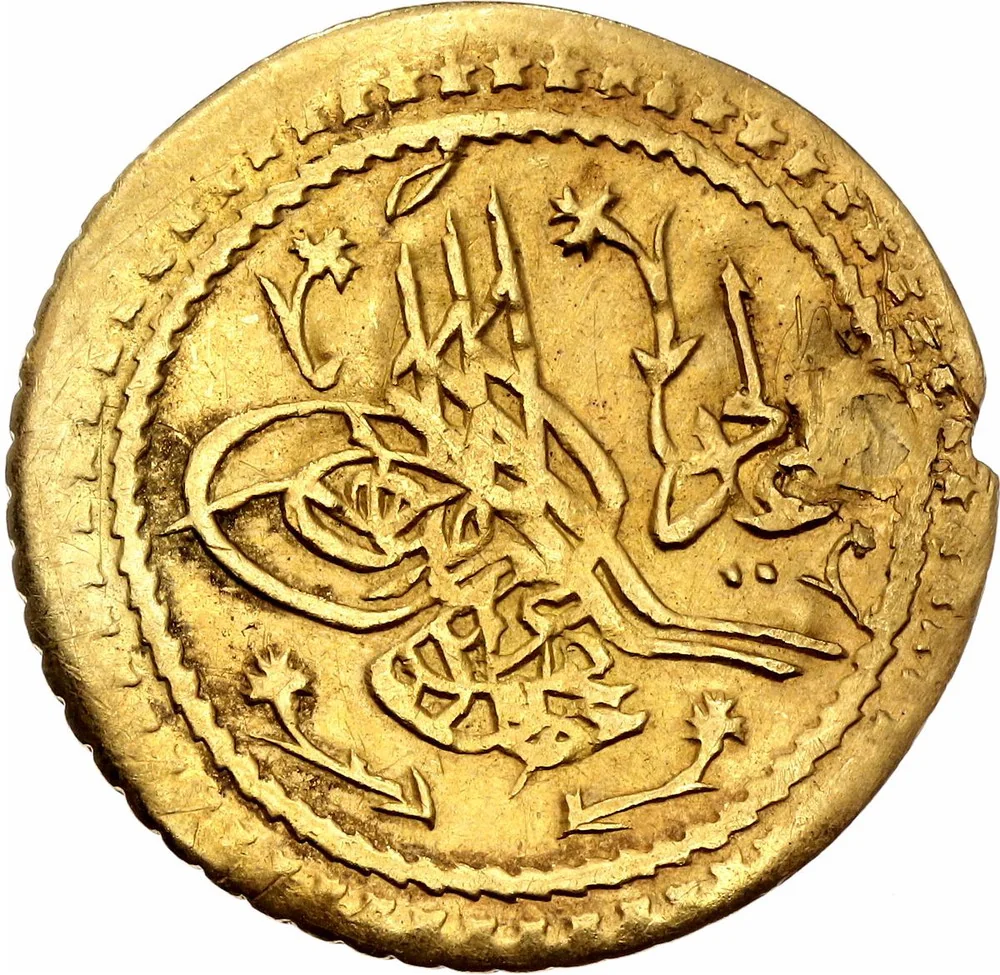
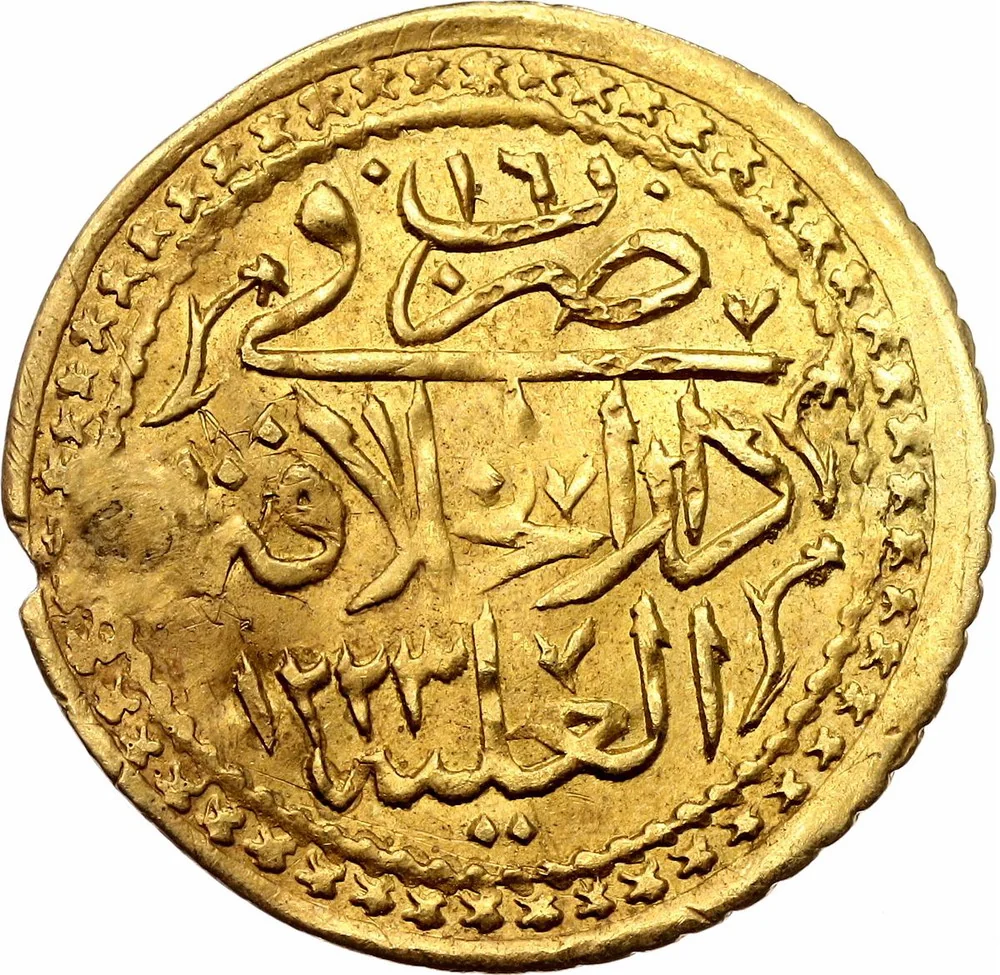
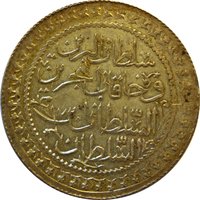
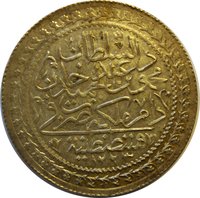
1 tam surre – Ottoman Empire
Add to wishlist
Turkey
Context
Year: 1822
Islamic (Hijri) Year:: 1223
Country: Turkey
Issuer: Ottoman Empire
Ruler: Mahmud II
Currency:
(1688—1844)
Demonetized: Yes
Material
Diameter: 21.5 mm
Weight: 1.55 g
Gold Weight:: 1.29 g
Shape: Round
Composition: 83% Gold
Standard: Gold twentieth ounce
Magnetic: No
References
KM: #
Numista: #43672
Value
Bullion value: $200.29
Mints
| Name | Mark |
|---|---|
| Dar-ül Hilafe | — |
Mintings
| Year | Mint Mark | Mintage | Quality | Collection |
|---|---|---|---|---|
| 1822 | — | — |
Historical background
By 1822, the Ottoman Empire's currency system was in a state of profound crisis, characterized by severe depreciation and loss of confidence. The primary unit, the kuruş (piastre), was a silver coin, but its value had been steadily eroded for decades through repeated debasements. The central government, facing immense fiscal pressures from military defeats, internal rebellions, and the need to fund modernizing reforms, resorted to reducing the silver content of newly minted coins to create short-term revenue. This practice led to a chaotic circulation where older, purer coins were hoarded or melted down, while newer, inferior coins flooded the market, causing inflation and disrupting trade.
The situation was further complicated by the widespread circulation of foreign currencies, particularly the Austrian thaler and Spanish real (known as "Spanish dollars"), which were trusted for their consistent silver purity. In many port cities and commercial centers, these foreign coins became the de facto medium for significant transactions, undermining Ottoman monetary sovereignty. Simultaneously, the Empire struggled with a chronic shortage of small-change copper coins (mangır), causing daily hardship for the common people and hindering small-scale commerce. This multi-layered monetary chaos reflected the Empire's weakening central control and its increasing integration into a European-dominated global economy on unfavorable terms.
The year 1822 itself was particularly tumultuous due to the ongoing Greek War of Independence, which began in 1821. The rebellion severed economically vital regions like the Morea from imperial control, disrupting tax revenues and trade flows, while simultaneously forcing the Porte to incur massive new military expenditures. These urgent financial demands accelerated the cycle of debasement and borrowing. Consequently, the monetary disorder of 1822 was not merely a technical financial issue but a stark symptom of the broader political and military crises threatening the survival of the Ottoman state.
The situation was further complicated by the widespread circulation of foreign currencies, particularly the Austrian thaler and Spanish real (known as "Spanish dollars"), which were trusted for their consistent silver purity. In many port cities and commercial centers, these foreign coins became the de facto medium for significant transactions, undermining Ottoman monetary sovereignty. Simultaneously, the Empire struggled with a chronic shortage of small-change copper coins (mangır), causing daily hardship for the common people and hindering small-scale commerce. This multi-layered monetary chaos reflected the Empire's weakening central control and its increasing integration into a European-dominated global economy on unfavorable terms.
The year 1822 itself was particularly tumultuous due to the ongoing Greek War of Independence, which began in 1821. The rebellion severed economically vital regions like the Morea from imperial control, disrupting tax revenues and trade flows, while simultaneously forcing the Porte to incur massive new military expenditures. These urgent financial demands accelerated the cycle of debasement and borrowing. Consequently, the monetary disorder of 1822 was not merely a technical financial issue but a stark symptom of the broader political and military crises threatening the survival of the Ottoman state.
✨ Legendary