

1 Kurush – Ottoman Empire
Turkey
Context
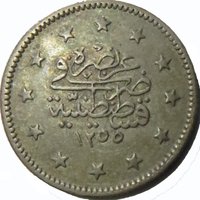
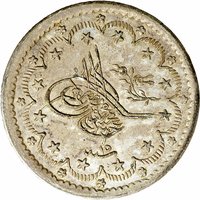
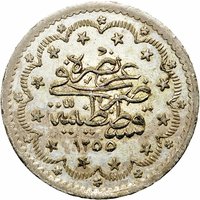
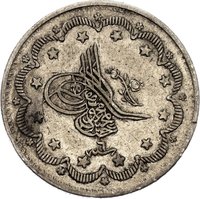
Years: 1844–1861
Islamic (Hijri) Year: 1255
Country: Turkey 
Issuer: Ottoman Empire
Ruler: Abdulmejid I
Currency:
(1844—1923)
Demonetized: Yes
Total mintage: 17,830,000
Material
References
KM: #Click to copy to clipboard671
Numista: #26557
Value
Bullion value: $2.89
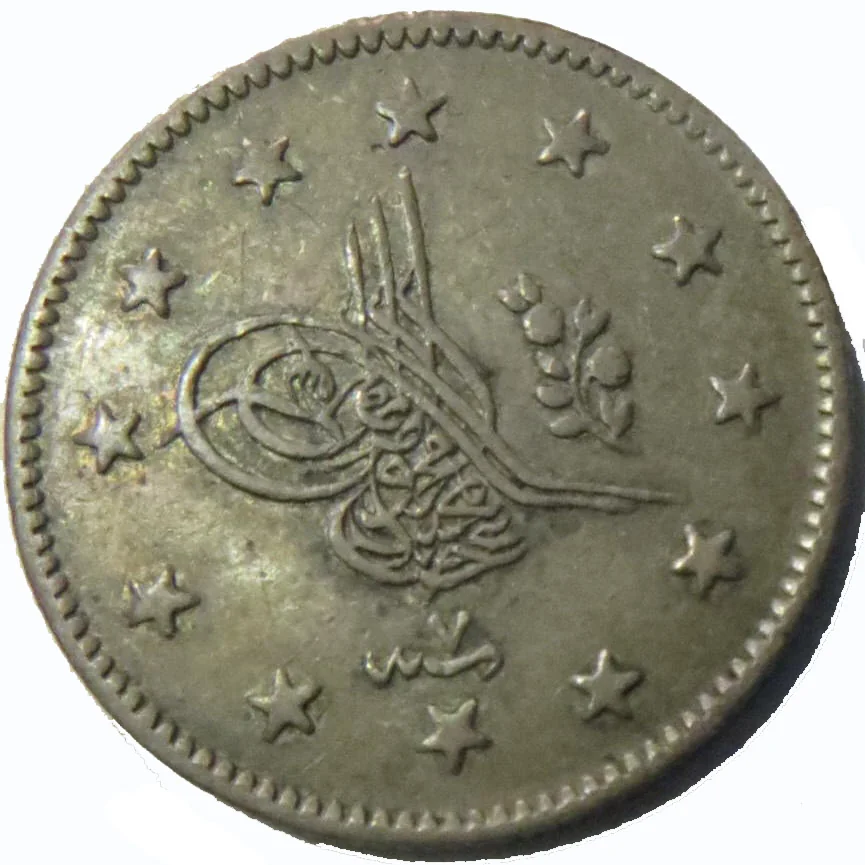
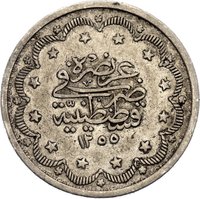
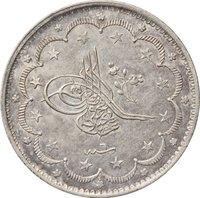
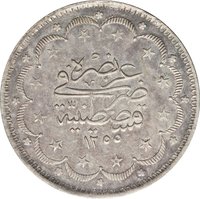
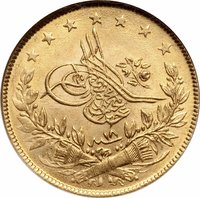
Obverse
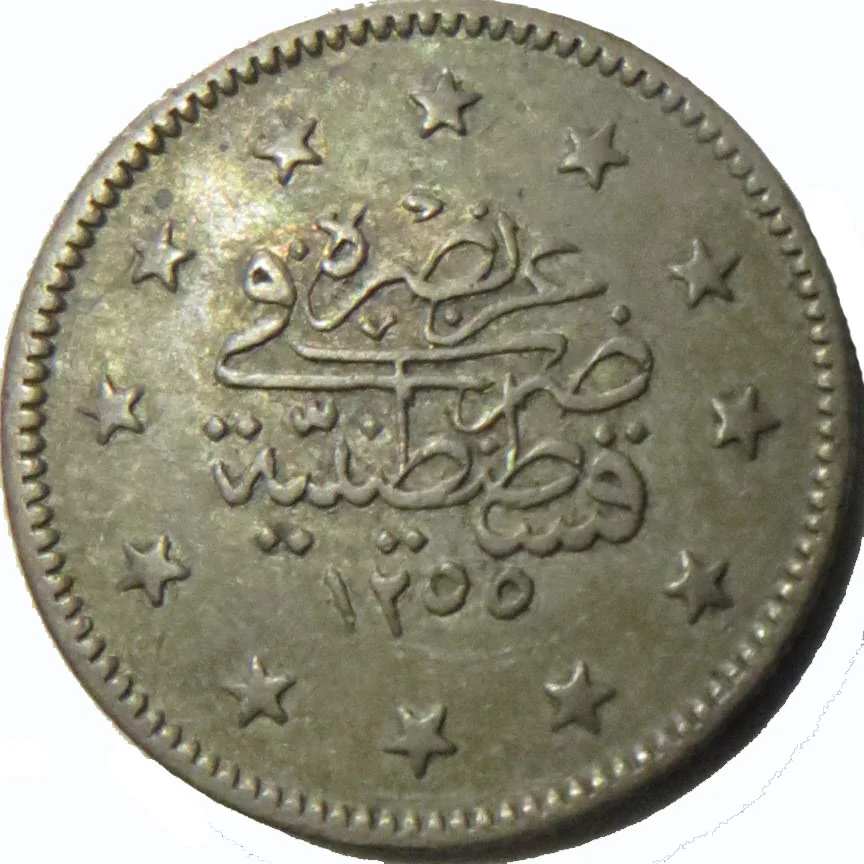
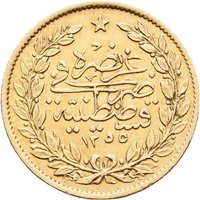
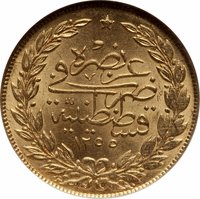
Reverse
Edge
Mints
| Name | Mark |
|---|---|
| Constantinople | — |
Mintings
| Year | Mint Mark | Mintage | Quality | Collection |
|---|---|---|---|---|
| 1844 | — | — | ||
| 1845 | — | 650,000 | ||
| 1846 | — | 1,420,000 | ||
| 1847 | — | 910,000 | ||
| 1848 | — | 970,000 | ||
| 1849 | — | 1,040,000 | ||
| 1850 | — | 1,100,000 | ||
| 1851 | — | 820,000 | ||
| 1852 | — | 790,000 | ||
| 1853 | — | 960,000 | ||
| 1854 | — | 1,220,000 | ||
| 1855 | — | 810,000 | ||
| 1856 | — | 720,000 | ||
| 1857 | — | 2,270,000 | ||
| 1858 | — | 1,165,000 | ||
| 1859 | — | 1,405,000 | ||
| 1860 | — | 825,000 | ||
| 1861 | — | 755,000 |
Historical background
In 1844, the Ottoman Empire enacted a significant monetary reform aimed at ending the chronic currency instability that had plagued the state for decades. The period leading up to this was marked by a severe devaluation of the Ottoman akçe and a proliferation of various foreign and domestic coins in circulation, including the Spanish piastre, the Dutch rijksdaalder, and the Austrian thaler. This monetary chaos disrupted trade, complicated state finances, and undermined both domestic and international confidence in the Ottoman economy. The failed attempt at establishing a paper currency, the kaime, in 1840 had further exacerbated inflationary pressures, creating an urgent need for a standardized and reliable system.
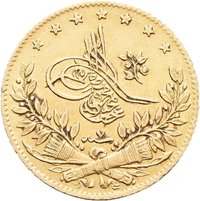
The reform of 1844, championed by Sultan Abdülmecid I and his ministers, introduced a new, bimetallic standard based on the Ottoman Lira (gold) and the Kuruş (silver), with 100 kuruş equaling 1 lira. This was a deliberate move to align the Ottoman monetary system with European standards, particularly the French franc, to facilitate international commerce and investment. The government began minting new, high-quality coins at the imperial mint in Constantinople, notably the gold 100 kuruş (1 lira) coin and the silver 20 kuruş coin, which were intended to replace the myriad of older and foreign currencies.
This standardization was a cornerstone of the broader Tanzimat reforms, representing an effort to centralize economic authority and modernize the empire's fiscal infrastructure. While successful in creating a unified currency system on paper and improving short-term stability, the reform faced ongoing challenges. Persistent budget deficits, a reliance on foreign loans, and the fluctuating global values of gold and silver continued to strain the system. Nevertheless, the 1844 reform established the basic framework of the Ottoman lira that would endure, in evolving forms, until the empire's dissolution.
The reform of 1844, championed by Sultan Abdülmecid I and his ministers, introduced a new, bimetallic standard based on the Ottoman Lira (gold) and the Kuruş (silver), with 100 kuruş equaling 1 lira. This was a deliberate move to align the Ottoman monetary system with European standards, particularly the French franc, to facilitate international commerce and investment. The government began minting new, high-quality coins at the imperial mint in Constantinople, notably the gold 100 kuruş (1 lira) coin and the silver 20 kuruş coin, which were intended to replace the myriad of older and foreign currencies.
This standardization was a cornerstone of the broader Tanzimat reforms, representing an effort to centralize economic authority and modernize the empire's fiscal infrastructure. While successful in creating a unified currency system on paper and improving short-term stability, the reform faced ongoing challenges. Persistent budget deficits, a reliance on foreign loans, and the fluctuating global values of gold and silver continued to strain the system. Nevertheless, the 1844 reform established the basic framework of the Ottoman lira that would endure, in evolving forms, until the empire's dissolution.
🌟 Uncommon