

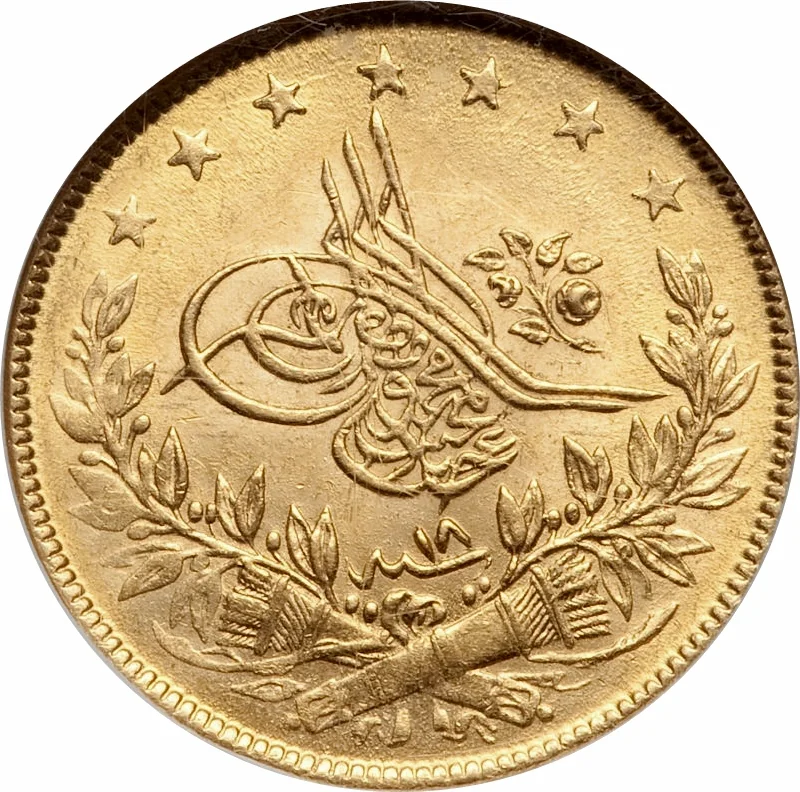
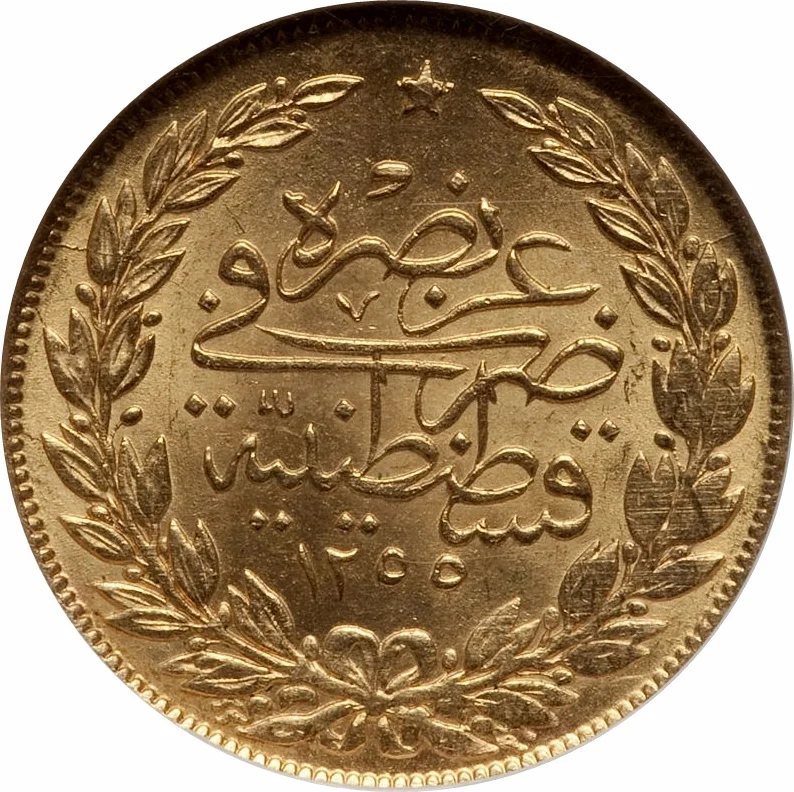
100 Kurush – Ottoman Empire
Turkey
Context
Years: 1843–1861
Islamic (Hijri) Year: 1255
Country: Turkey 
Issuer: Ottoman Empire
Ruler: Abdulmejid I
Currency:
(1844—1923)
Demonetized: Yes
Material
References
KM: #Click to copy to clipboard679
Numista: #59645
Value
Bullion value: $1103.18
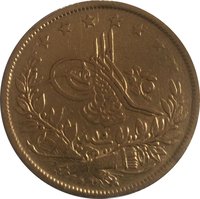
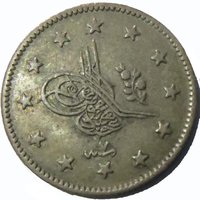
Obverse
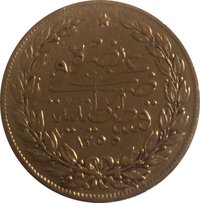
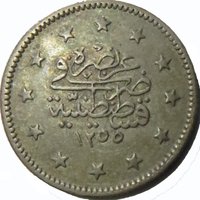
Reverse
Edge
Mints
| Name | Mark |
|---|---|
| Constantinople | — |
Mintings
| Year | Mint Mark | Mintage | Quality | Collection |
|---|---|---|---|---|
| 1843 | — | — | ||
| 1844 | — | — | ||
| 1845 | — | — | ||
| 1846 | — | — | ||
| 1847 | — | — | ||
| 1848 | — | — | ||
| 1849 | — | — | ||
| 1850 | — | — | ||
| 1851 | — | — | ||
| 1852 | — | — | ||
| 1853 | — | — | ||
| 1854 | — | — | ||
| 1855 | — | — | ||
| 1856 | — | — | ||
| 1857 | — | — | ||
| 1858 | — | — | ||
| 1859 | — | — | ||
| 1860 | — | — | ||
| 1861 | — | — |
Historical background
In 1843, the Ottoman Empire's currency system was in a state of profound disarray, characterized by severe depreciation and monetary confusion. The primary unit, the kuruş (piastre), had been drastically debased over decades to finance state deficits, wars, and modernization efforts. By this time, the silver content of Ottoman coinage was a fraction of its nominal value, leading to a wide circulation of heavily worn and clipped coins alongside a plethora of foreign currencies—especially the Austrian Thaler and Spanish real—which were often preferred for large transactions due to their reliable silver content. This created a chaotic multi-currency environment where exchange rates fluctuated wildly, harming both domestic trade and the state's ability to collect taxes effectively.
Recognizing the crisis, the Ottoman state under Sultan Abdülmecid I was in the early stages of a major reform drive known as the Tanzimat. A cornerstone of this modernization was monetary stabilization. In 1843, the government was actively preparing for a landmark currency reform that would be implemented the following year. The plan, developed with European technical advice, aimed to introduce a new, bimetallic standard based on a gold lira and a standardized silver kuruş, with 100 kuruş to the lira. This was an attempt to move away from the debased coinage and establish a uniform, decimalized system that could restore confidence and simplify commerce.
Thus, the currency situation in 1843 was one of transition from chaos to order. It represented the tension between the Empire's entrenched fiscal weaknesses and its determined, state-led push for centralization and modernization. The decrepit state of the coinage in circulation was a daily reminder of past fiscal mismanagement, while the impending reform of 1844 symbolized the hope for integration into the global economic system and the strengthening of imperial sovereignty through a stable, unified currency.
Recognizing the crisis, the Ottoman state under Sultan Abdülmecid I was in the early stages of a major reform drive known as the Tanzimat. A cornerstone of this modernization was monetary stabilization. In 1843, the government was actively preparing for a landmark currency reform that would be implemented the following year. The plan, developed with European technical advice, aimed to introduce a new, bimetallic standard based on a gold lira and a standardized silver kuruş, with 100 kuruş to the lira. This was an attempt to move away from the debased coinage and establish a uniform, decimalized system that could restore confidence and simplify commerce.
Thus, the currency situation in 1843 was one of transition from chaos to order. It represented the tension between the Empire's entrenched fiscal weaknesses and its determined, state-led push for centralization and modernization. The decrepit state of the coinage in circulation was a daily reminder of past fiscal mismanagement, while the impending reform of 1844 symbolized the hope for integration into the global economic system and the strengthening of imperial sovereignty through a stable, unified currency.
💎 Very Rare