

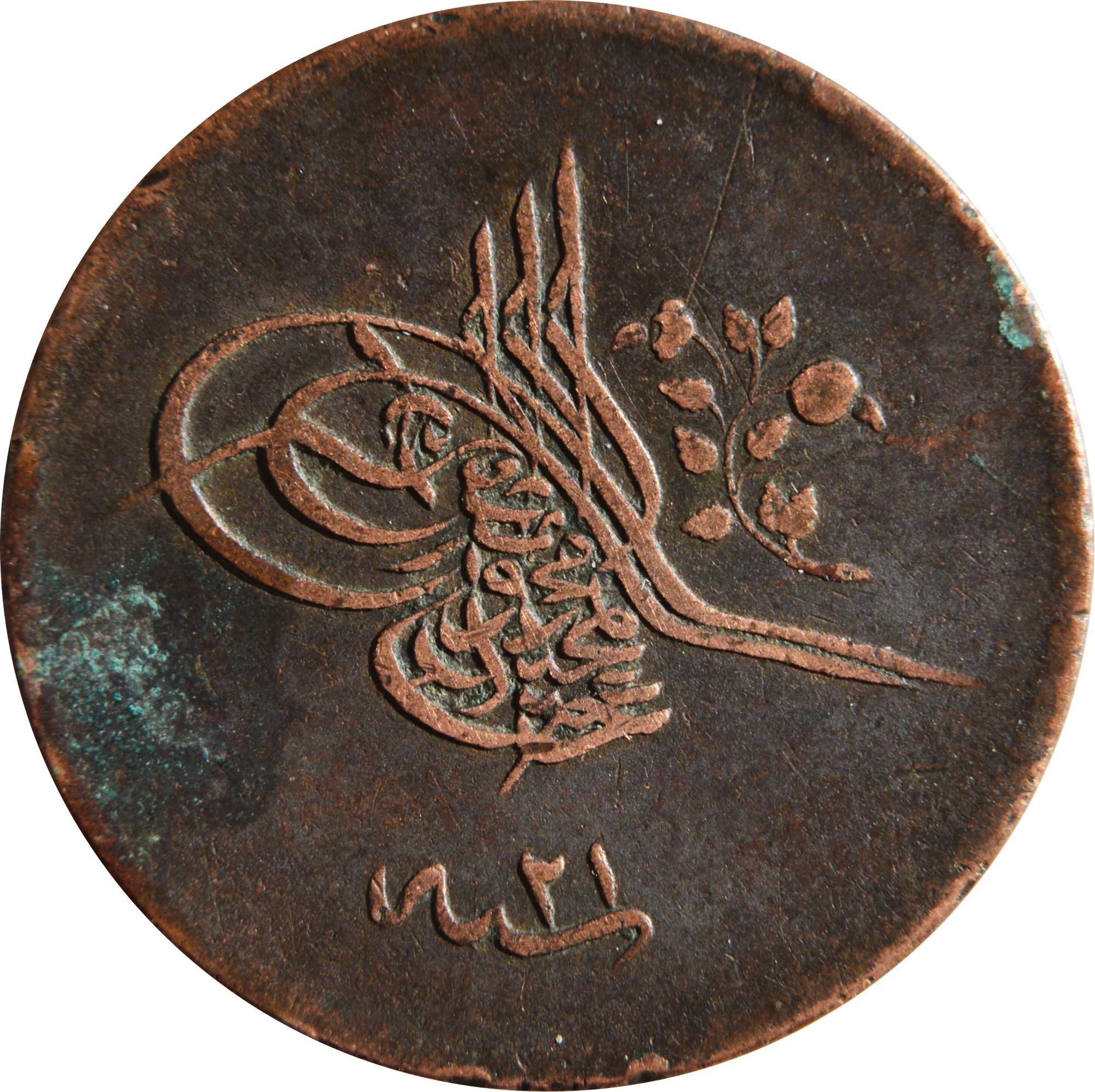
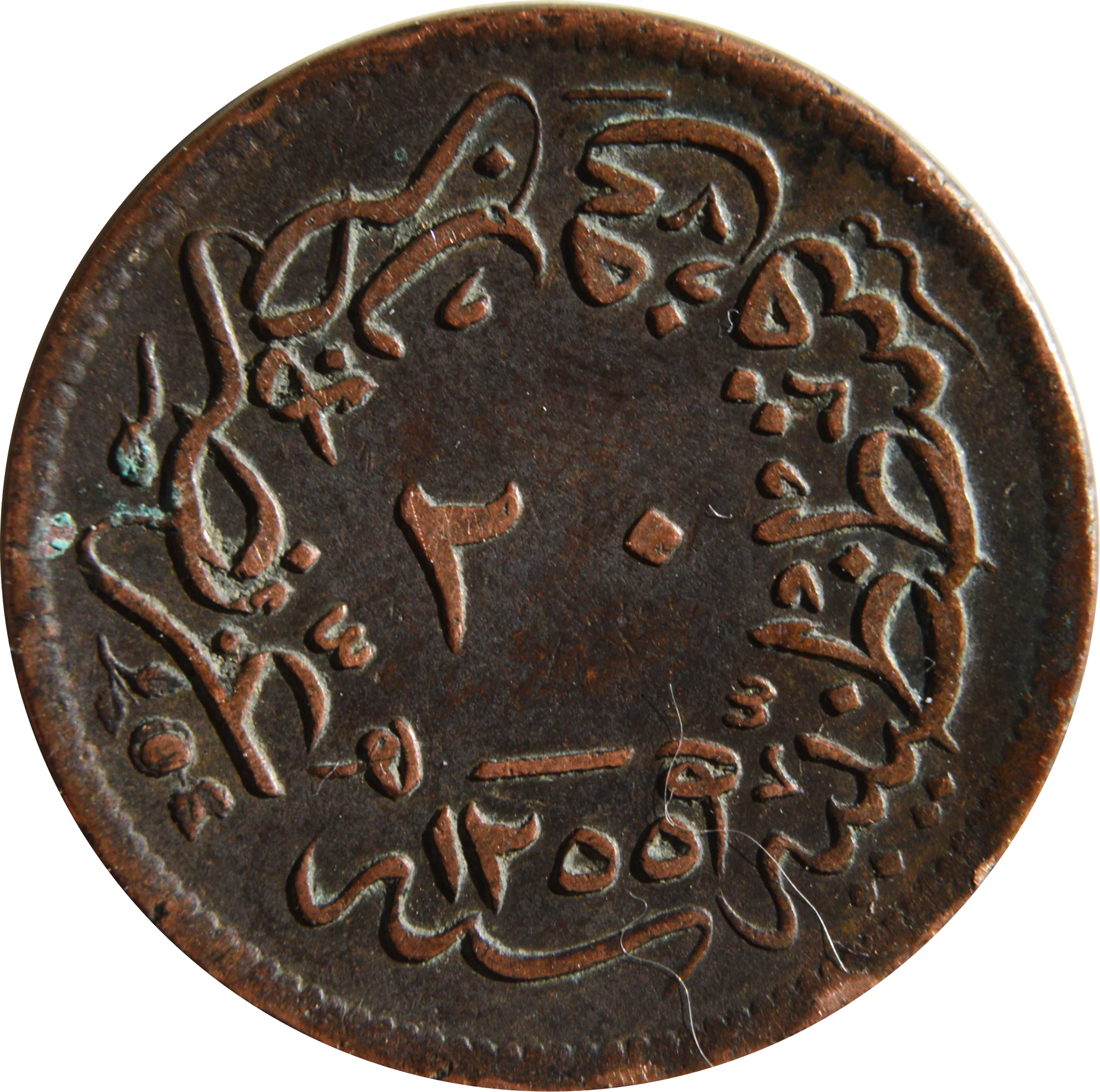
20 para – Ottoman Empire
Add to wishlist
Turkey
Context
Years: 1848–1859
Islamic (Hijri) Year:: 1255
Country: Turkey
Issuer: Ottoman Empire
Ruler: Abdulmejid I
Currency:
(1844—1923)
Demonetized: Yes
Total mintage: 19,000,000
Material
References
KM: #
Numista: #20387
Obverse
Reverse
Edge
Plain
Mints
| Name | Mark |
|---|---|
| Constantinople | — |
Mintings
| Year | Mint Mark | Mintage | Quality | Collection |
|---|---|---|---|---|
| 1848 | — | — | ||
| 1854 | — | 4,350,000 | ||
| 1855 | — | 2,050,000 | ||
| 1857 | — | 1,200,000 | ||
| 1858 | — | 3,000,000 | ||
| 1859 | — | 8,400,000 |
Historical background
By 1848, the Ottoman Empire's currency system was in a state of profound disarray, characterized by a chaotic multiplicity of coins and severe devaluation. The primary unit, the kuruş (piastre), had been drastically debased over decades, with its silver content reduced by approximately 90% since the late 18th century to finance state deficits and military costs. This led to a dual circulation: old, full-weight coins (esedi kuruş) were hoarded or traded at a premium, while new, lightweight coins flooded the market. Alongside these, a plethora of foreign currencies—especially the Austrian thaler, British sovereign, and French franc—circulated freely, used for large transactions and international trade, undermining the state's monetary sovereignty.
The root cause was the Empire's chronic fiscal crises and its integration into the global capitalist economy without a modern financial infrastructure. The government resorted to repeated debasements as a form of desperate revenue, which destroyed public trust and sparked rampant inflation. This instability was acutely felt in 1848, a year of European revolutions that disrupted trade and heightened economic anxiety within the Empire. The Ottoman state, already financially weakened, faced increased pressure as the reverberations of Europe's turmoil affected its commercial centers like Istanbul and Izmir.
In response to this long-standing crisis, the Ottoman government was actively pursuing major reform. The same year, 1848, saw the establishment of the Darphane-i Amire (Imperial Mint) in its modern form, a key step toward centralizing coinage. This was part of a broader trajectory that would culminate in the landmark monetary reform of 1849–1850, which introduced the Ottoman lira as a gold-based unit and attempted to standardize the silver kuruş. Therefore, 1848 represents a critical juncture—the peak of an old, failing system and the immediate preamble to a concerted, though only partially successful, effort to create a unified and stable currency.
The root cause was the Empire's chronic fiscal crises and its integration into the global capitalist economy without a modern financial infrastructure. The government resorted to repeated debasements as a form of desperate revenue, which destroyed public trust and sparked rampant inflation. This instability was acutely felt in 1848, a year of European revolutions that disrupted trade and heightened economic anxiety within the Empire. The Ottoman state, already financially weakened, faced increased pressure as the reverberations of Europe's turmoil affected its commercial centers like Istanbul and Izmir.
In response to this long-standing crisis, the Ottoman government was actively pursuing major reform. The same year, 1848, saw the establishment of the Darphane-i Amire (Imperial Mint) in its modern form, a key step toward centralizing coinage. This was part of a broader trajectory that would culminate in the landmark monetary reform of 1849–1850, which introduced the Ottoman lira as a gold-based unit and attempted to standardize the silver kuruş. Therefore, 1848 represents a critical juncture—the peak of an old, failing system and the immediate preamble to a concerted, though only partially successful, effort to create a unified and stable currency.
🌱 Common