

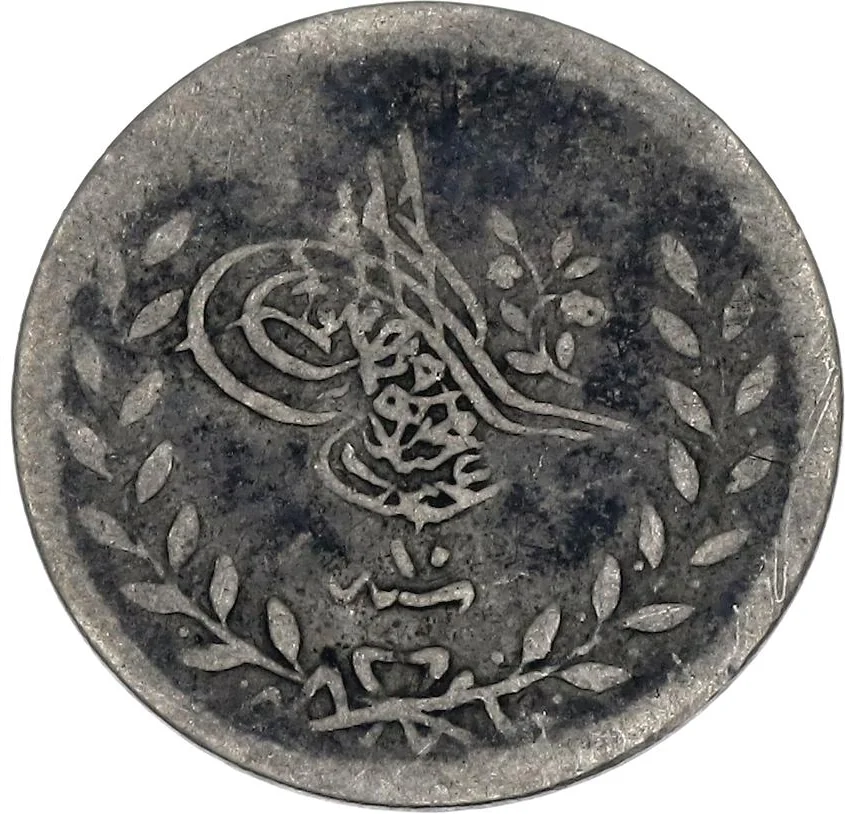
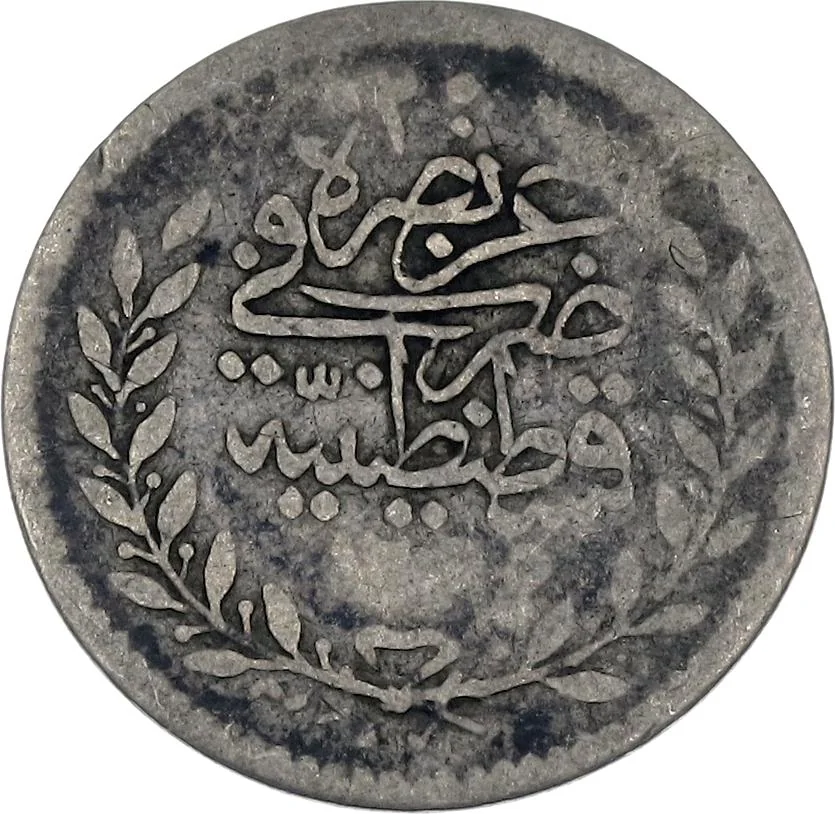
20 Para – Ottoman Empire
Turkey
Context
Years: 1847–1861
Islamic (Hijri) Year: 1255
Country: Turkey 
Issuer: Ottoman Empire
Ruler: Abdulmejid I
Currency:
(1844—1923)
Demonetized: Yes
Total mintage: 5,430,000
Material
References
KM: #Click to copy to clipboard669
Numista: #41035
Value
Bullion value: $1.42
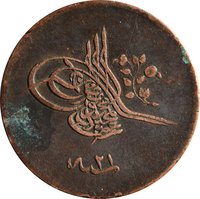
Obverse
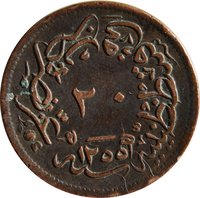
Reverse
Edge
Reeded
Mints
| Name | Mark |
|---|---|
| Constantinople | — |
Mintings
| Year | Mint Mark | Mintage | Quality | Collection |
|---|---|---|---|---|
| 1847 | — | 400,000 | ||
| 1848 | — | 910,000 | ||
| 1849 | — | 390,000 | ||
| 1850 | — | 270,000 | ||
| 1851 | — | 230,000 | ||
| 1852 | — | 180,000 | ||
| 1853 | — | 240,000 | ||
| 1854 | — | 270,000 | ||
| 1855 | — | 170,000 | ||
| 1856 | — | 260,000 | ||
| 1857 | — | 900,000 | ||
| 1858 | — | 150,000 | ||
| 1859 | — | 250,000 | ||
| 1860 | — | 190,000 | ||
| 1861 | — | 620,000 |
Historical background
In 1847, the Ottoman Empire was grappling with a severe and multifaceted currency crisis, symptomatic of its broader financial and political decline. The monetary system was chaotic, characterized by the simultaneous circulation of a bewildering array of coins: Ottoman gold liras and silver kuruş, alongside a host of European currencies like the British sovereign, French franc, and Austrian thaler, which often held more public trust. This lack of uniformity crippled domestic trade and complicated government finance. Furthermore, decades of debasement—reducing the silver content of the kuruş to fund budget shortfalls—had led to rampant inflation, a collapse in public confidence in state-issued money, and a wide discrepancy between the official and market exchange rates.
The root cause was the Empire's deepening integration into the global capitalist economy, which exposed structural weaknesses. Chronic budget deficits, exacerbated by costly military campaigns and an inefficient tax farm system, forced the state to seek its first major foreign loans in the 1850s, setting the stage for later debt dependency. The traditional sikke (coinage) could not meet the demands of expanding commerce, and the state lacked the central authority and bullion reserves to impose a stable, unified currency. This financial instability was a direct precursor to the more formalized reforms that would follow, most notably the establishment of the Imperial Ottoman Bank in 1863 as a state bank with note-issuing authority.
Thus, the currency situation in 1847 represented a critical juncture of traditional decay and modernizing pressure. It highlighted the Porte's weakening control over its own economy and its increasing vulnerability to European financial power. The chaos of this year underscored an urgent need for systemic reform, making the eventual adoption of a gold-based standard and the issuance of paper banknotes not just a financial necessity, but a political imperative for the survival of the empire in the face of modern economic forces.
The root cause was the Empire's deepening integration into the global capitalist economy, which exposed structural weaknesses. Chronic budget deficits, exacerbated by costly military campaigns and an inefficient tax farm system, forced the state to seek its first major foreign loans in the 1850s, setting the stage for later debt dependency. The traditional sikke (coinage) could not meet the demands of expanding commerce, and the state lacked the central authority and bullion reserves to impose a stable, unified currency. This financial instability was a direct precursor to the more formalized reforms that would follow, most notably the establishment of the Imperial Ottoman Bank in 1863 as a state bank with note-issuing authority.
Thus, the currency situation in 1847 represented a critical juncture of traditional decay and modernizing pressure. It highlighted the Porte's weakening control over its own economy and its increasing vulnerability to European financial power. The chaos of this year underscored an urgent need for systemic reform, making the eventual adoption of a gold-based standard and the issuance of paper banknotes not just a financial necessity, but a political imperative for the survival of the empire in the face of modern economic forces.
⭐ Rare