

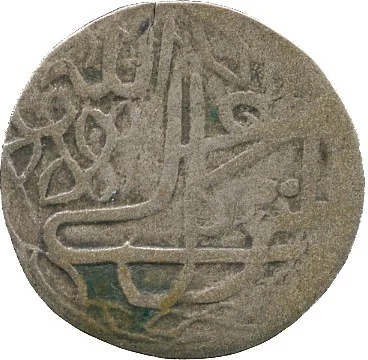
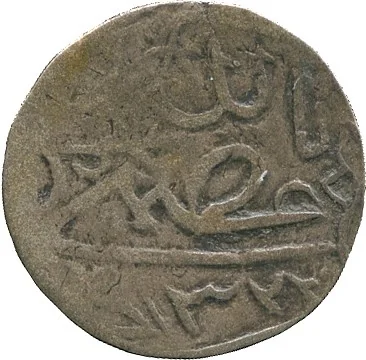
1⁄40 riyal – Yemeni Zaidi State
Add to wishlist
Yemen
Context
Years: 1904–1921
Islamic (Hijri) Year:: 1322
Country: Yemen
Issuer: Yemeni Zaidi State
Currency:
(1904—1918)
Demonetized: Yes
References
Y: #
Numista: #195690
Value
Exchange value: 1⁄40 YEI
Mintings
| Year | Mint Mark | Mintage | Quality | Collection |
|---|---|---|---|---|
| 1904 | — | — |
Historical background
In 1904, the currency situation within the Zaidi Imamate of Yemen was characterized by fragmentation and instability, reflecting the broader political and economic challenges of the region. The Imamate, ruled by Imam Yahya Muhammad Hamid ed-Din, did not have a unified, modern monetary system. Instead, circulation was dominated by a mix of older, debased Ottoman coinage—particularly the silver qirsh (piastre)—and a variety of foreign silver coins, most notably the Austrian Maria Theresa thaler and the British Indian rupee. These foreign coins were valued by weight and purity, leading to complex and fluctuating exchange rates that hampered trade and state revenue collection.
This monetary disorder was a direct consequence of the Imamate's recent history. Following the gradual withdrawal of Ottoman forces from the Yemeni highlands after 1904 (formalized later in the 1911 Treaty of Daʿan), the nascent Zaidi state inherited an economic vacuum. The Ottoman Empire had previously introduced some standardized coinage, but its departure left a system in decay. Imam Yahya’s primary focus was on consolidating political and military control over the fractious tribes and confronting the Idrisi state to the north, leaving little immediate capacity to implement a comprehensive monetary reform. The economy remained largely subsistence-based and reliant on barter, with imported coins serving the limited needs of regional and long-distance trade.
Therefore, the currency situation in 1904 was not one of state-controlled policy but of ad-hoc adaptation. The lack of a sovereign coinage symbolized the Imamate's limited administrative reach and its struggle to transition from a tribal confederation under a religious leader to a modern nation-state. It would take decades before Imam Yahya’s government could begin to address this issue, with the first attempts at minting distinct Zaidi coinage only emerging much later, in the 1920s and 1930s, as part of a broader effort to assert independence and sovereignty.
This monetary disorder was a direct consequence of the Imamate's recent history. Following the gradual withdrawal of Ottoman forces from the Yemeni highlands after 1904 (formalized later in the 1911 Treaty of Daʿan), the nascent Zaidi state inherited an economic vacuum. The Ottoman Empire had previously introduced some standardized coinage, but its departure left a system in decay. Imam Yahya’s primary focus was on consolidating political and military control over the fractious tribes and confronting the Idrisi state to the north, leaving little immediate capacity to implement a comprehensive monetary reform. The economy remained largely subsistence-based and reliant on barter, with imported coins serving the limited needs of regional and long-distance trade.
Therefore, the currency situation in 1904 was not one of state-controlled policy but of ad-hoc adaptation. The lack of a sovereign coinage symbolized the Imamate's limited administrative reach and its struggle to transition from a tribal confederation under a religious leader to a modern nation-state. It would take decades before Imam Yahya’s government could begin to address this issue, with the first attempts at minting distinct Zaidi coinage only emerging much later, in the 1920s and 1930s, as part of a broader effort to assert independence and sovereignty.

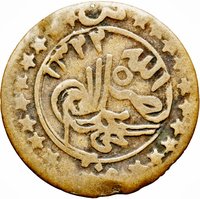
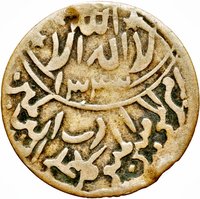
✨ Legendary