

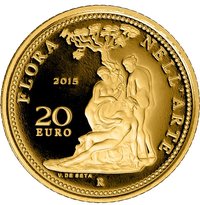
Obverse
Description:
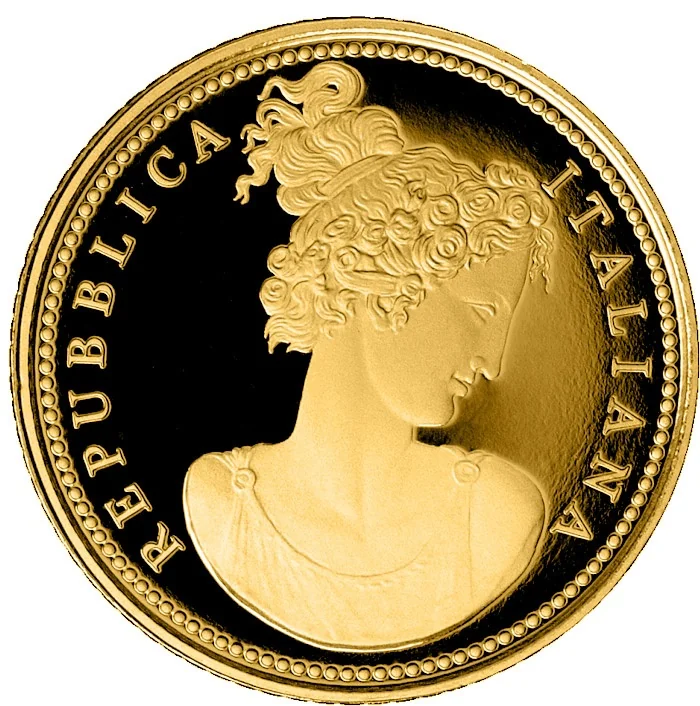
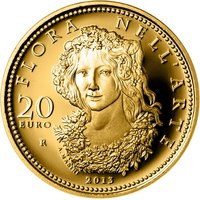
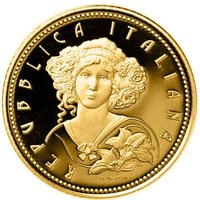
Front-facing bust of Flora in profile, crowned with roses and with light drapery. Wax model for a cameo by Benedetto Pistrucci, held at the Museum of the Mint of Rome.
Inscription:
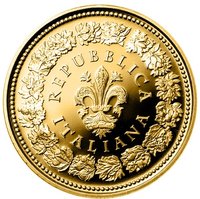
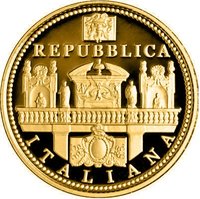
REPUBBLICA ITALIANA
Translation:
Italian Republic
Script: Latin
Language: Italian
Engraver: Valerio De Seta
Reverse
Description:
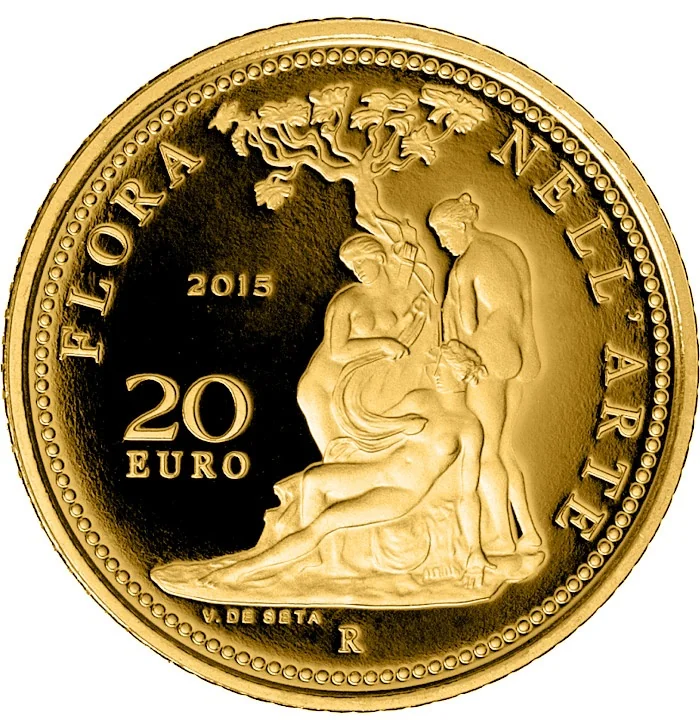
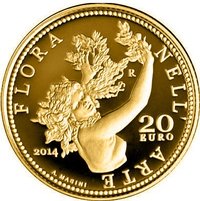
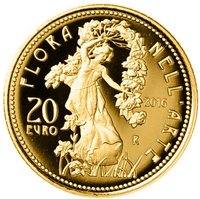
Detail of Benedetto Pistrucci's wax model "Diana and Actaeon," showing Diana bathing with two nymphs amid rocks and a tree. Held at the Museum of the Mint of Rome.
Inscription:
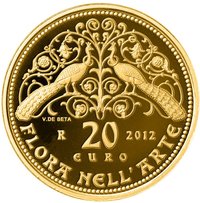
FLORA NELL'ARTE
2015
20
EURO
V. DE SETA
R
2015
20
EURO
V. DE SETA
R
Script: Latin
Engraver: Valerio De Seta
Edge
Continuous milled.
Mints
| Name | Mark |
|---|---|
| Rome | R |
Mintings
| Year | Mint Mark | Mintage | Quality | Collection |
|---|---|---|---|---|
| 2015 | R | 1,200 | Proof |
Historical background
In 2015, Italy remained firmly within the Eurozone, using the euro as its official currency since its physical introduction in 2002. The country's monetary policy was therefore set by the European Central Bank (ECB), not by Rome. This period was marked by the ECB's aggressive quantitative easing (QE) program, announced in January 2015, which aimed to combat deflationary pressures across the euro area by purchasing sovereign bonds. For Italy, this was a crucial intervention, as it helped keep government borrowing costs at historically low levels despite its high public debt, which exceeded 130% of GDP.
Domestically, the currency situation was intertwined with deep economic fragility. Italy was struggling with near-zero growth, high unemployment (particularly youth unemployment), and a banking sector burdened by a high load of non-performing loans. The fixed exchange rate of the euro meant Italy could not devalue its currency to regain competitiveness against trade partners like Germany. This lack of a national monetary lever fueled persistent political and public debate about the costs and benefits of euro membership, with some factions, most notably the Five Star Movement and the Northern League, periodically questioning the euro's suitability for Italy.
Overall, 2015 presented a currency environment of external support and internal strain. The ECB's policies provided essential stability and cheap financing for the state, shielding Italy from the kind of debt crisis seen earlier in the decade. However, the single currency also highlighted and exacerbated Italy's structural economic weaknesses—low productivity and rigid markets—without providing the traditional tool of devaluation. This tension set the stage for the significant political and banking crises that would intensify in the following years.
Domestically, the currency situation was intertwined with deep economic fragility. Italy was struggling with near-zero growth, high unemployment (particularly youth unemployment), and a banking sector burdened by a high load of non-performing loans. The fixed exchange rate of the euro meant Italy could not devalue its currency to regain competitiveness against trade partners like Germany. This lack of a national monetary lever fueled persistent political and public debate about the costs and benefits of euro membership, with some factions, most notably the Five Star Movement and the Northern League, periodically questioning the euro's suitability for Italy.
Overall, 2015 presented a currency environment of external support and internal strain. The ECB's policies provided essential stability and cheap financing for the state, shielding Italy from the kind of debt crisis seen earlier in the decade. However, the single currency also highlighted and exacerbated Italy's structural economic weaknesses—low productivity and rigid markets—without providing the traditional tool of devaluation. This tension set the stage for the significant political and banking crises that would intensify in the following years.
✨ Legendary