

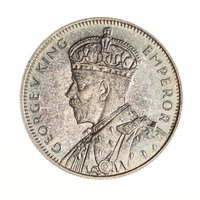
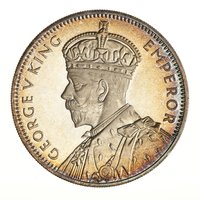
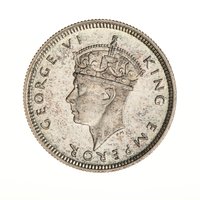
Obverse
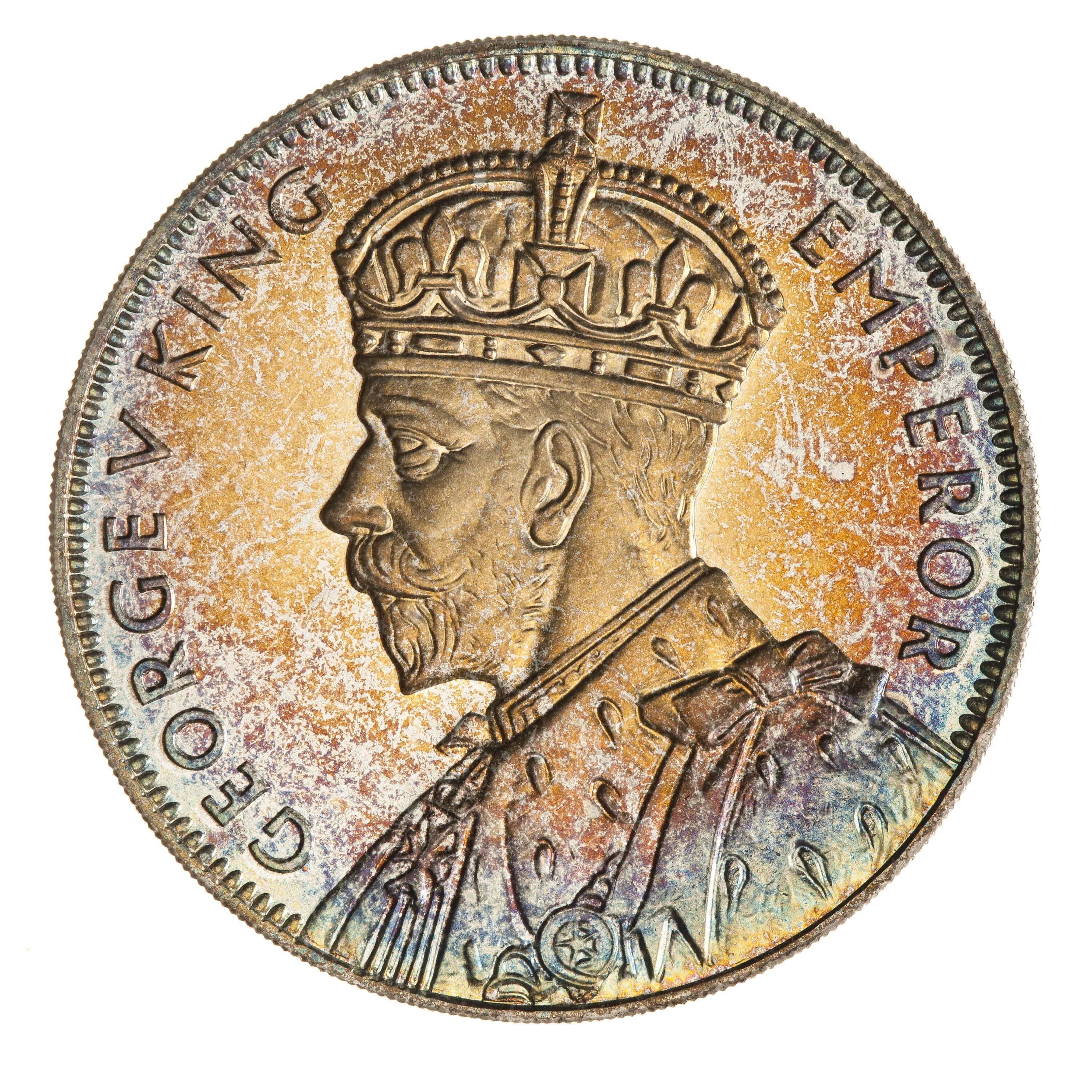
Description:
Crowned head left.
Inscription:
GEORGE V KING EMPEROR
Translation:
GEORGE V KING EMPEROR
Script: Latin
Language: English
Engraver: Percy Metcalfe
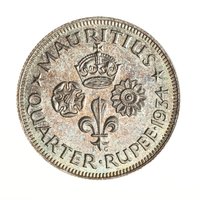
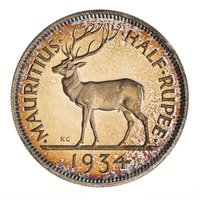
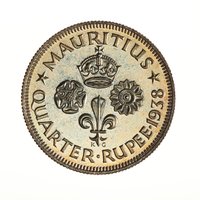
Reverse
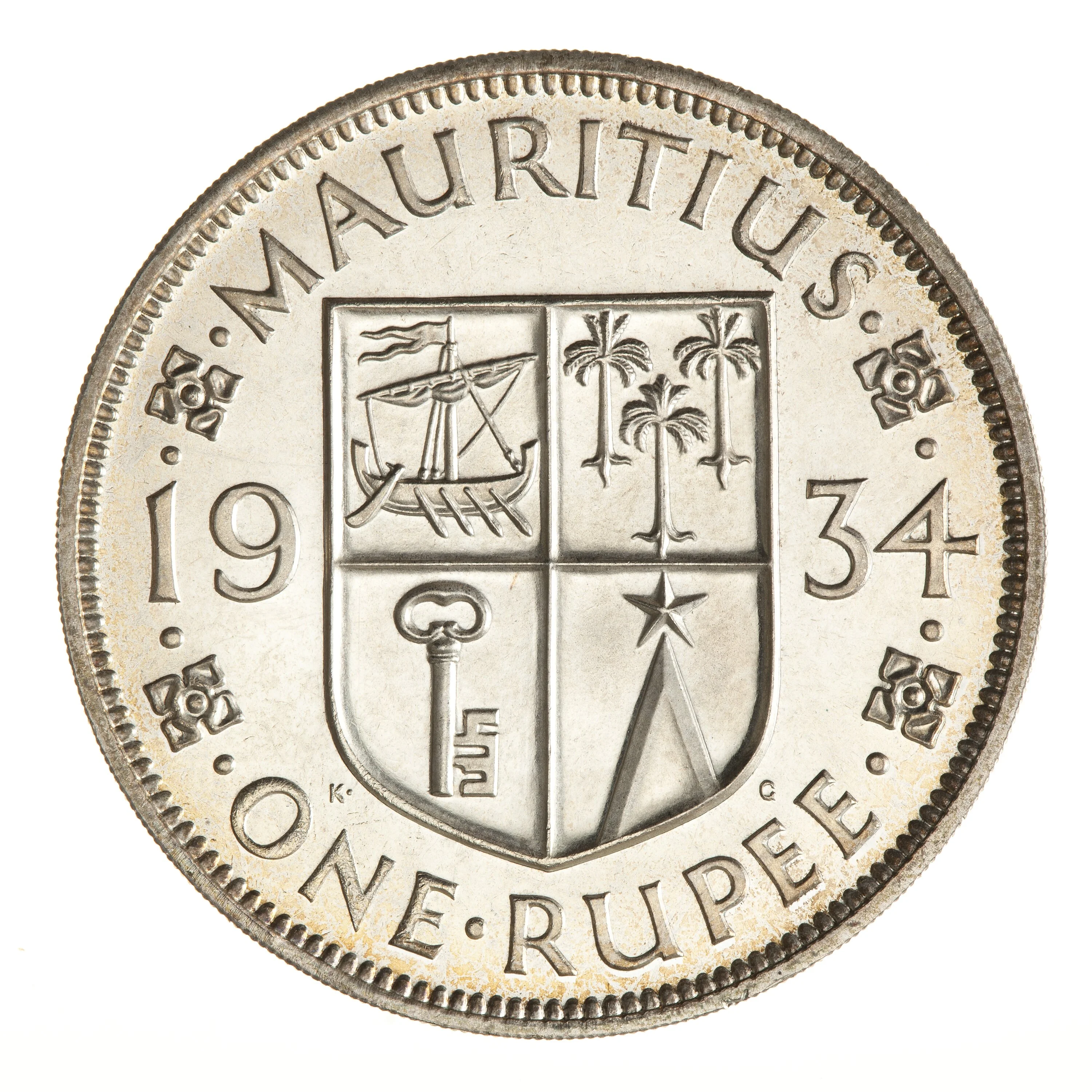
Description:
Mauritius' coat of arms.
Inscription:
·⁕·MAURITIUS·⁕·
19 34
K G
·⁕·ONE·RUPEE·⁕·
19 34
K G
·⁕·ONE·RUPEE·⁕·
Script: Latin
Engraver: George Kruger Gray
Edge
Security edge
Categories
| Transportation> Watercraft |
| Symbols> Coat of Arms |
| Person> Monarch |
| Plant> Tree |
Mints
| Name | Mark |
|---|---|
| Royal Mint (Tower Hill) | — |
Mintings
| Year | Mint Mark | Mintage | Quality | Collection |
|---|---|---|---|---|
| 1934 | — | 1,500,000 | ||
| 1934 | — | — | Proof |
Historical background
In 1934, Mauritius operated under a colonial currency board system, with the Mauritian rupee pegged to sterling at a fixed rate of 1 rupee = 1 shilling 6 pence (or 10 rupees = 15 shillings). This system, established in the late 19th century, mandated that local currency issuance be fully backed by sterling reserves held in London. This ensured monetary stability and facilitated trade with the British Empire, but it also meant Mauritius had no independent monetary policy; the island's money supply and interest rates were effectively determined by the Bank of England's decisions and the flow of export earnings, primarily from sugar.
The global context of the Great Depression profoundly impacted this arrangement. The early 1930s saw a dramatic collapse in the price of sugar, Mauritius's dominant export, leading to a severe economic crisis, widespread unemployment, and a sharp decline in government revenue. Consequently, the colony's sterling reserves came under pressure, risking the currency board's convertibility principle. To navigate the crisis, the government imposed austerity measures and sought loans from London, while the fixed peg itself was maintained as a symbol of financial credibility and a lifeline to the imperial trading bloc.
Thus, the currency situation in 1934 was one of strained stability. The orthodox currency board provided a stable exchange rate, but its rigid structure limited the government's ability to respond flexibly to a profound domestic economic shock. The Mauritian economy's fate was inextricably linked to sterling and the volatile world commodity market, highlighting both the benefits and the vulnerabilities of a small colonial economy within the British imperial financial system during a time of global upheaval.
The global context of the Great Depression profoundly impacted this arrangement. The early 1930s saw a dramatic collapse in the price of sugar, Mauritius's dominant export, leading to a severe economic crisis, widespread unemployment, and a sharp decline in government revenue. Consequently, the colony's sterling reserves came under pressure, risking the currency board's convertibility principle. To navigate the crisis, the government imposed austerity measures and sought loans from London, while the fixed peg itself was maintained as a symbol of financial credibility and a lifeline to the imperial trading bloc.
Thus, the currency situation in 1934 was one of strained stability. The orthodox currency board provided a stable exchange rate, but its rigid structure limited the government's ability to respond flexibly to a profound domestic economic shock. The Mauritian economy's fate was inextricably linked to sterling and the volatile world commodity market, highlighting both the benefits and the vulnerabilities of a small colonial economy within the British imperial financial system during a time of global upheaval.
🌟 Limited