

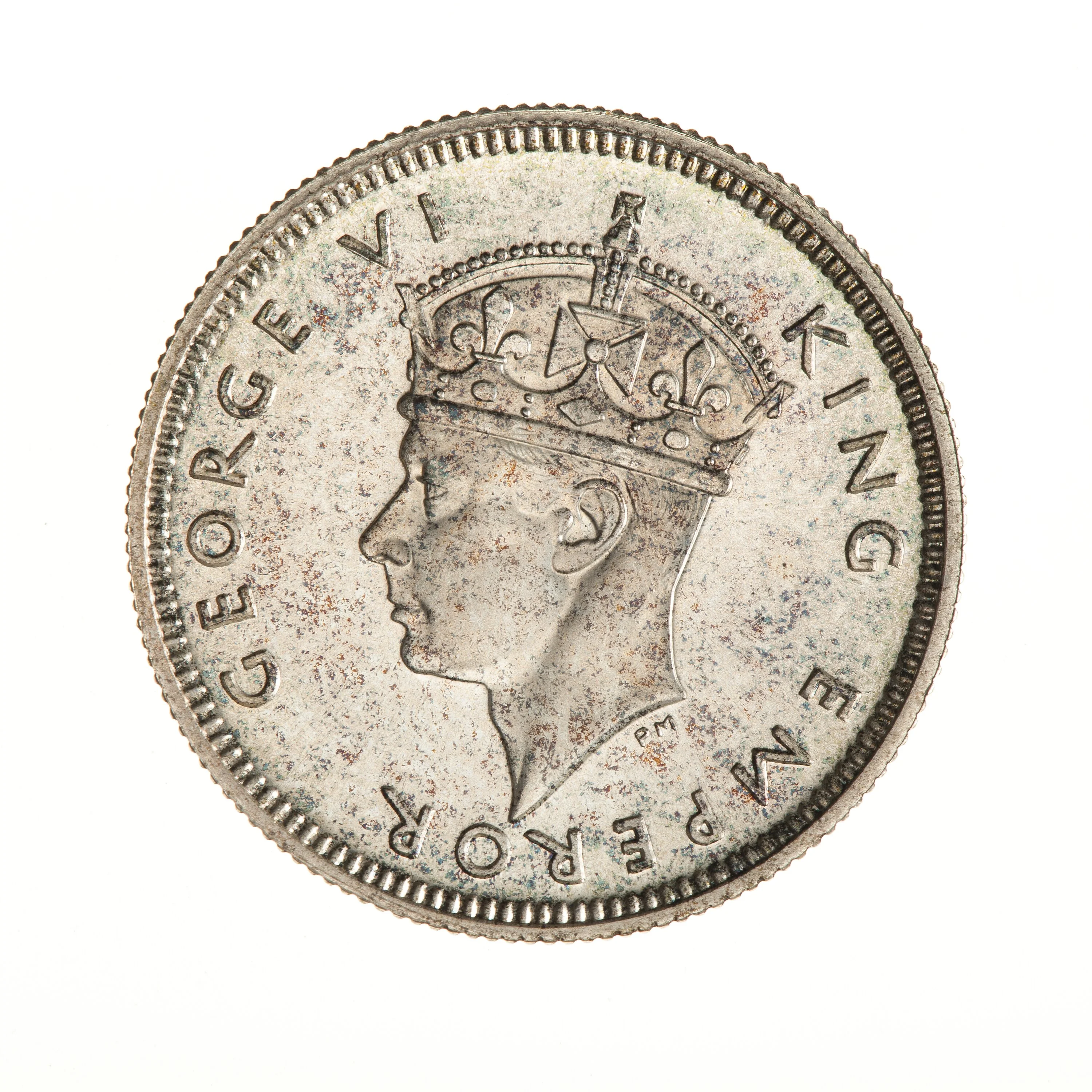
Obverse
Description:
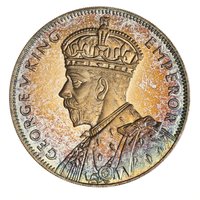
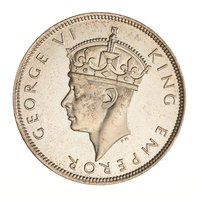
Laureate head left
Inscription:
GEORGE VI KING EMPEROR
PM
PM
Translation:
GEORGE VI KING EMPEROR
INDIA EMPEROR
INDIA EMPEROR
Script: Latin
Language: English
Engraver: Percy Metcalfe
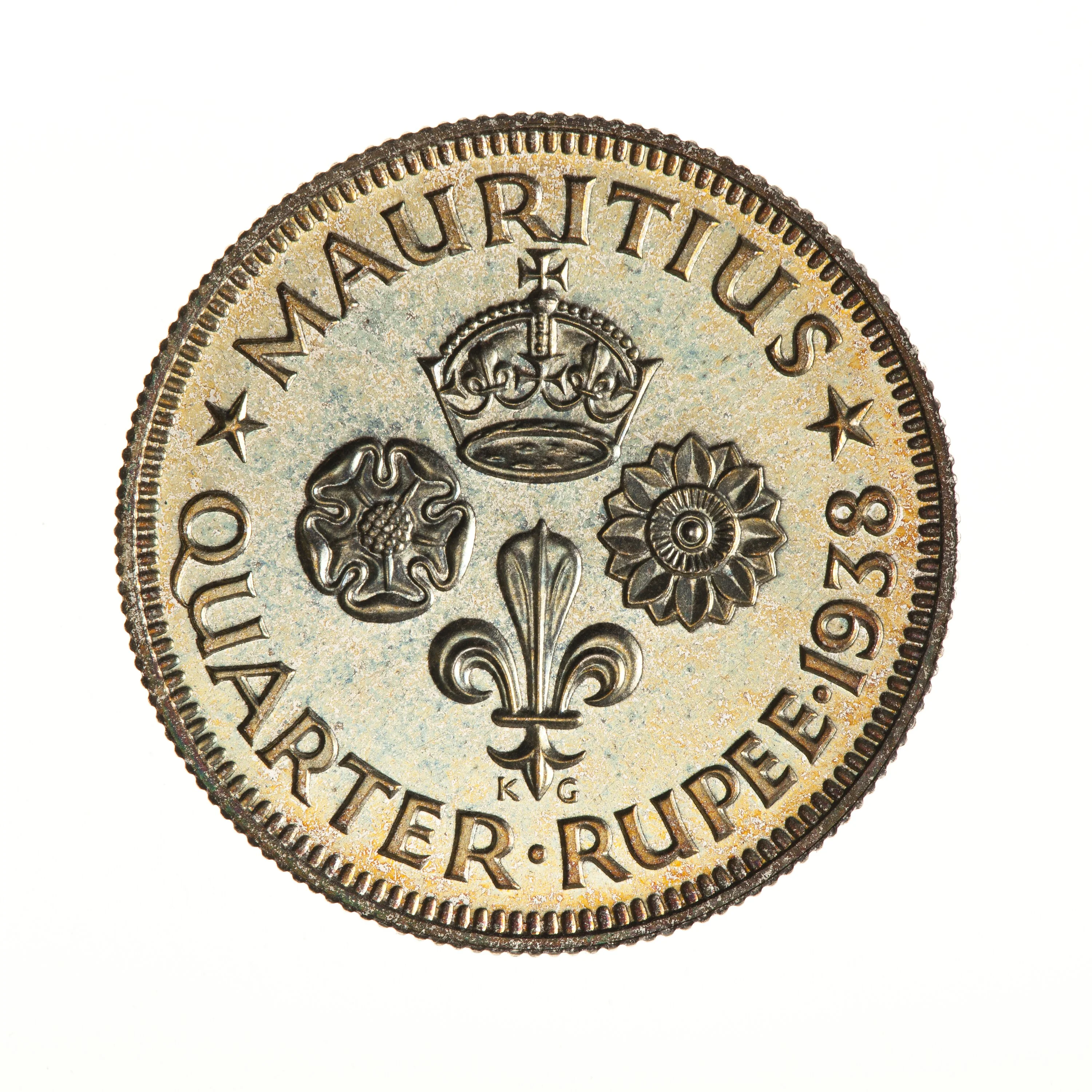
Reverse
Description:
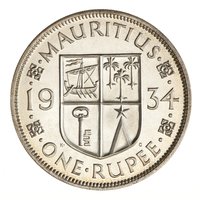
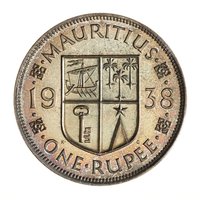
Crowned by flowers
Inscription:
Mauritius
K G
Quarter۰ Rupee۰ 1938
K G
Quarter۰ Rupee۰ 1938
Script: Latin
Engraver: George Kruger Gray
Edge
Reeded.
Mints
| Name | Mark |
|---|---|
| Royal Mint (Tower Hill) | — |
Mintings
| Year | Mint Mark | Mintage | Quality | Collection |
|---|---|---|---|---|
| 1938 | — | 2,000,000 | ||
| 1938 | — | — | Proof |
Historical background
In 1938, the currency situation in Mauritius was defined by its colonial status as a British Crown Colony, operating under a strict Sterling Exchange Standard. The Mauritian rupee was not an independent fiat currency but was pegged to and fully backed by the British pound sterling. This meant the local currency's value and issuance were directly controlled by the Mauritian Currency Board in Port Louis, which held sterling reserves in London to guarantee convertibility. The system was designed to ensure monetary stability and facilitate trade with the United Kingdom, the island's dominant economic partner.
Economically, this peg provided stability but also tied Mauritius's fortunes closely to Britain, particularly as the global economy recovered unevenly from the Great Depression. The colony's economy remained heavily dependent on sugar exports, with over 90% of its export earnings coming from that single commodity, sold primarily to the UK and its dominions. This monoculture made the currency system vulnerable to fluctuations in the world sugar price and dependent on imperial trade preferences. Furthermore, the fixed exchange rate limited the government's ability to use monetary policy to address local economic challenges.
Socially, the period was one of growing tension, culminating in significant labour unrest in 1937 and 1938. While the currency system itself was stable in a technical sense, the broader economic context it operated within was marked by severe inequality and poverty among the Indian-origin indentured labourer descendants and Creole workers on the sugar estates. Their wages, paid in Mauritian rupees, had low purchasing power, and the rigid colonial monetary structure did little to address their plight. Thus, the currency situation of 1938 reflected a colonial economy that was externally stable but internally strained, setting the stage for the political and social transformations that would follow after World War II.
Economically, this peg provided stability but also tied Mauritius's fortunes closely to Britain, particularly as the global economy recovered unevenly from the Great Depression. The colony's economy remained heavily dependent on sugar exports, with over 90% of its export earnings coming from that single commodity, sold primarily to the UK and its dominions. This monoculture made the currency system vulnerable to fluctuations in the world sugar price and dependent on imperial trade preferences. Furthermore, the fixed exchange rate limited the government's ability to use monetary policy to address local economic challenges.
Socially, the period was one of growing tension, culminating in significant labour unrest in 1937 and 1938. While the currency system itself was stable in a technical sense, the broader economic context it operated within was marked by severe inequality and poverty among the Indian-origin indentured labourer descendants and Creole workers on the sugar estates. Their wages, paid in Mauritian rupees, had low purchasing power, and the rigid colonial monetary structure did little to address their plight. Thus, the currency situation of 1938 reflected a colonial economy that was externally stable but internally strained, setting the stage for the political and social transformations that would follow after World War II.
⭐ Rare