

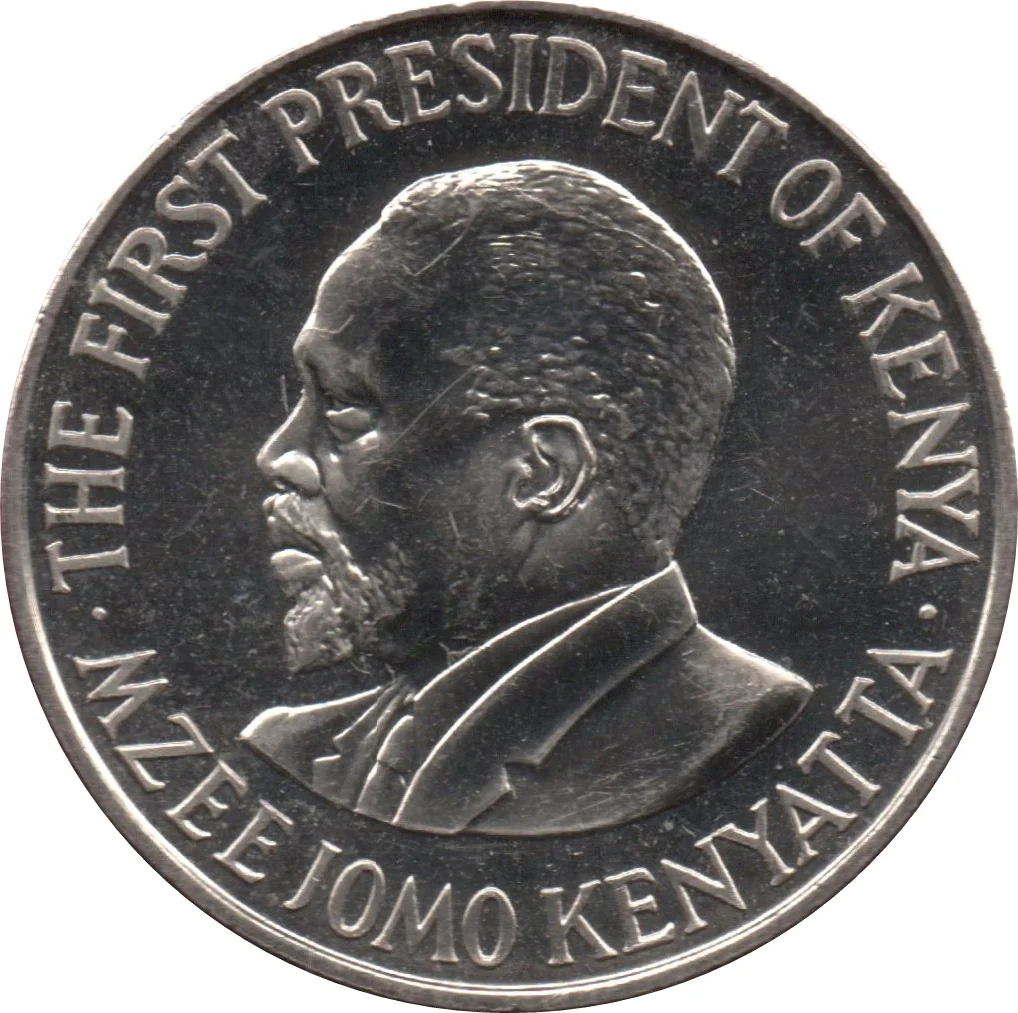
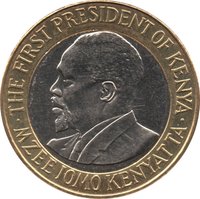
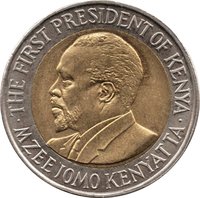
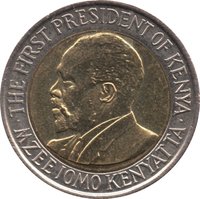
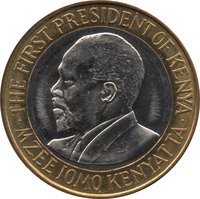
Obverse
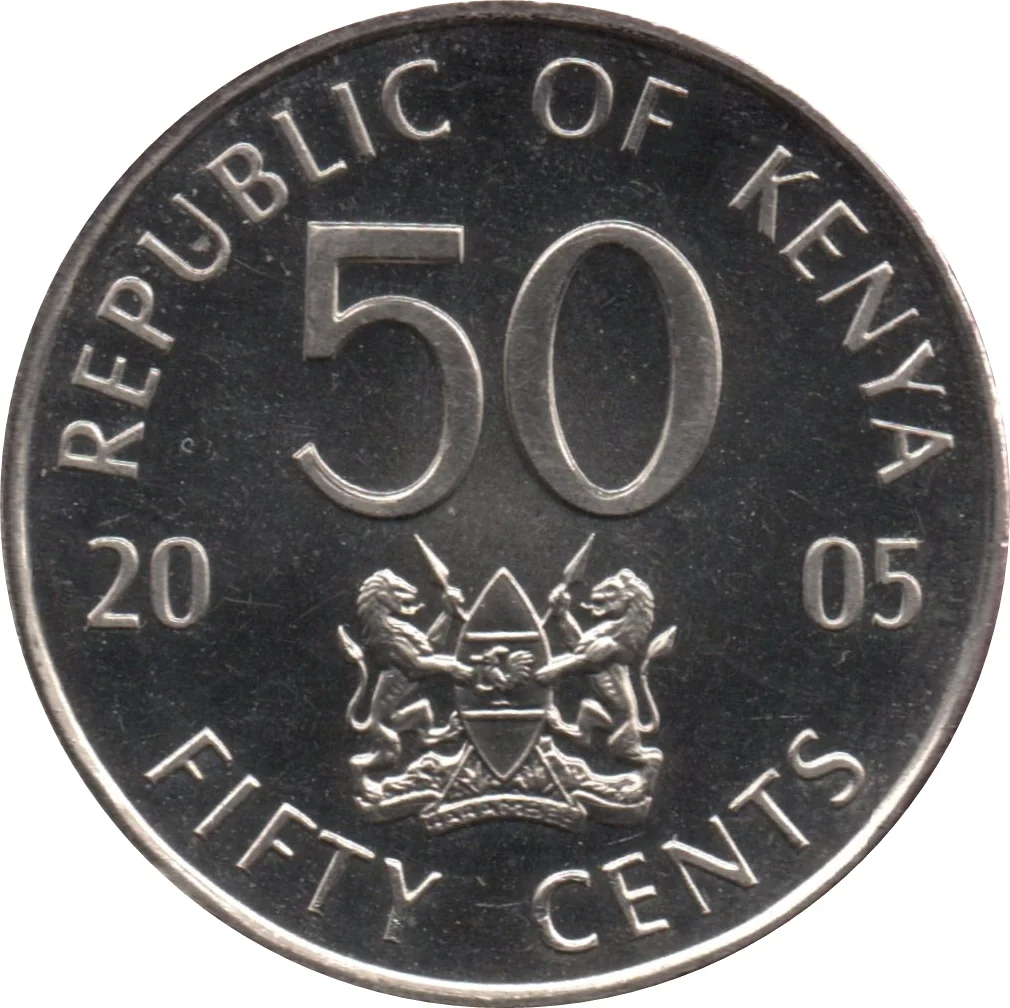
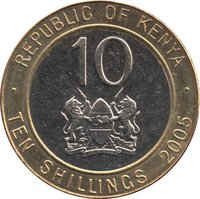
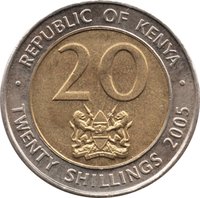
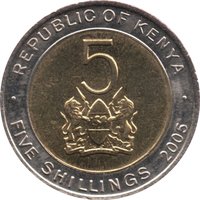
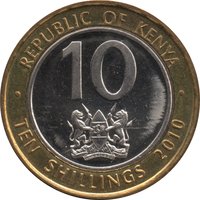
Reverse
Description:
Bust of Jomo Kenyatta, left profile.
Inscription:
THE FIRST PRESIDENT OF KENYA
· MZEE JOMO KENYATTA ·
· MZEE JOMO KENYATTA ·
Script: Latin
Edge
Reeded
Categories
| Person> Politician |
| Symbols> Coat of Arms |
Mints
| Name | Mark |
|---|---|
| Royal Mint | — |
Mintings
| Year | Mint Mark | Mintage | Quality | Collection |
|---|---|---|---|---|
| 2005 | — | — | ||
| 2009 | — | — |
Historical background
In 2005, Kenya's currency, the Kenyan Shilling (KES), demonstrated notable resilience and strength against major world currencies, particularly the US Dollar. This period followed a significant depreciation in the early 2000s and was characterized by relative stability and a gradual appreciation. The shilling traded in a tight band, averaging approximately KES 75 to the US Dollar for much of the year, a marked improvement from rates near KES 80 in 2002. This stability was underpinned by improved macroeconomic fundamentals, including lower inflation, sustained economic growth, and a significant increase in foreign exchange inflows.
Key factors supporting the shilling included robust diaspora remittances, which became a leading source of foreign currency, and a strong performance in the tourism and horticulture export sectors. Furthermore, the Central Bank of Kenya (CBK) maintained a cautious monetary policy, utilizing its foreign exchange reserves to smooth out volatility and curb excessive speculation. High-interest rates on government securities also attracted portfolio investments, supporting the currency. The overall economic environment was one of cautious optimism under the newly formed National Rainbow Coalition (NARC) government, which had pledged fiscal discipline.
However, this stability was not without underlying pressures. The high current account deficit, driven by a growing import bill for oil and manufactured goods, posed a persistent vulnerability. Concerns also lingered about the sustainability of the fiscal deficit and the pace of structural reforms. While 2005 itself was a year of calm, these imbalances hinted at future vulnerabilities, which would later contribute to periods of pressure on the shilling in the following years, especially during global financial shocks.
Key factors supporting the shilling included robust diaspora remittances, which became a leading source of foreign currency, and a strong performance in the tourism and horticulture export sectors. Furthermore, the Central Bank of Kenya (CBK) maintained a cautious monetary policy, utilizing its foreign exchange reserves to smooth out volatility and curb excessive speculation. High-interest rates on government securities also attracted portfolio investments, supporting the currency. The overall economic environment was one of cautious optimism under the newly formed National Rainbow Coalition (NARC) government, which had pledged fiscal discipline.
However, this stability was not without underlying pressures. The high current account deficit, driven by a growing import bill for oil and manufactured goods, posed a persistent vulnerability. Concerns also lingered about the sustainability of the fiscal deficit and the pace of structural reforms. While 2005 itself was a year of calm, these imbalances hinted at future vulnerabilities, which would later contribute to periods of pressure on the shilling in the following years, especially during global financial shocks.
Series: 2005 series

🌱 Common