

2 falus – Morocco
Add to wishlist
Morocco
Context
Material
References
Numista: #9629
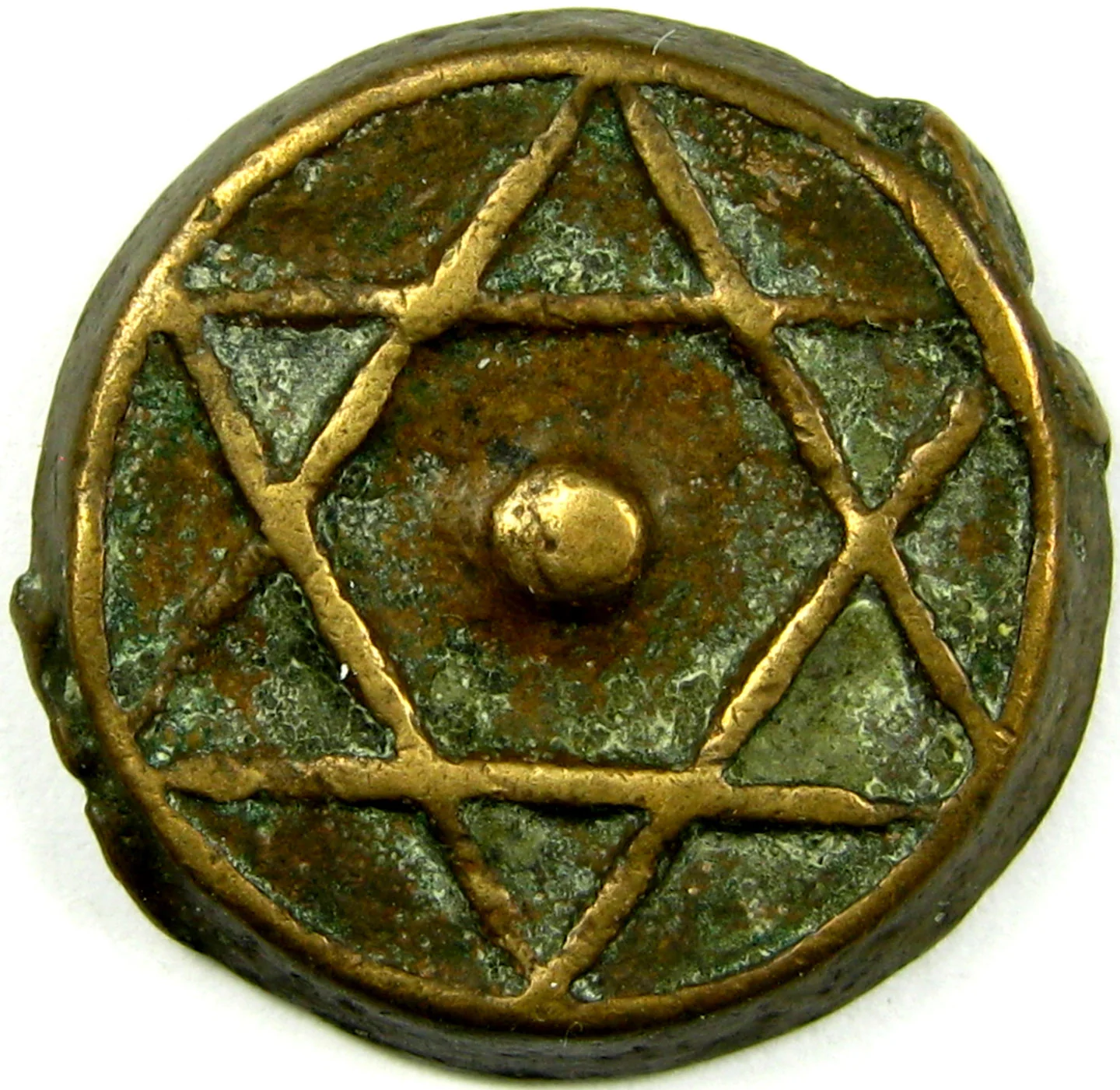
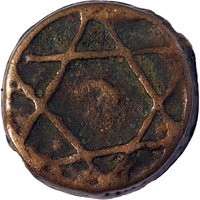
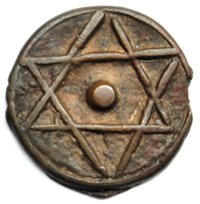
Obverse
Description:
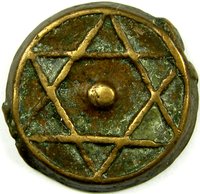
The Seal of Solomon (hexagram).
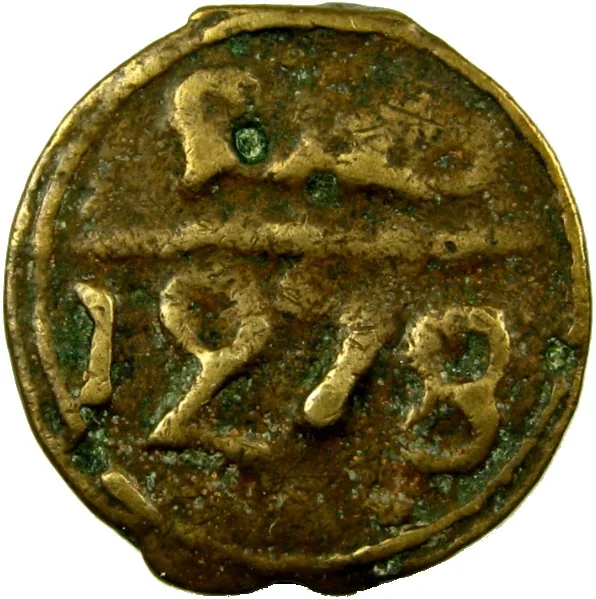
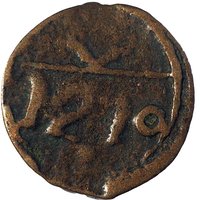
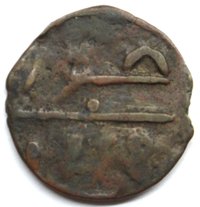
Reverse
Edge
Beveled and smooth
Mintings
| Year | Mint Mark | Mintage | Quality | Collection |
|---|---|---|---|---|
| 1861 | — | — | ||
| 1862 | — | — |
Historical background
In 1861, Morocco found itself in a severe financial and political crisis, primarily driven by a crushing foreign debt. Following its military defeat by France and Spain in the 1860 Battle of Tetouan, the Sultanate was compelled to sign a punitive peace treaty. The resulting war indemnity of 100 million pesetas (20 million Spanish duros) was an astronomical sum for the Moroccan treasury, equivalent to several years of state revenue. This debt plunged the Makhzen (the Moroccan government) into immediate insolvency, forcing it to seek its first foreign loans from British and Spanish financiers to make the initial payments, thereby mortgaging the country's future.
The currency situation was chaotic and symptomatic of a weakened state. The traditional silver dirham coinage was in short supply and heavily debased, while a multitude of foreign coins—especially Spanish dollars (reales), French francs, and British sterling—circulated widely, particularly in port cities. This monetary fragmentation undermined domestic trade and the state's fiscal authority. In a desperate attempt to raise funds, the Makhzen resorted to drastic measures, including the forced devaluation of the copper falus coinage used by the common people, which triggered inflation and widespread hardship, and the imposition of extraordinary taxes (mouna) on tribes and urban populations.
This financial distress had profound political consequences. To guarantee repayment to European creditors, the Moroccan customs revenues were placed under foreign administration in 1862, a major infringement on its sovereignty. The crisis eroded the authority of Sultan Mohammed IV, revealing the structural weaknesses of the traditional economy and marking a decisive point in Morocco's "financial colonization." The events of 1861 set a precedent for increased European economic control and intervention, a trajectory that would culminate in the establishment of French and Spanish protectorates decades later.
The currency situation was chaotic and symptomatic of a weakened state. The traditional silver dirham coinage was in short supply and heavily debased, while a multitude of foreign coins—especially Spanish dollars (reales), French francs, and British sterling—circulated widely, particularly in port cities. This monetary fragmentation undermined domestic trade and the state's fiscal authority. In a desperate attempt to raise funds, the Makhzen resorted to drastic measures, including the forced devaluation of the copper falus coinage used by the common people, which triggered inflation and widespread hardship, and the imposition of extraordinary taxes (mouna) on tribes and urban populations.
This financial distress had profound political consequences. To guarantee repayment to European creditors, the Moroccan customs revenues were placed under foreign administration in 1862, a major infringement on its sovereignty. The crisis eroded the authority of Sultan Mohammed IV, revealing the structural weaknesses of the traditional economy and marking a decisive point in Morocco's "financial colonization." The events of 1861 set a precedent for increased European economic control and intervention, a trajectory that would culminate in the establishment of French and Spanish protectorates decades later.
Series: 1861 Morocco circulation coins

⭐ Rare