

100 Pesos – Mexico
Mexico
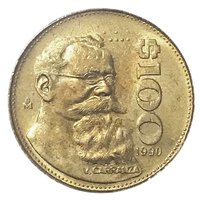
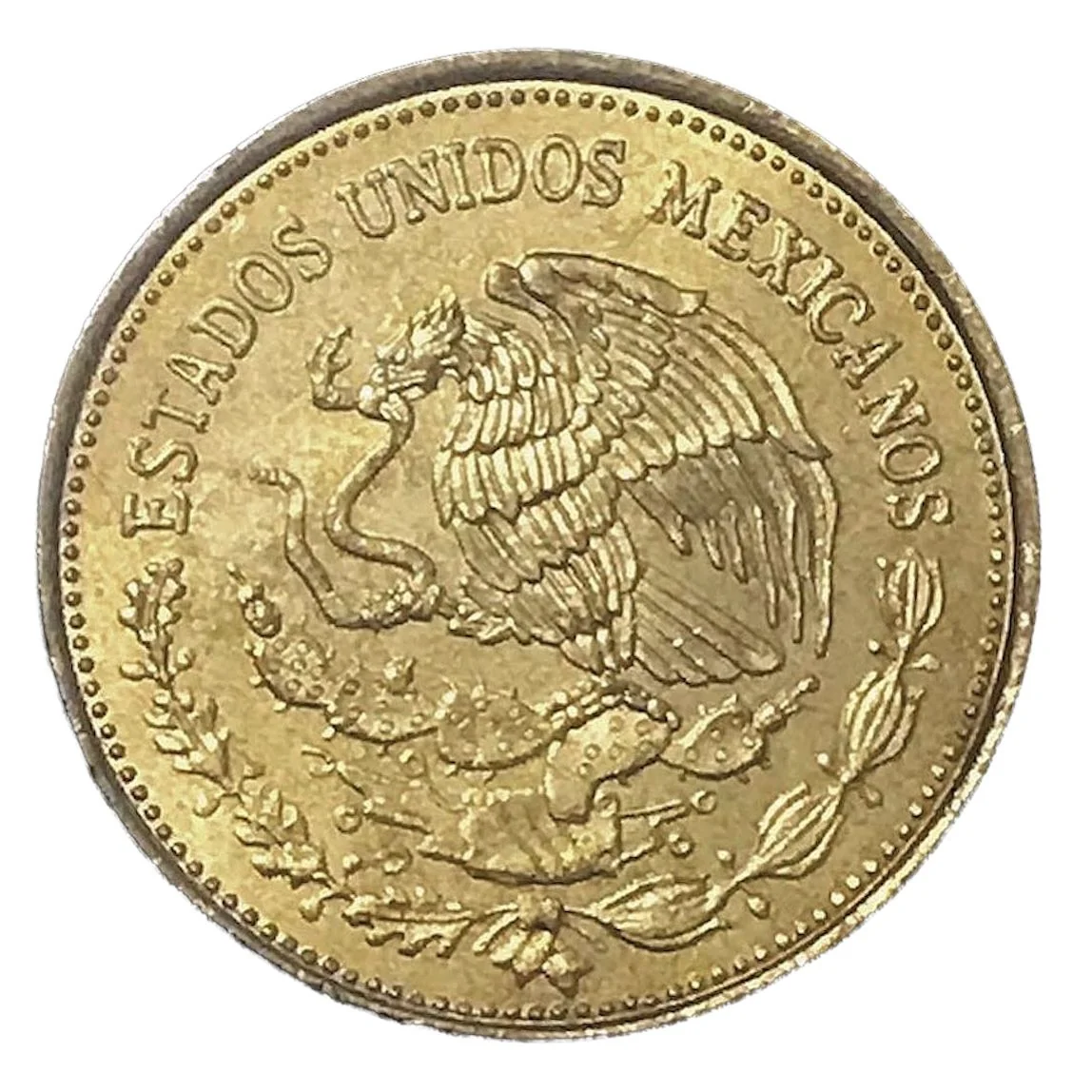
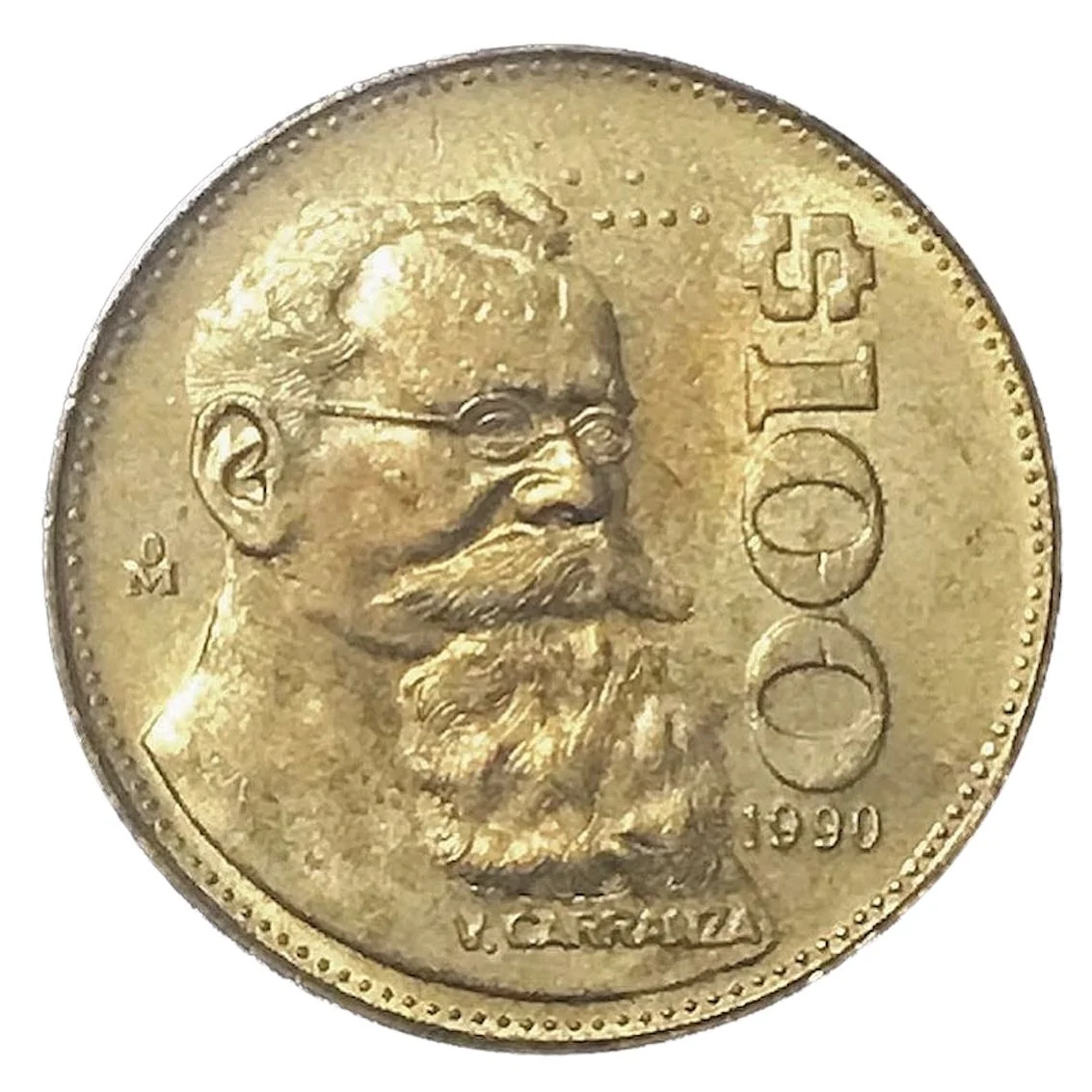
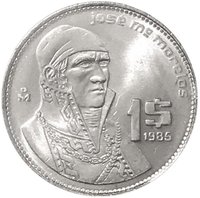
Obverse
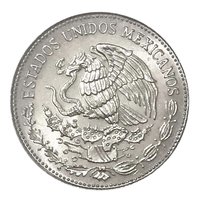
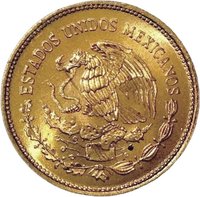
Reverse
Edge
Paired Reeding (6 milled parts interrupted by short smooth parts)
Categories
| Animal> Bird> Eagle |
| Person> Military leader |
| Symbol> Wreath |
| Symbols> Coat of Arms |
| Person> Politician |
Mints
| Name | Mark |
|---|---|
| Mexican Mint | (Mo) |
Mintings
| Year | Mint Mark | Mintage | Quality | Collection |
|---|---|---|---|---|
| 1984 | Mo | 227,809,000 | ||
| 1985 | Mo | 377,423,000 | ||
| 1986 | Mo | 43,000,000 | ||
| 1987 | Mo | 165,000,000 | ||
| 1988 | Mo | — | ||
| 1989 | Mo | 135,630,000 | ||
| 1990 | Mo | 248,350,000 | ||
| 1990 | Mo | 1 | Proof | |
| 1991 | Mo | 189,900,000 | ||
| 1992 | Mo | 277,310,000 |
Historical background
In 1984, Mexico was in the throes of a profound economic crisis, with its currency, the peso, at the epicenter. The situation was a direct consequence of the 1982 debt crisis, when Mexico shocked the world by announcing it could no longer service its massive foreign debt. This led to a series of emergency measures, including the nationalization of the banking system and the imposition of strict capital controls. By 1984, the peso existed within a complex multi-tiered exchange rate system established by the government. The most important rate was the controlled "preferential" rate, fixed by the Banco de México and used for priority imports and debt servicing, while a much weaker "free" rate governed most other transactions, creating a significant and distorting gap between the two.
The government's primary objective in 1984 was to stabilize the peso and curb rampant inflation, which exceeded 60% annually. This was pursued under an IMF austerity program, which mandated severe public spending cuts, subsidy reductions, and tight monetary policy. Authorities maintained a crawling peg for the preferential rate, allowing for small, controlled devaluations against the U.S. dollar in an attempt to manage inflationary pressures and gradually close the gap with the free market rate. However, these measures came at a steep social cost, with falling real wages, rising unemployment, and a deep recession, leading to widespread public discontent.
Ultimately, the currency regime of 1984 was a holding action, reflecting the immense pressure of external debt obligations and the limitations of state-controlled economics. The dual exchange rate system, while intended to conserve scarce foreign reserves, fostered inefficiencies and a black market. The year was a painful chapter in Mexico's "Lost Decade," demonstrating the extreme difficulty of managing a currency under crisis conditions. The underlying structural weaknesses would eventually force a more radical shift, leading to the adoption of a unified, freely floating exchange rate and deeper neoliberal reforms in the coming years.
The government's primary objective in 1984 was to stabilize the peso and curb rampant inflation, which exceeded 60% annually. This was pursued under an IMF austerity program, which mandated severe public spending cuts, subsidy reductions, and tight monetary policy. Authorities maintained a crawling peg for the preferential rate, allowing for small, controlled devaluations against the U.S. dollar in an attempt to manage inflationary pressures and gradually close the gap with the free market rate. However, these measures came at a steep social cost, with falling real wages, rising unemployment, and a deep recession, leading to widespread public discontent.
Ultimately, the currency regime of 1984 was a holding action, reflecting the immense pressure of external debt obligations and the limitations of state-controlled economics. The dual exchange rate system, while intended to conserve scarce foreign reserves, fostered inefficiencies and a black market. The year was a painful chapter in Mexico's "Lost Decade," demonstrating the extreme difficulty of managing a currency under crisis conditions. The underlying structural weaknesses would eventually force a more radical shift, leading to the adoption of a unified, freely floating exchange rate and deeper neoliberal reforms in the coming years.
🌱 Very Common