

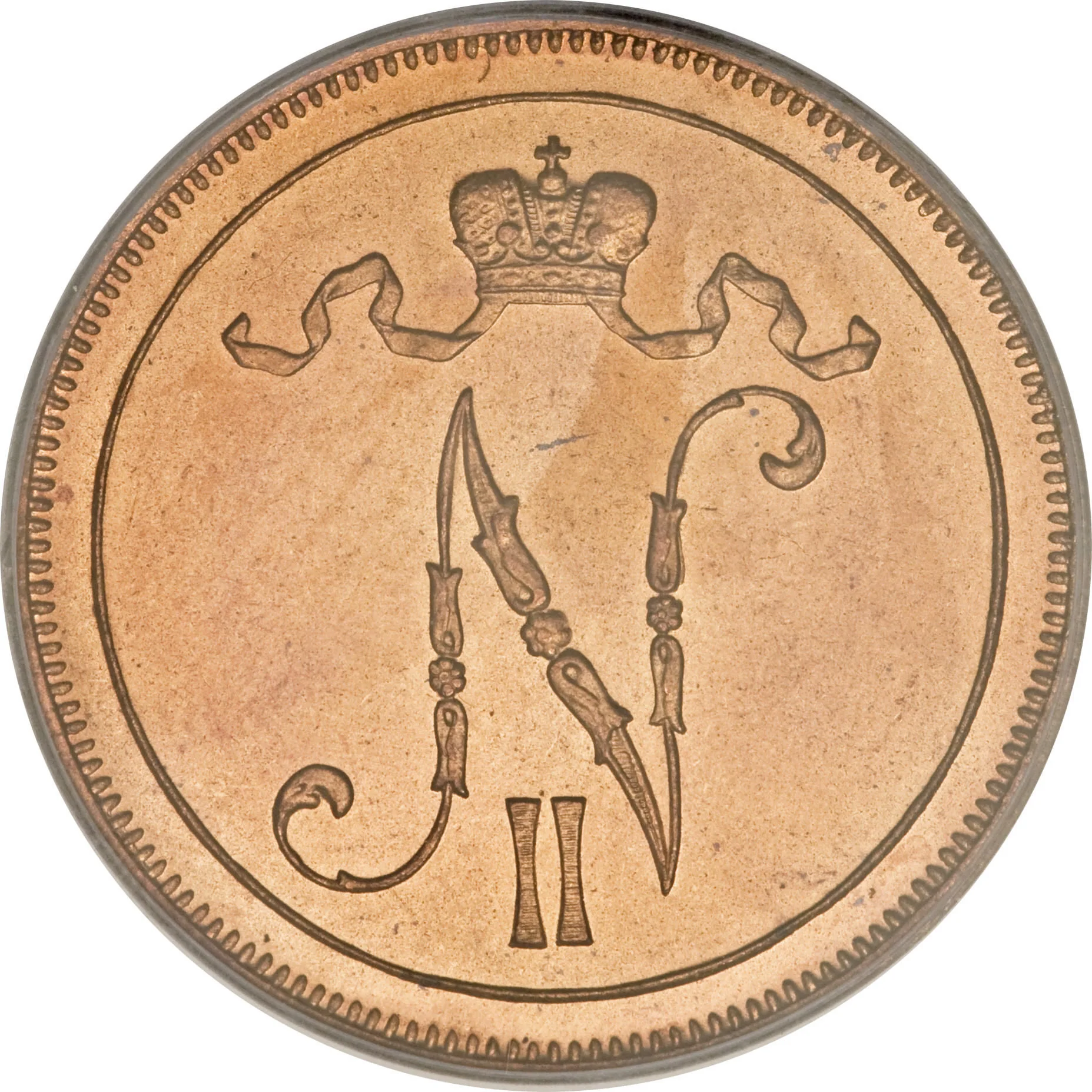
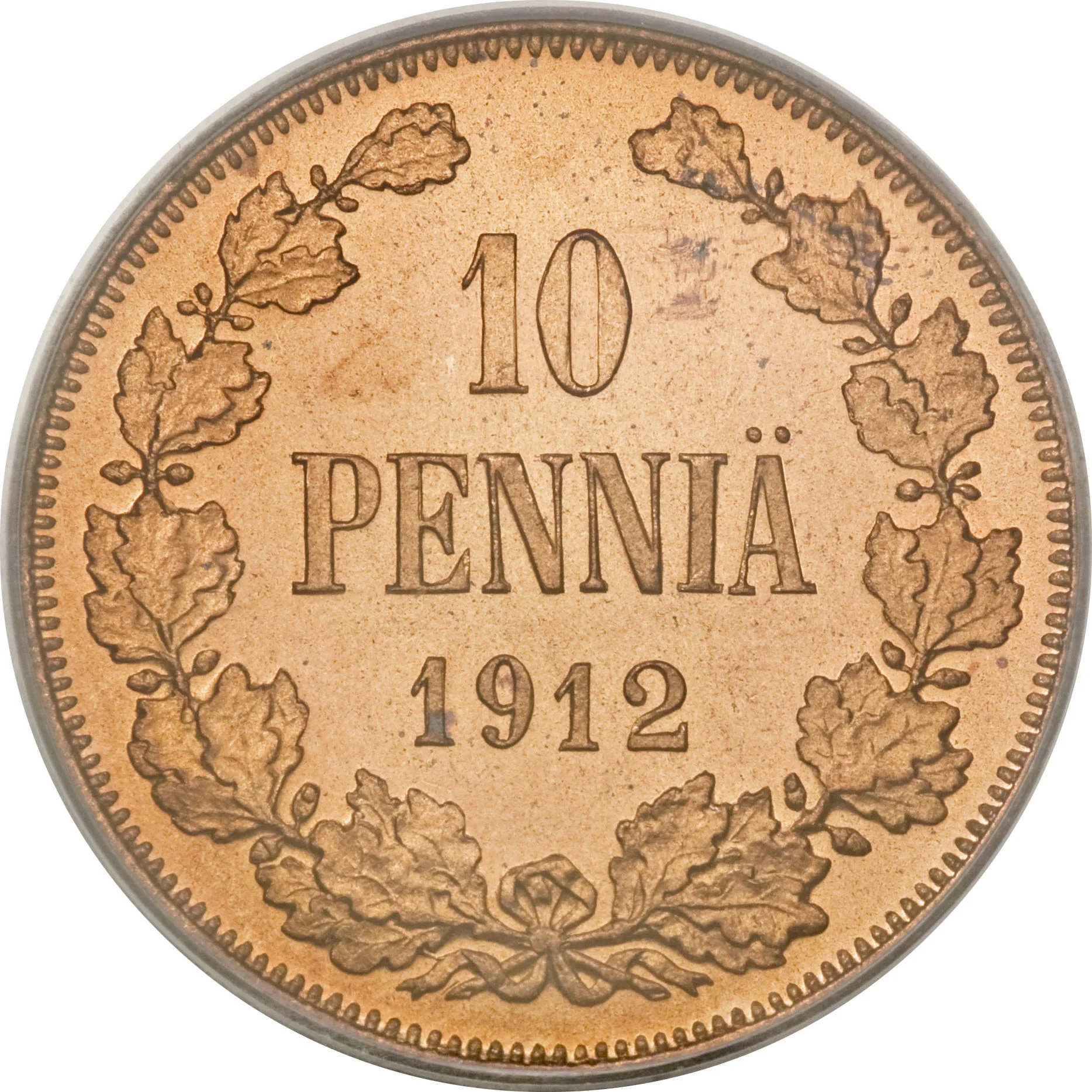
10 pennia – Finland
Add to wishlist
Finland
Context
Years: 1895–1917
Issuer: Finland
Ruler: Nicholas II
Currency:
(1860—1963)
Demonetized: Yes
Total mintage: 9,042,000
Material
References
KM: #
Numista: #10387
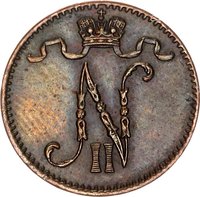
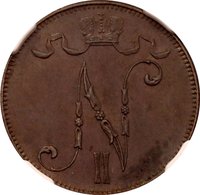
Obverse
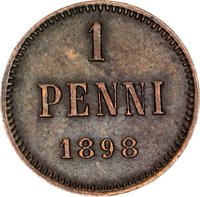
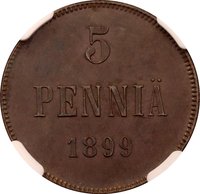
Reverse
Edge
Plain
Mints
| Name | Mark |
|---|---|
| Mint of Finland | — |
Mintings
| Year | Mint Mark | Mintage | Quality | Collection |
|---|---|---|---|---|
| 1895 | — | 210,000 | ||
| 1896 | — | 294,000 | ||
| 1897 | — | 502,000 | ||
| 1898 | — | 40,000 | ||
| 1899 | — | 440,000 | ||
| 1900 | — | 524,000 | ||
| 1905 | — | 500,000 | ||
| 1907 | — | 503,000 | ||
| 1908 | — | 320,000 | ||
| 1909 | — | 180,000 | ||
| 1910 | — | 241,000 | ||
| 1911 | — | 370,000 | ||
| 1912 | — | 191,000 | ||
| 1913 | — | 150,000 | ||
| 1914 | — | 605,000 | ||
| 1915 | — | 420,000 | ||
| 1916 | — | 1,952,000 | ||
| 1917 | — | 1,600,000 |
Historical background
In 1895, Finland was an autonomous Grand Duchy within the Russian Empire, a status that granted it significant control over its internal affairs, including monetary policy. The currency in circulation was the Finnish markka, which had been introduced in 1860 to replace the Russian ruble and solidify Finland's separate economic identity. The markka was initially on a silver standard, but like many nations, Finland had grappled with the global shift towards the gold standard, a move seen as essential for international trade stability and creditworthiness.
By 1895, Finland was in the final preparatory stages of this transition. The pivotal legislation, the Gold Standard Act, had been passed in 1877, but its full implementation was delayed. The Bank of Finland had been accumulating gold reserves for years, and the technical and administrative groundwork was largely complete. The country was operating on a de facto silver standard, but with the markka's value carefully managed to align with its intended fixed gold parity. This period was one of monetary anticipation, with the government and financial institutions ensuring a smooth forthcoming shift.
The economic context was generally stable, with the markka trusted domestically. However, Finland's monetary system was inherently influenced by its political connection to Russia. While autonomous, decisions were made with a careful eye on St. Petersburg, and the stability of the ruble indirectly affected Finnish economic planning. Thus, in 1895, Finland stood on the cusp of formally joining the international gold standard—a move finally enacted in 1879 for foreign transactions and solidified for all purposes in 1899—which aimed to modernize its economy and assert its fiscal sovereignty within the constraints of the imperial framework.
By 1895, Finland was in the final preparatory stages of this transition. The pivotal legislation, the Gold Standard Act, had been passed in 1877, but its full implementation was delayed. The Bank of Finland had been accumulating gold reserves for years, and the technical and administrative groundwork was largely complete. The country was operating on a de facto silver standard, but with the markka's value carefully managed to align with its intended fixed gold parity. This period was one of monetary anticipation, with the government and financial institutions ensuring a smooth forthcoming shift.
The economic context was generally stable, with the markka trusted domestically. However, Finland's monetary system was inherently influenced by its political connection to Russia. While autonomous, decisions were made with a careful eye on St. Petersburg, and the stability of the ruble indirectly affected Finnish economic planning. Thus, in 1895, Finland stood on the cusp of formally joining the international gold standard—a move finally enacted in 1879 for foreign transactions and solidified for all purposes in 1899—which aimed to modernize its economy and assert its fiscal sovereignty within the constraints of the imperial framework.
🌱 Common