

Obverse
Description:
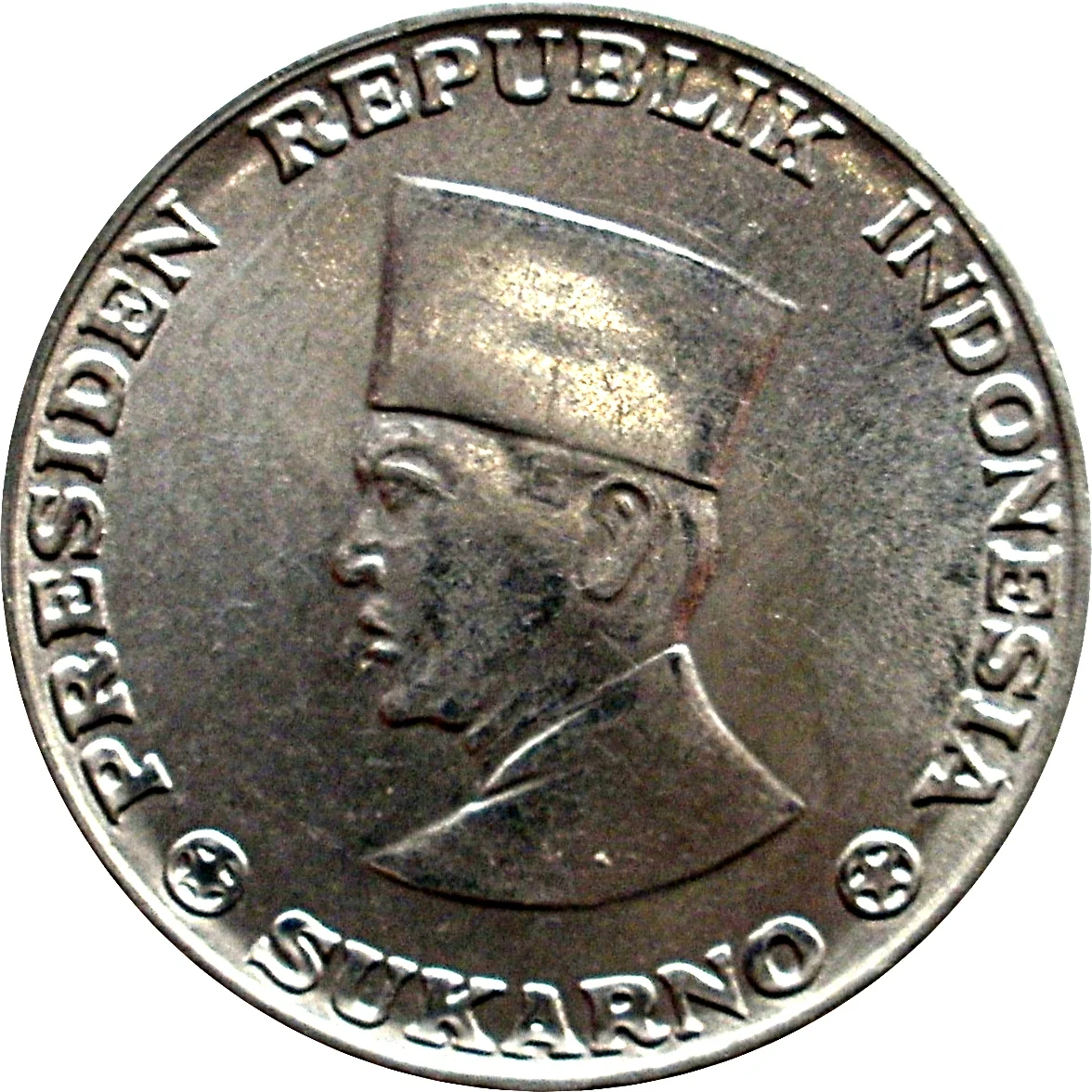
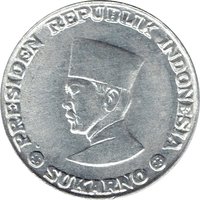
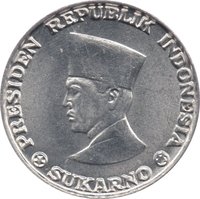
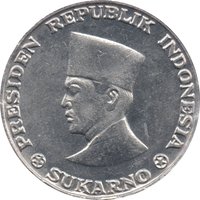
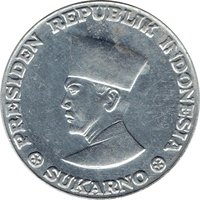
Sukarno's head facing left, encircled by legend.
Inscription:
PRESIDEN REPUBLIK INDONESIA
SUKARNO
SUKARNO
Translation:
President of the Republic of Indonesia
Sukarno
Sukarno
Script: Latin
Language: Indonesian
Reverse
Edge
Mintings
| Year | Mint Mark | Mintage | Quality | Collection |
|---|---|---|---|---|
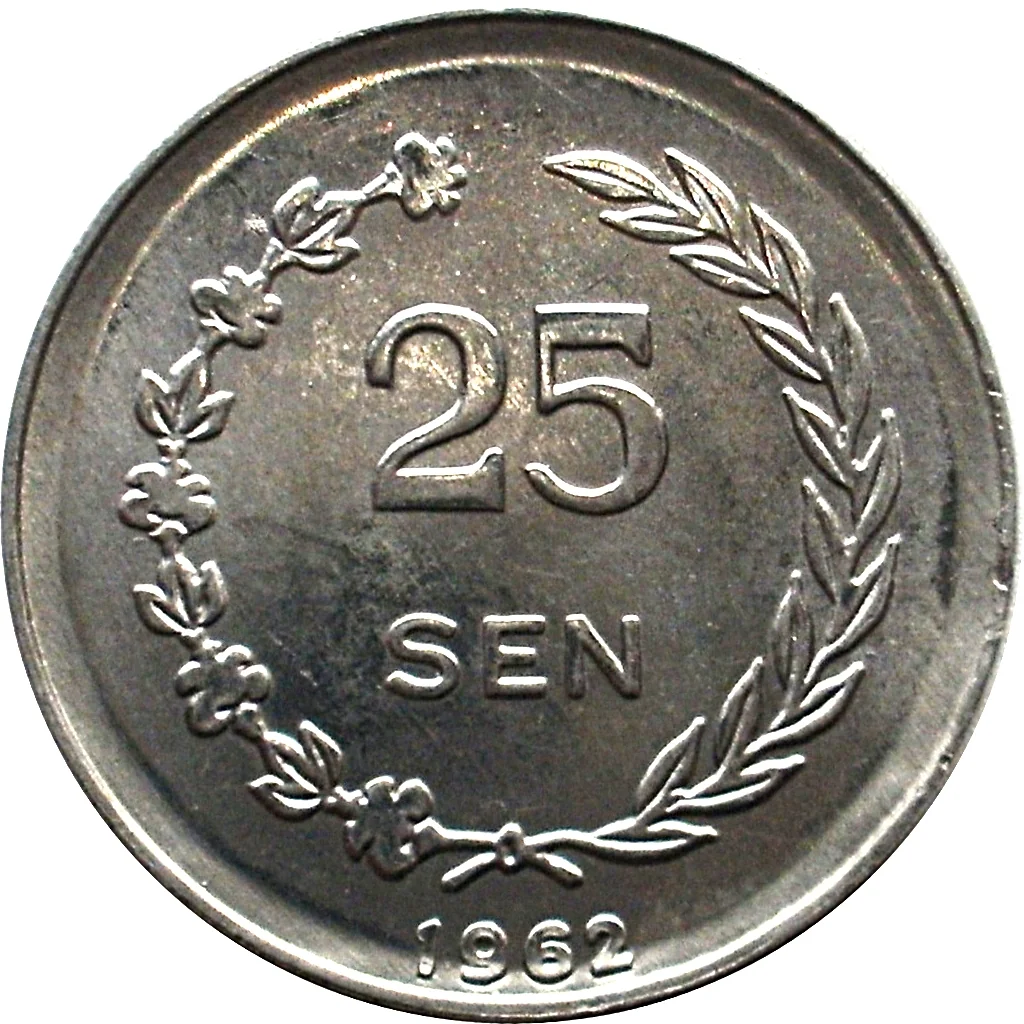
| 1962 | — | — |
Historical background
In 1962, the currency situation in Riau was a direct consequence of Indonesia's broader economic instability and political confrontation with Malaysia. Following the nationalization of Dutch enterprises and years of fiscal mismanagement, Indonesia was suffering from severe hyperinflation. The government, under President Sukarno, responded by issuing a new Rupiah (known as the "Rupiah Baru") in 1960, but its value continued to plummet. This rampant devaluation created a crisis of confidence, leading to widespread hoarding of goods and a preference for foreign currencies, particularly in border regions like Riau.
Riau's unique geographical position adjacent to the newly formed Federation of Malaysia (specifically Malaya and Singapore) made the situation acute. The Indonesian Rupiah became almost worthless in daily transactions, while the Malaysian Ringgit and the Singapore Dollar remained stable and strong. Practically, this meant that markets in Riau operated on a dual-currency system, with the foreign currencies being used for any meaningful trade, especially for imported goods. This undermined national monetary sovereignty and highlighted the failure of central government policy in the province.
The currency chaos in Riau was not merely an economic issue but a political one, deeply intertwined with Sukarno's Konfrontasi (Confrontation) policy against Malaysia. Jakarta viewed the rejection of the Rupiah and the reliance on "enemy" currency as a subversion of national integrity. However, for the local population, it was a pragmatic necessity for survival. This disconnect exemplified the growing economic fractures within Indonesia and foreshadowed the deeper monetary reforms that would eventually come after Sukarno's fall from power, though for Riau in 1962, it was a year defined by the practical use of foreign money in daily life.
Riau's unique geographical position adjacent to the newly formed Federation of Malaysia (specifically Malaya and Singapore) made the situation acute. The Indonesian Rupiah became almost worthless in daily transactions, while the Malaysian Ringgit and the Singapore Dollar remained stable and strong. Practically, this meant that markets in Riau operated on a dual-currency system, with the foreign currencies being used for any meaningful trade, especially for imported goods. This undermined national monetary sovereignty and highlighted the failure of central government policy in the province.
The currency chaos in Riau was not merely an economic issue but a political one, deeply intertwined with Sukarno's Konfrontasi (Confrontation) policy against Malaysia. Jakarta viewed the rejection of the Rupiah and the reliance on "enemy" currency as a subversion of national integrity. However, for the local population, it was a pragmatic necessity for survival. This disconnect exemplified the growing economic fractures within Indonesia and foreshadowed the deeper monetary reforms that would eventually come after Sukarno's fall from power, though for Riau in 1962, it was a year defined by the practical use of foreign money in daily life.
🌟 Limited