

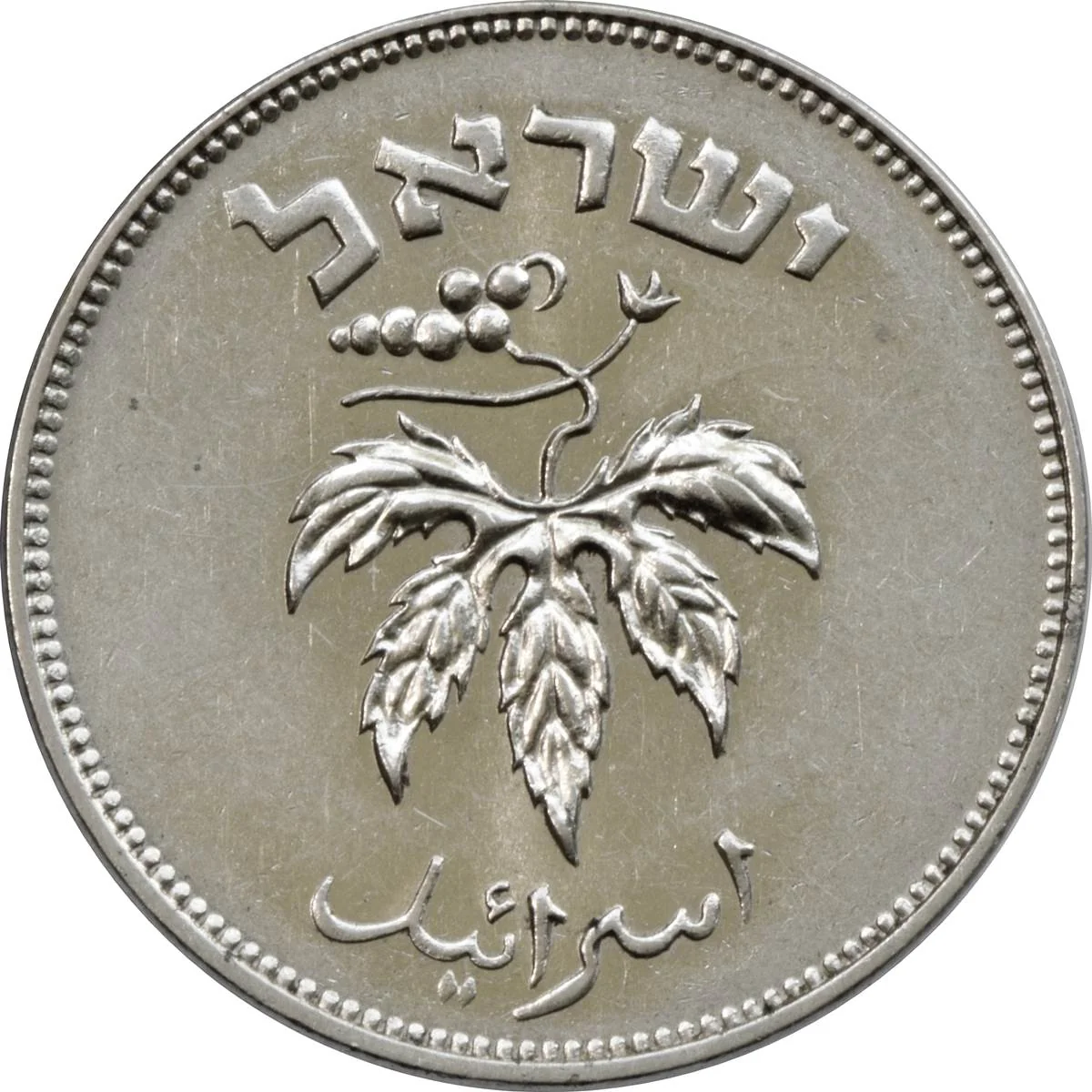

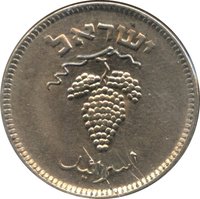
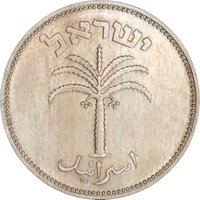
Obverse
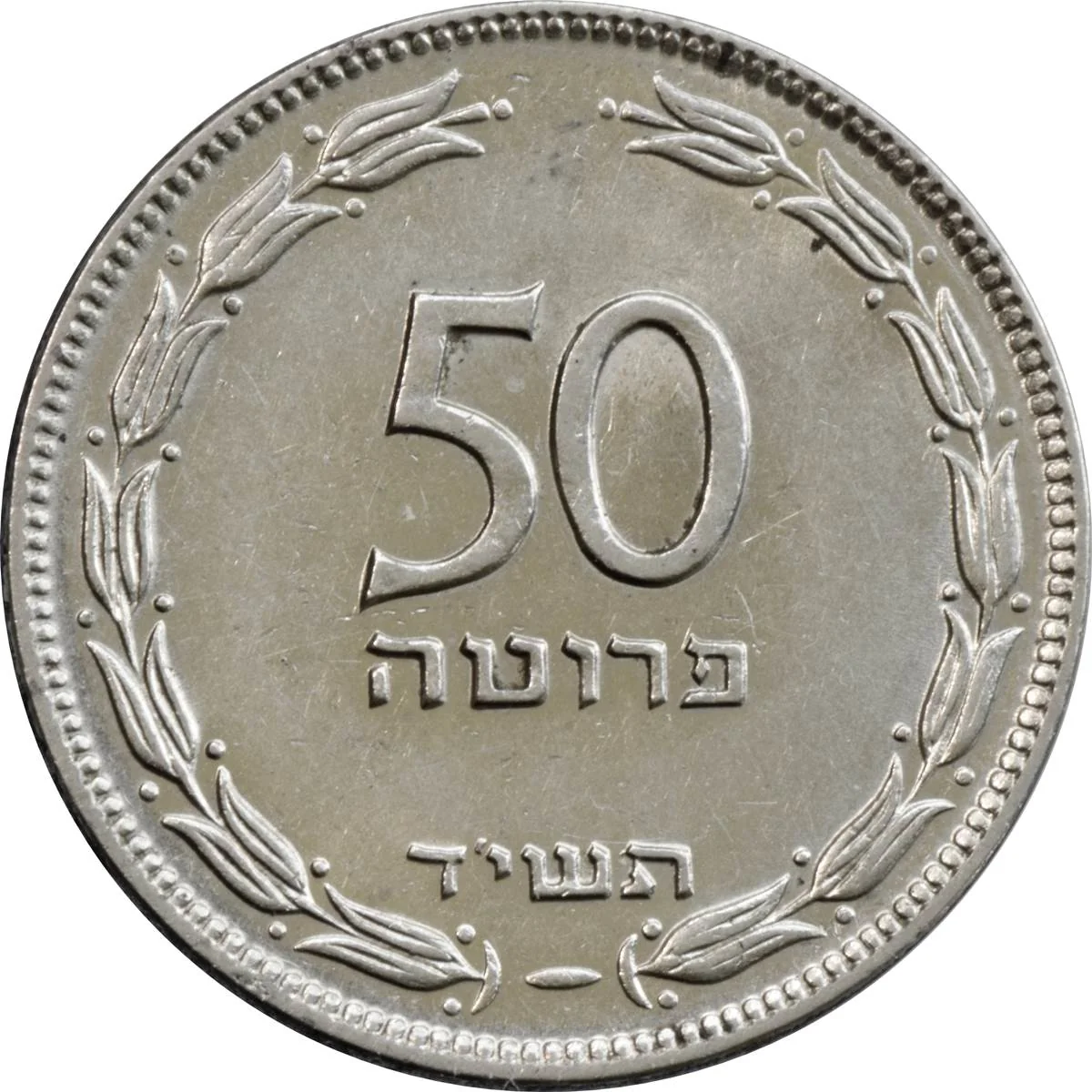
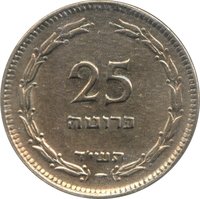
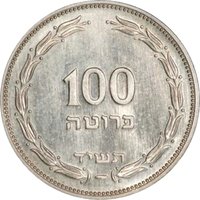
Reverse
Edge
Plain
Mints
| Name | Mark |
|---|---|
| Government Printer - Israel Mint | — |
Mintings
| Year | Mint Mark | Mintage | Quality | Collection |
|---|---|---|---|---|
| 1954 | — | 17,773,633 |
Historical background
In 1954, Israel's currency situation was defined by the Israeli lira (often called the "Israeli pound" or lira yisraelit), which had been introduced in 1952 to replace the Palestinian pound. This change was more than symbolic; it marked the young state's assertion of monetary sovereignty following independence. However, the economy was under severe strain, characterized by a government-led austerity policy known as Tzena. The state was absorbing massive immigration, building national infrastructure, and facing a significant trade deficit, all of which drained foreign currency reserves and put persistent pressure on the lira's value.
To manage these acute economic challenges, Israel operated a complex multi-tiered exchange rate system. Instead of a single official rate, different types of transactions (e.g., essential imports, non-essential imports, exports, and private transfers) were conducted at different government-set rates. This allowed the state to subsidize vital food and development imports while discouraging luxury goods and controlling capital flight. While this controlled system provided short-term stability and directed scarce foreign currency to priority sectors, it also created distortions, encouraged a black market for currency, and added bureaucratic complexity to all foreign trade.
The situation in 1954 was one of precarious balance. The currency controls and austerity measures were necessary to sustain the state-building project, but they came at a cost to living standards and economic efficiency. This period laid the groundwork for future monetary reforms, most notably the 1954 "New Economic Policy" introduced by Finance Minister Levi Eshkol, which began a cautious process of simplifying the exchange rate system and moving toward a more unified, market-oriented currency framework in the years that followed.
To manage these acute economic challenges, Israel operated a complex multi-tiered exchange rate system. Instead of a single official rate, different types of transactions (e.g., essential imports, non-essential imports, exports, and private transfers) were conducted at different government-set rates. This allowed the state to subsidize vital food and development imports while discouraging luxury goods and controlling capital flight. While this controlled system provided short-term stability and directed scarce foreign currency to priority sectors, it also created distortions, encouraged a black market for currency, and added bureaucratic complexity to all foreign trade.
The situation in 1954 was one of precarious balance. The currency controls and austerity measures were necessary to sustain the state-building project, but they came at a cost to living standards and economic efficiency. This period laid the groundwork for future monetary reforms, most notably the 1954 "New Economic Policy" introduced by Finance Minister Levi Eshkol, which began a cautious process of simplifying the exchange rate system and moving toward a more unified, market-oriented currency framework in the years that followed.
🌱 Very Common