

½ crown – United Kingdom
Add to wishlist
United Kingdom
Context
Year: 1953
Issuer: United Kingdom
Ruler: Elizabeth II
Currency:
(1158—1970)
Demonetization: 31 December 1969
Total mintage: 4,333,202
Material
References
KM: #
Numista: #9538
Obverse
Description:
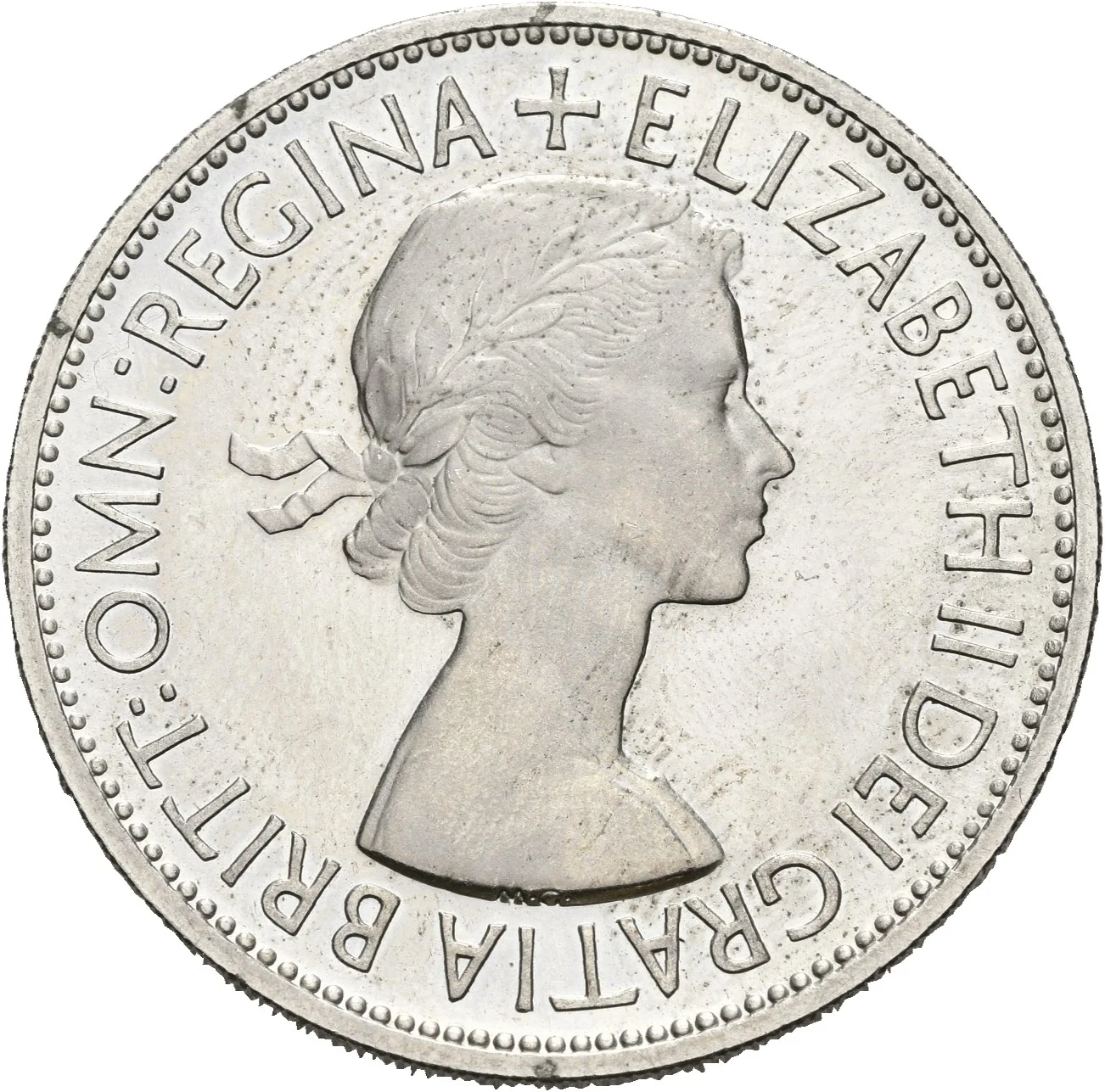
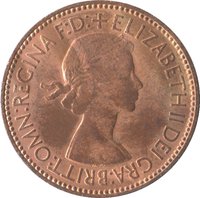
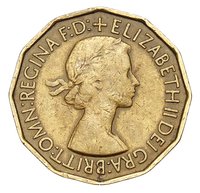
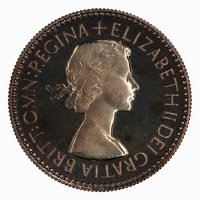
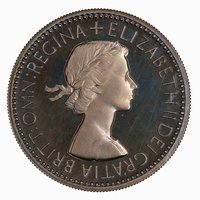
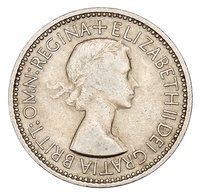
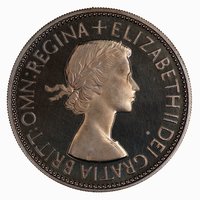
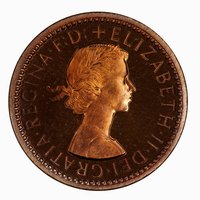
Young Queen Elizabeth II bust right, "BRITT:OMN" legend.
Inscription:
+ ELIZABETH II DEI GRATIA BRITT:OMN:REGINA
Translation:
Elizabeth the Second by the Grace of God Queen of Britain and of all Realms.
Script: Latin
Language: Latin
Engraver: Mary Gillick
Reverse
Description:
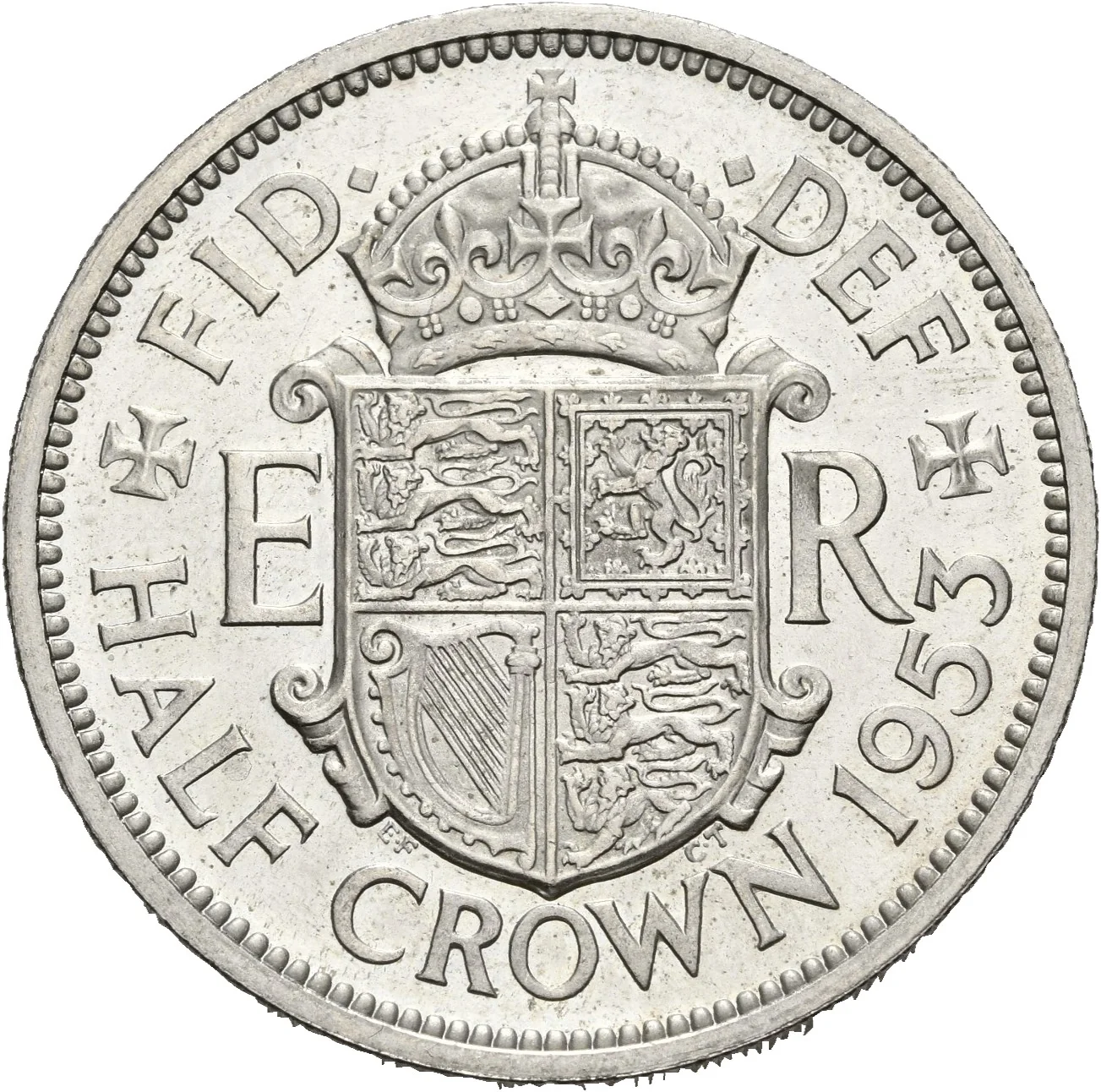
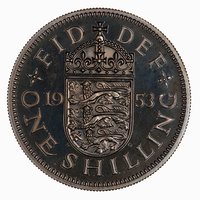
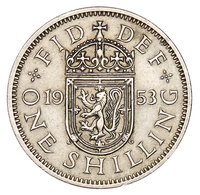
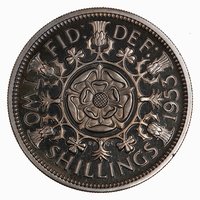
Shield quartered with crown, flanked by E and R. Legend above, date and denomination below.
Inscription:
+ FID· ·DEF +
E R
E·F C·T
HALF CROWN 1953
E R
E·F C·T
HALF CROWN 1953
Translation:
Defender of the Faith
Queen Elizabeth
Elizabeth the Second, by the Grace of God, Queen of the Britains, Defender of the Faith
Half Crown 1953
Queen Elizabeth
Elizabeth the Second, by the Grace of God, Queen of the Britains, Defender of the Faith
Half Crown 1953
Script: Latin
Language: Latin
Engraver: Cecil Thomas
Edge
Reeded
Mints
| Name | Mark |
|---|---|
| Royal Mint (Tower Hill) | — |
Mintings
| Year | Mint Mark | Mintage | Quality | Collection |
|---|---|---|---|---|
| 1953 | — | 4,333,200 | ||
| 1953 | — | 2 | Proof |
Historical background
In 1953, the United Kingdom's currency situation was defined by the strictures of the post-war Bretton Woods system and the ongoing challenge of sterling's role as a reserve currency. The pound was pegged at a fixed rate of $2.80, a parity maintained through extensive exchange controls that restricted the convertibility of sterling for both residents and non-residents. This "Sterling Area" system, which tied the currencies of the Commonwealth and other nations to the pound, created a vast zone of monetary influence but also a significant burden. The UK was obligated to support these currencies, leaving its gold and dollar reserves perpetually vulnerable to runs triggered by a lack of confidence in sterling.
Domestically, the economy was emerging from a period of austerity, yet the currency remained under pressure from the costs of sustaining a global military presence and the legacy of wartime debt. The 1949 devaluation from $4.03 to $2.80 had provided only temporary relief, and the underlying "dollar gap"—the chronic shortage of US currency needed to pay for vital imports—persisted. Rationing had largely ended, but the Conservative government under Winston Churchill, re-elected in 1951, was cautiously managing a "bonfire of controls" while prioritising the defence of the sterling parity as a matter of national prestige and financial credibility.
The year itself was one of relative calm, marked by the coronation of Queen Elizabeth II, which symbolised a new Elizabethan age of hope. Economically, it was a period of stabilisation rather than crisis; reserves saw modest improvement and inflation was low. However, this stability was fragile and artificially maintained. The fundamental contradictions of an overextended reserve currency, supported by a weakened economy and stringent controls, were merely contained, not resolved. This precarious equilibrium would define the UK's monetary policy for the next two decades, setting the stage for the persistent sterling crises that characterised the 1950s, 60s, and beyond.
Domestically, the economy was emerging from a period of austerity, yet the currency remained under pressure from the costs of sustaining a global military presence and the legacy of wartime debt. The 1949 devaluation from $4.03 to $2.80 had provided only temporary relief, and the underlying "dollar gap"—the chronic shortage of US currency needed to pay for vital imports—persisted. Rationing had largely ended, but the Conservative government under Winston Churchill, re-elected in 1951, was cautiously managing a "bonfire of controls" while prioritising the defence of the sterling parity as a matter of national prestige and financial credibility.
The year itself was one of relative calm, marked by the coronation of Queen Elizabeth II, which symbolised a new Elizabethan age of hope. Economically, it was a period of stabilisation rather than crisis; reserves saw modest improvement and inflation was low. However, this stability was fragile and artificially maintained. The fundamental contradictions of an overextended reserve currency, supported by a weakened economy and stringent controls, were merely contained, not resolved. This precarious equilibrium would define the UK's monetary policy for the next two decades, setting the stage for the persistent sterling crises that characterised the 1950s, 60s, and beyond.
🌱 Very Common