

1 Crown – Gibraltar
United Kingdom
Context
Years: 1967–1970
Country: United Kingdom 
Issuer: Gibraltar 
Ruler: Elizabeth II
Currency:
(since 1967)
Total mintage: 250,000
Material
References
KM: #Click to copy to clipboard4
Numista: #9530
Obverse
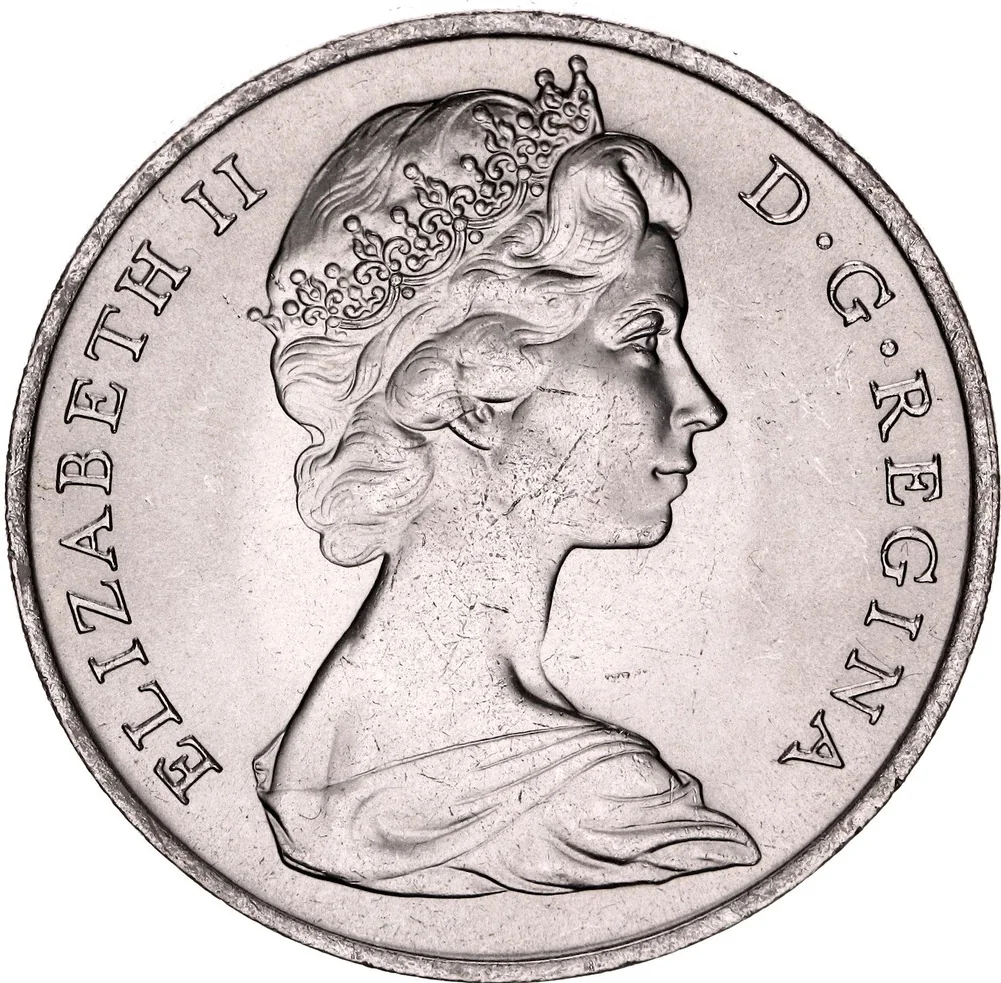
Description:
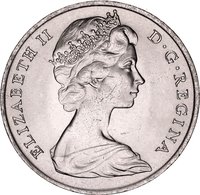
Queen Elizabeth II in profile, wearing the Girls of Great Britain and Ireland Tiara.
Inscription:
ELIZABETH II D · G · REGINA
Script: Latin
Engraver: Arnold Machin
Reverse
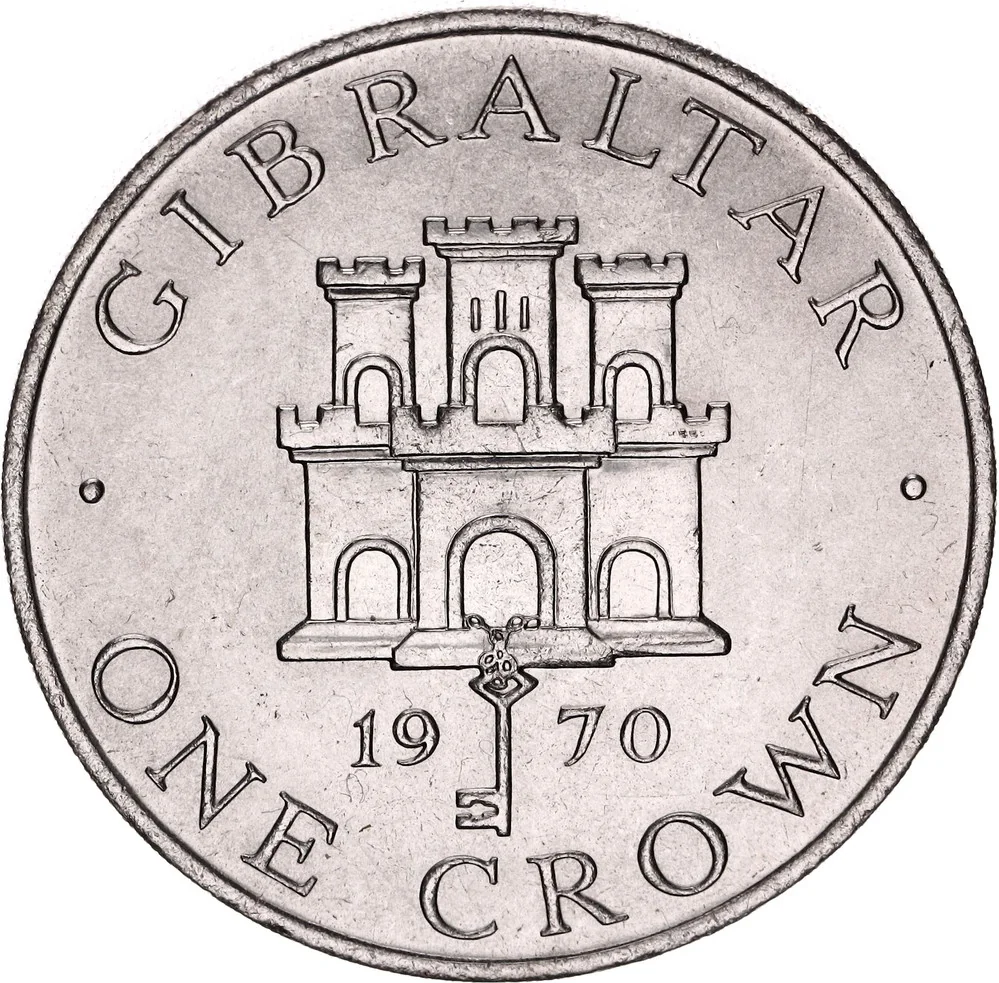
Description:
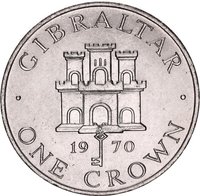
Gibraltar arms with key, date, and surrounding inscription.
Inscription:
GIBRALTAR
1968
· ONE CROWN ·
1968
· ONE CROWN ·
Script: Latin
Edge
Reeded
Categories
| Building> Castle or fortification |
| Symbols> Coat of Arms |
Mints
| Name | Mark |
|---|---|
| Royal Mint (Tower Hill) | — |
Mintings
| Year | Mint Mark | Mintage | Quality | Collection |
|---|---|---|---|---|
| 1967 | — | 125,000 | ||
| 1968 | — | 40,000 | ||
| 1969 | — | 40,000 | ||
| 1970 | — | 45,000 |
Historical background
In 1967, Gibraltar's currency situation was intrinsically linked to its political status and the ongoing sovereignty dispute between Britain and Spain. Following the 1967 referendum, in which Gibraltarians overwhelmingly voted to remain under British sovereignty, Spain intensified its pressure by closing the land border and severing economic ties. This blockade had immediate monetary consequences, as Gibraltar's economy had previously relied heavily on the Spanish peseta for daily transactions and cross-border trade. The territory was forced to rapidly decouple from the Spanish monetary sphere.
At the time, Gibraltar did not issue its own independent currency but used the Gibraltar pound, which was (and remains) pegged at par with the British pound sterling. The Gibraltar pound was issued by the Government of Gibraltar under the authority of the 1934 Currency Notes Act, and sterling coins circulated freely. However, the political crisis underscored the vulnerability of this arrangement to geopolitical tensions. With the border closed, the practical need for the peseta evaporated, and the Gibraltar pound's linkage to sterling was reinforced as a symbol of its British connection and economic lifeline.
Thus, the currency situation in 1967 was one of consolidation rather than change. The external shock of the Spanish blockade effectively ended the territory's de facto dual-currency system and cemented the exclusive domestic use of the Gibraltar pound, backed by sterling. This monetary alignment with the United Kingdom provided crucial stability during a period of economic isolation, reinforcing Gibraltar's financial and political bonds with Britain in direct opposition to Spanish claims.
At the time, Gibraltar did not issue its own independent currency but used the Gibraltar pound, which was (and remains) pegged at par with the British pound sterling. The Gibraltar pound was issued by the Government of Gibraltar under the authority of the 1934 Currency Notes Act, and sterling coins circulated freely. However, the political crisis underscored the vulnerability of this arrangement to geopolitical tensions. With the border closed, the practical need for the peseta evaporated, and the Gibraltar pound's linkage to sterling was reinforced as a symbol of its British connection and economic lifeline.
Thus, the currency situation in 1967 was one of consolidation rather than change. The external shock of the Spanish blockade effectively ended the territory's de facto dual-currency system and cemented the exclusive domestic use of the Gibraltar pound, backed by sterling. This monetary alignment with the United Kingdom provided crucial stability during a period of economic isolation, reinforcing Gibraltar's financial and political bonds with Britain in direct opposition to Spanish claims.
🌱 Common