

Obverse
Description:
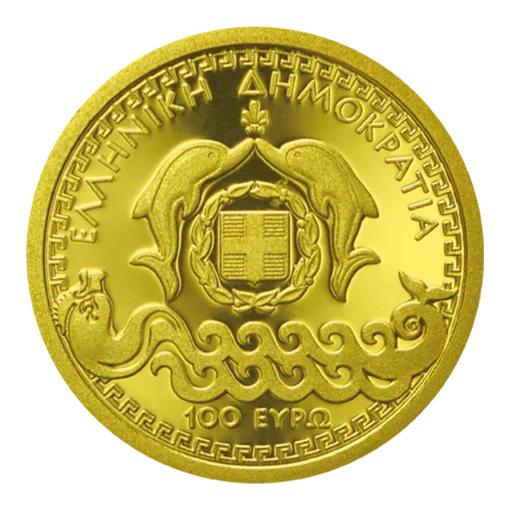
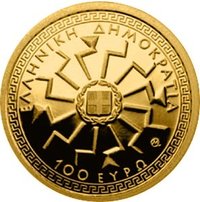
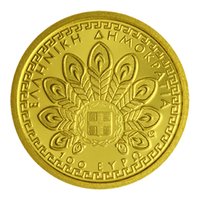
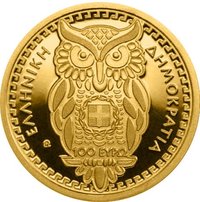
Greek Republic coat of arms.
Inscription:
ΕΛΛΗΝΙΚΗ ΔΗΜΟΚΡΑΤΙΑ
100 ΕΥΡΩ
100 ΕΥΡΩ
Translation:
HELLENIC REPUBLIC
100 EURO
100 EURO
Script: Greek
Language: Greek
Engraver: Maria Antonatou
Reverse
Description:
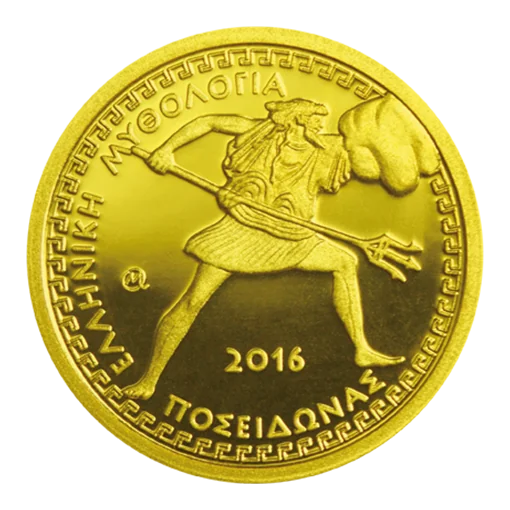
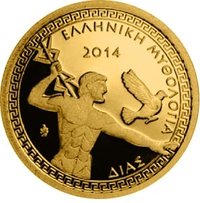
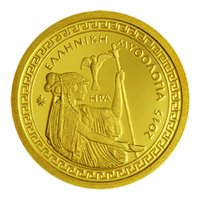
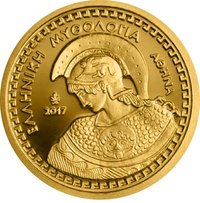
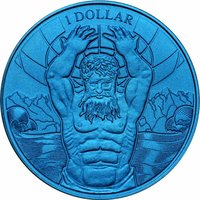
Poseidon portrait
Inscription:
ΕΛΛΗΝΙΚΗ ΜΥΘΟΛΟΓΙΑ
2016
ΠΟΣΕΙΔΩΝΑΣ
2016
ΠΟΣΕΙΔΩΝΑΣ
Translation:
Greek Mythology
2016
Poseidon
2016
Poseidon
Script: Greek
Language: Greek
Engraver: Maria Antonatou
Edge
Plain
Categories
| Animal> Marine mammal |
| Object> Cold weapons |
| Mythology |
| Symbols> Coat of Arms |
| Geography> Sea |
Mints
| Name | Mark |
|---|---|
| National Mint of the Bank of Greece | — |
Mintings
| Year | Mint Mark | Mintage | Quality | Collection |
|---|---|---|---|---|
| 2016 | — | 1,200 | Proof |
Historical background
By 2016, Greece remained mired in a profound debt crisis that had defined its economy for nearly a decade. The year was dominated by the aftermath of the tumultuous summer of 2015, which saw the radical-left Syriza government clash with international creditors, impose capital controls, and narrowly avoid a "Grexit" from the Eurozone after a third, stringent bailout was agreed upon. This €86 billion package came with strict austerity conditions, including pension cuts, tax hikes, and sweeping market reforms, ensuring that 2016 was a year of implementation under intense international supervision.
The currency situation was uniquely strained due to the continued existence of capital controls, a rare feature within the Eurozone. Instituted in June 2015 to prevent a bank run and the collapse of the financial system, these controls strictly limited cash withdrawals to €420 per week and placed severe restrictions on transfers abroad. While gradually eased throughout 2016, these measures symbolized the deep fragility of the banking sector and the lack of trust in the economy's immediate prospects. The euro, while still the official currency, circulated under a constrained and monitored regime within the country.
Economically, the year was one of fragile and painful stabilization. The intense uncertainty of 2015 had pushed the economy back into recession, but 2016 saw a slow return to some form of normality as the new bailout program unlocked essential funding. However, the social and economic toll was severe: unemployment remained over 23%, public debt soared to around 180% of GDP, and society grappled with the effects of prolonged austerity. Thus, the currency situation in 2016 reflected a nation still trapped in crisis management, using the euro but operating under a semi-functioning financial system, with its long-term future within the single currency secured only by continued compliance with harsh external demands.
The currency situation was uniquely strained due to the continued existence of capital controls, a rare feature within the Eurozone. Instituted in June 2015 to prevent a bank run and the collapse of the financial system, these controls strictly limited cash withdrawals to €420 per week and placed severe restrictions on transfers abroad. While gradually eased throughout 2016, these measures symbolized the deep fragility of the banking sector and the lack of trust in the economy's immediate prospects. The euro, while still the official currency, circulated under a constrained and monitored regime within the country.
Economically, the year was one of fragile and painful stabilization. The intense uncertainty of 2015 had pushed the economy back into recession, but 2016 saw a slow return to some form of normality as the new bailout program unlocked essential funding. However, the social and economic toll was severe: unemployment remained over 23%, public debt soared to around 180% of GDP, and society grappled with the effects of prolonged austerity. Thus, the currency situation in 2016 reflected a nation still trapped in crisis management, using the euro but operating under a semi-functioning financial system, with its long-term future within the single currency secured only by continued compliance with harsh external demands.
Series: Greek Mythology
💎 Extremely Rare