

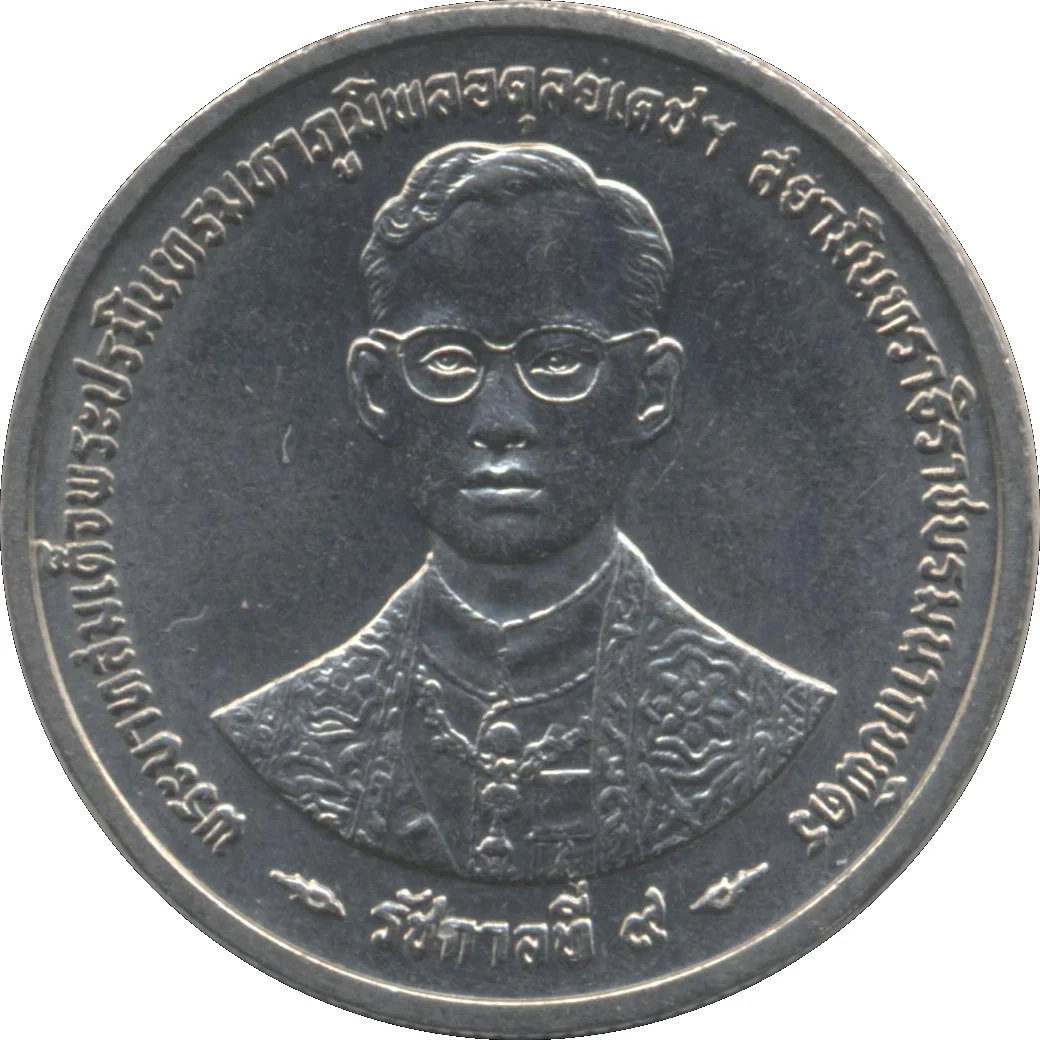
2 Bahts (King Rama IX reign) – Thailand
Circulating commemorative coins
Commemoration: 50th Anniversary of reign of King Rama IX
Series: Golden Jubilee of Rama IX
Thailand
Context

Material
References
Y: #Click to copy to clipboard319
Numista: #9522
Value
Exchange value: 2 THB = $0.06
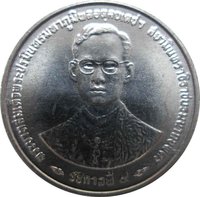
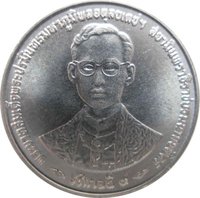
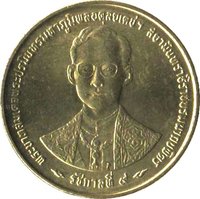
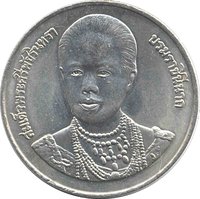
Obverse
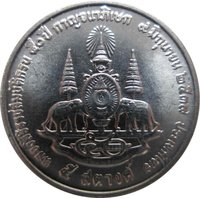
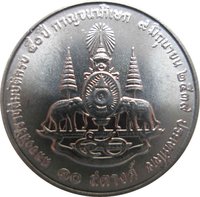
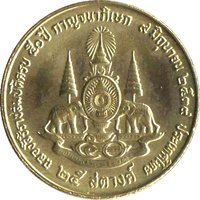
Reverse
Description:
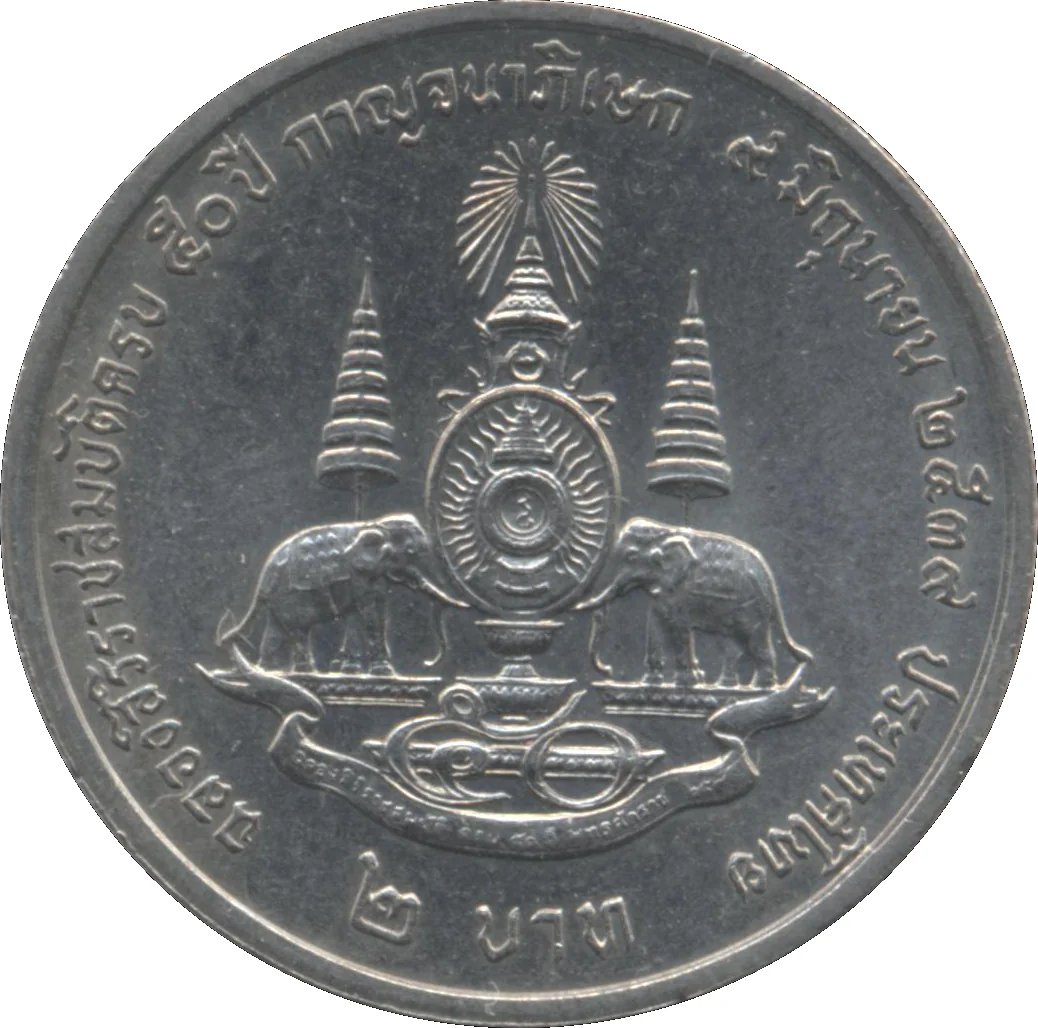
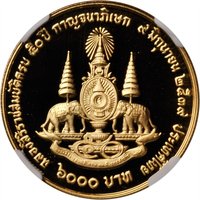
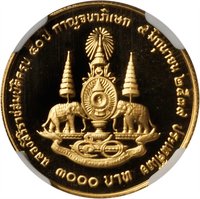
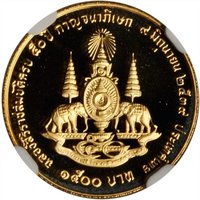
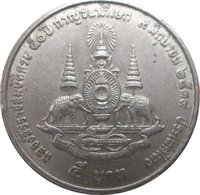
Royal Golden Jubilee emblem: a crowned privy seal between two seven-tiered parasol elephants, above a ribbon with "50" and mottos.
Inscription:
ฉลองสิริราชสมบัติครบ ๕๐ ปี กาญจนาภิเษก ๙ มิถุนายน ๒๕๓๙ ประเทศไทย
๕๐
ฉลองสิริราชสมบัติ ครบ ๕๐ ปี พุทธศักราช ๒๕๓๙
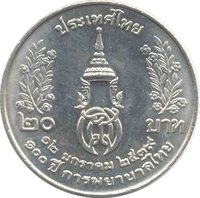
๒ บาท
๕๐
ฉลองสิริราชสมบัติ ครบ ๕๐ ปี พุทธศักราช ๒๕๓๙
๒ บาท
Translation:
Celebrating the 50th Anniversary of the Reign, the Golden Jubilee, 9 June 1996, Thailand
50
Celebrating the 50th Anniversary of the Reign, Buddhist Era 2539
2 Baht
50
Celebrating the 50th Anniversary of the Reign, Buddhist Era 2539
2 Baht
Script: Thai
Language: Thai
Edge
Reeded
Mintings
| Year | Mint Mark | Mintage | Quality | Collection |
|---|---|---|---|---|
| 1996 | — | — |
Historical background
In 1996, Thailand stood at the precipice of a financial catastrophe that would soon engulf much of East Asia. The country's economy, celebrated as an "Asian Tiger" for its rapid, export-led growth, was showing severe underlying strains. A decade of soaring growth had been fueled by massive capital inflows, particularly short-term foreign loans, which created a credit bubble and inflated asset prices, especially in real estate. The Thai baht was pegged at a fixed rate of approximately 25 to the US dollar, a policy intended to ensure stability for trade and investment but which increasingly masked fundamental economic weaknesses.
The situation was characterized by a dangerous triad: a large and growing current account deficit (exceeding 8% of GDP), a significant depletion of foreign exchange reserves as the Bank of Thailand (BOT) defended the peg, and a fragile financial sector burdened by non-performing loans. Export growth had stalled due to a loss of competitiveness—partly because the dollar-pegged baht had appreciated alongside the strong US currency—while China's rising manufacturing prowess presented a new challenge. Speculators, notably international hedge funds, began to recognize the unsustainability of the peg and started mounting massive attacks on the baht through forward contracts and short-selling.
Throughout 1996 and into 1997, the Bank of Thailand engaged in a costly and ultimately futile defense of the currency. It spent billions of dollars in reserves to buy baht and imposed capital controls, but market confidence had evaporated. The desperate measures only highlighted the severity of the crisis. By late 1997, the failed defense led to the baht's float and catastrophic devaluation, triggering the broader Asian Financial Crisis. Thus, 1996 represents the final, fragile year of the "Thai economic miracle," where accumulated vulnerabilities set the stage for a devastating collapse.
The situation was characterized by a dangerous triad: a large and growing current account deficit (exceeding 8% of GDP), a significant depletion of foreign exchange reserves as the Bank of Thailand (BOT) defended the peg, and a fragile financial sector burdened by non-performing loans. Export growth had stalled due to a loss of competitiveness—partly because the dollar-pegged baht had appreciated alongside the strong US currency—while China's rising manufacturing prowess presented a new challenge. Speculators, notably international hedge funds, began to recognize the unsustainability of the peg and started mounting massive attacks on the baht through forward contracts and short-selling.
Throughout 1996 and into 1997, the Bank of Thailand engaged in a costly and ultimately futile defense of the currency. It spent billions of dollars in reserves to buy baht and imposed capital controls, but market confidence had evaporated. The desperate measures only highlighted the severity of the crisis. By late 1997, the failed defense led to the baht's float and catastrophic devaluation, triggering the broader Asian Financial Crisis. Thus, 1996 represents the final, fragile year of the "Thai economic miracle," where accumulated vulnerabilities set the stage for a devastating collapse.
Series: Golden Jubilee of Rama IX




🌱 Common