

2 bolivars – Venezuela
Add to wishlist
Venezuela
Obverse
Description:
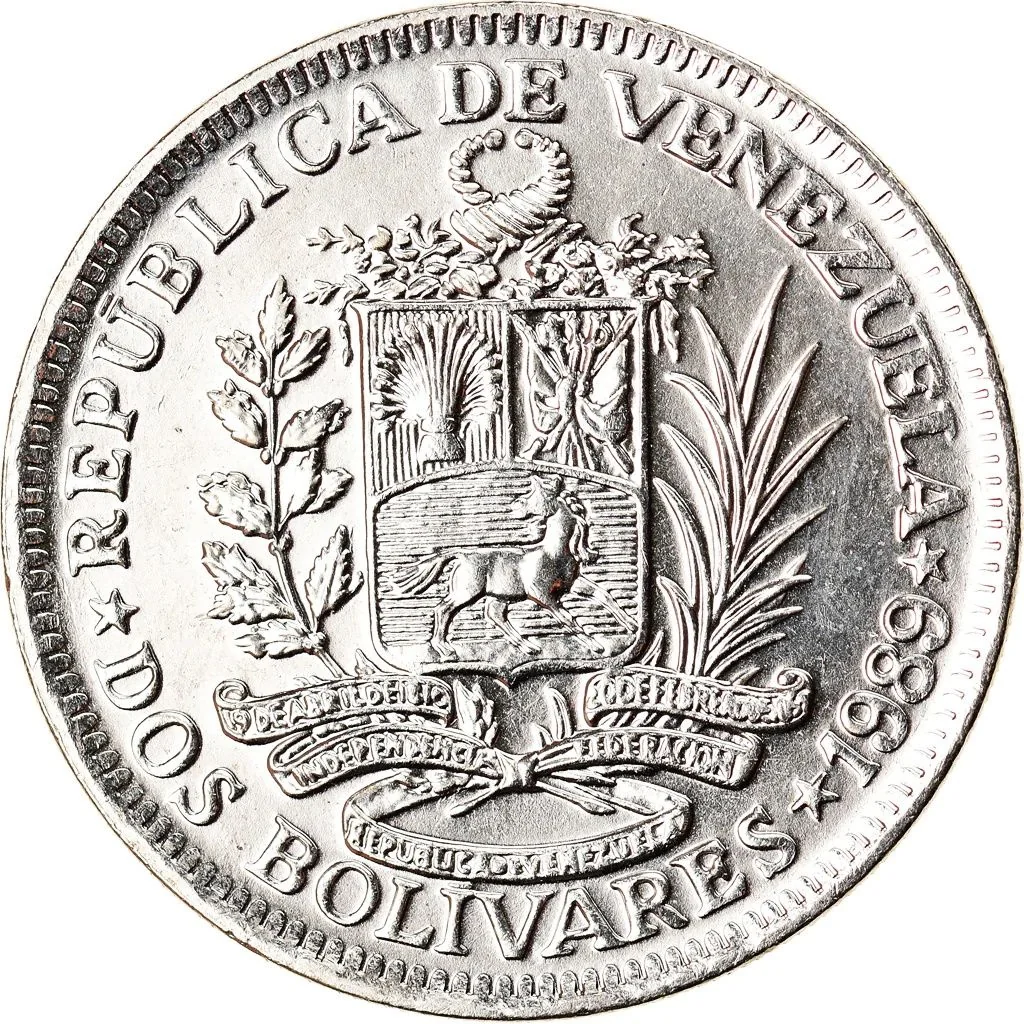
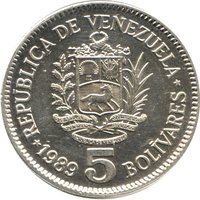
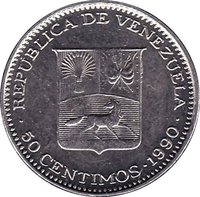
Coat of arms above, value and date below.
Inscription:
★ REPÚBLICA DE VENEZUELA ★
19 DE ABRIL DE 1810
INDEPENDENCIA
20 DE FEBRERO DE 1859
FEDERACION
REPUBLICA DE VENEZUELA
DOS BOLÍVARES ★ 1989
19 DE ABRIL DE 1810
INDEPENDENCIA
20 DE FEBRERO DE 1859
FEDERACION
REPUBLICA DE VENEZUELA
DOS BOLÍVARES ★ 1989
Translation:
★ REPUBLIC OF VENEZUELA ★
APRIL 19, 1810
INDEPENDENCE
FEBRUARY 20, 1859
FEDERATION
REPUBLIC OF VENEZUELA
TWO BOLÍVARES ★ 1989
APRIL 19, 1810
INDEPENDENCE
FEBRUARY 20, 1859
FEDERATION
REPUBLIC OF VENEZUELA
TWO BOLÍVARES ★ 1989
Script: Latin
Language: Spanish
Reverse
Description:
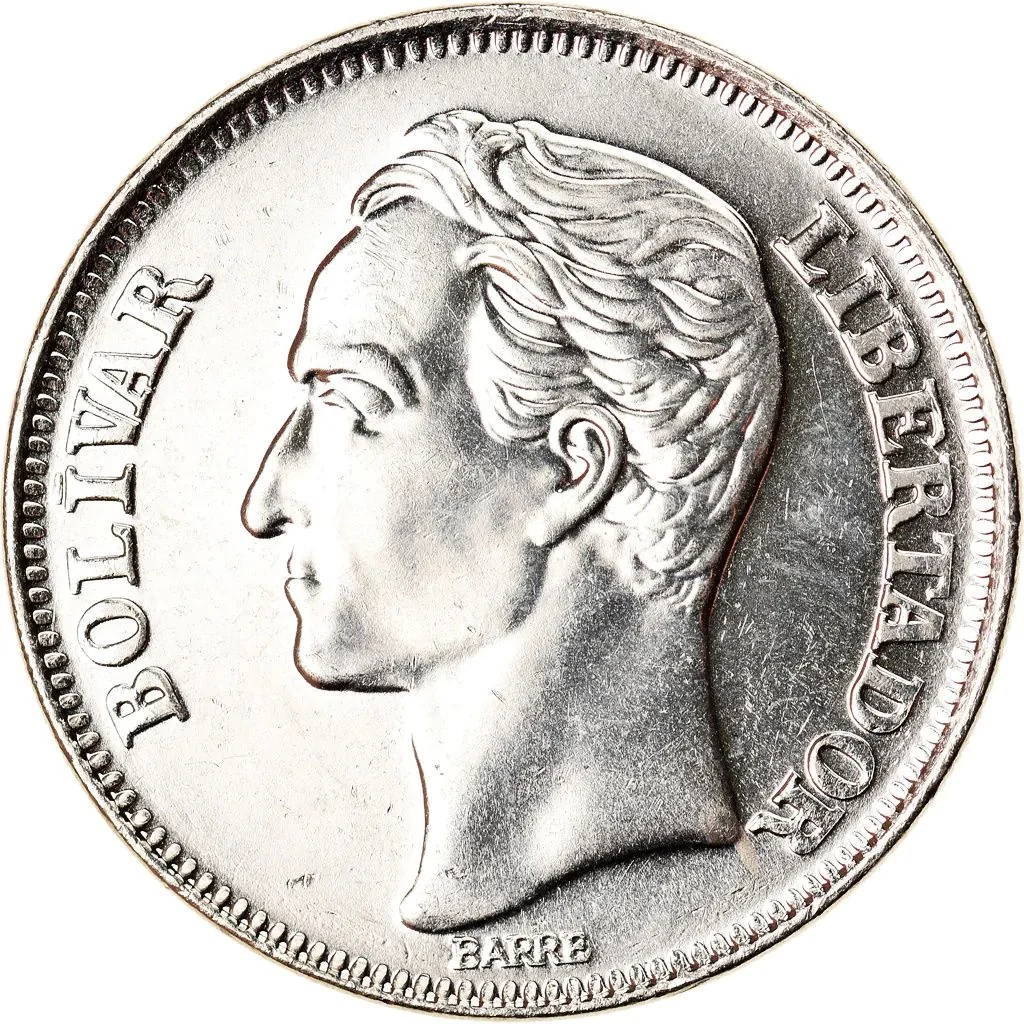
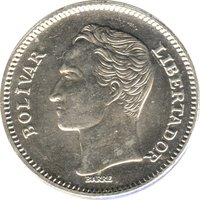
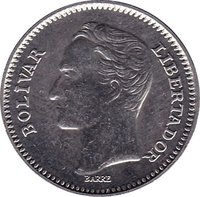
Bust left, with legend and engraver at base.
Inscription:
BOLÍVAR LIBERTADOR
BARRE
BARRE
Translation:
Bolivar Liberator
Barre
Barre
Script: Latin
Language: Spanish
Engraver: Désiré-Albert Barre
Edge
Reeded
Categories
| Symbols> Coat of Arms |
| Animal> Horse |
| Person> Military leader |
| Symbol> Cornucopia |
| Person> Politician |
Mintings
| Year | Mint Mark | Mintage | Quality | Collection |
|---|---|---|---|---|
| 1989 | — | 200,000,000 | ||
| 1990 | — | 400,000,000 |
Historical background
In 1989, Venezuela's currency situation was defined by a profound crisis stemming from the collapse of the petro-state model. Following the 1970s oil boom, the country had accumulated massive foreign debt during a period of high oil prices. When global oil prices plummeted in the 1980s, Venezuela's economy contracted sharply, leading to severe balance of payments problems and a drastic depletion of international reserves. By the late 1980s, the bolívar was widely considered overvalued and subject to strict exchange controls, creating a vast gap between the official fixed rate and a thriving black market for US dollars. This disparity crippled the economy, causing widespread shortages of imported goods and fostering capital flight as confidence in the national currency evaporated.
The situation reached a breaking point shortly after President Carlos Andrés Pérez took office in February 1989. Facing pressure from the International Monetary Fund (IMF) to secure loans, his government launched a dramatic neoliberal reform package known as "El Paquetazo." Its most shocking element was a sudden and massive devaluation of the bolívar, moving from a heavily subsidized fixed rate to a free-floating "market" rate. Overnight, the currency lost over 100% of its value against the dollar, leading to an immediate and catastrophic surge in the price of all imported and essential goods, including food and medicine.
This abrupt currency devaluation acted as the direct trigger for the "Caracazo" – a spontaneous, massive wave of riots, looting, and violent protests that swept through Caracas and other cities from February 27th. The social explosion was a direct response to the eradication of purchasing power for the vast majority of Venezuelans, plunging a formerly middle-class nation into sudden, brutal poverty. Thus, the 1989 currency crisis was not merely a financial event; it marked a pivotal historical rupture, shattering the social contract of Venezuela's democratic era and setting the stage for decades of subsequent political and economic instability.
The situation reached a breaking point shortly after President Carlos Andrés Pérez took office in February 1989. Facing pressure from the International Monetary Fund (IMF) to secure loans, his government launched a dramatic neoliberal reform package known as "El Paquetazo." Its most shocking element was a sudden and massive devaluation of the bolívar, moving from a heavily subsidized fixed rate to a free-floating "market" rate. Overnight, the currency lost over 100% of its value against the dollar, leading to an immediate and catastrophic surge in the price of all imported and essential goods, including food and medicine.
This abrupt currency devaluation acted as the direct trigger for the "Caracazo" – a spontaneous, massive wave of riots, looting, and violent protests that swept through Caracas and other cities from February 27th. The social explosion was a direct response to the eradication of purchasing power for the vast majority of Venezuelans, plunging a formerly middle-class nation into sudden, brutal poverty. Thus, the 1989 currency crisis was not merely a financial event; it marked a pivotal historical rupture, shattering the social contract of Venezuela's democratic era and setting the stage for decades of subsequent political and economic instability.
Series: 1989 Venezuela circulation coins
🌱 Very Common