

¼ anna – Bombay Presidency
Add to wishlist
India
Context
Material
References
KM: #
Numista: #9459
Obverse
Description:
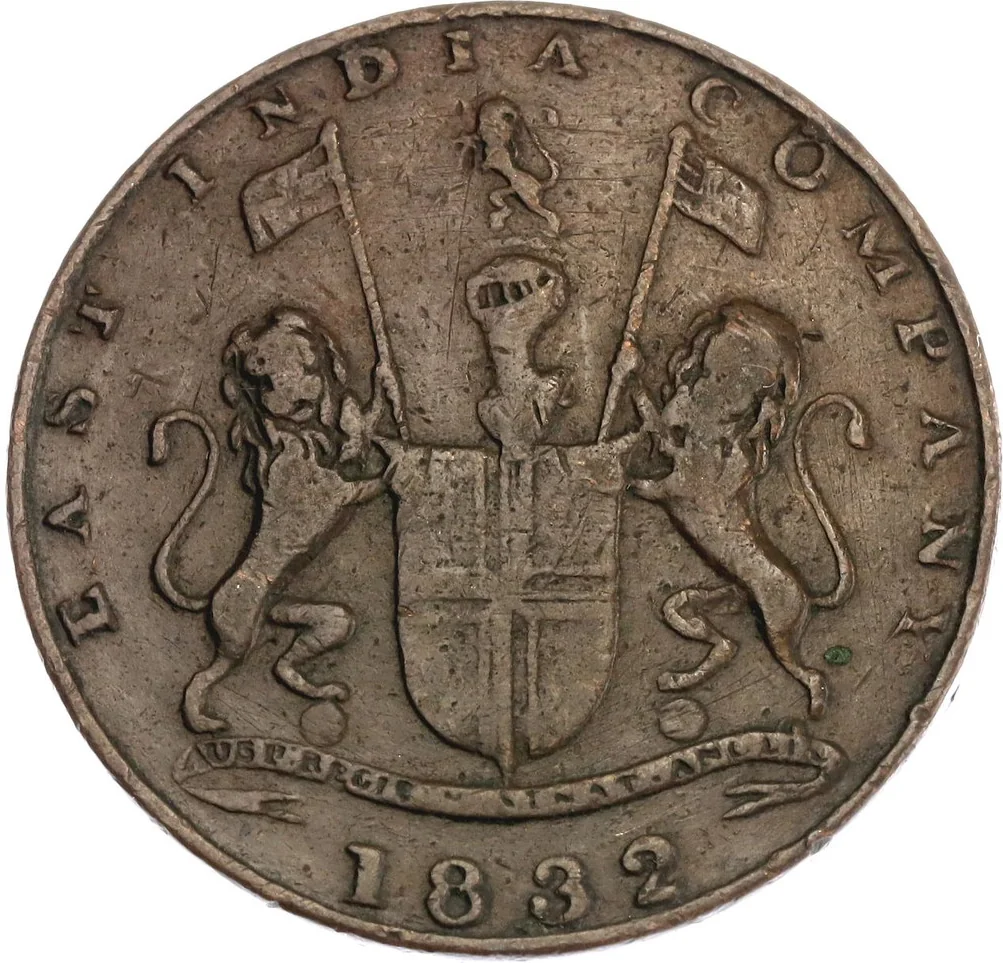
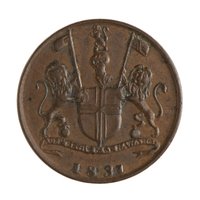
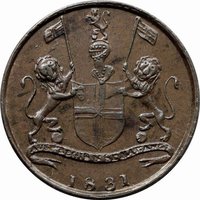
East India Company coat of arms: Two lions support a shield with St. George's cross, repeated on the crest and flags. The motto "Auspicio Regis et Senatus Angliæ" is on a ribbon, with the issuer's name around and the date below.
Inscription:
EAST INDIA COMPANY
AUSP : REGIS & SENAT : ANGLIA
1830
AUSP : REGIS & SENAT : ANGLIA
1830
Translation:
Under the Auspices of the King & Senate of England
Script: Latin
Language: Latin
Reverse
Edge
Plain
Categories
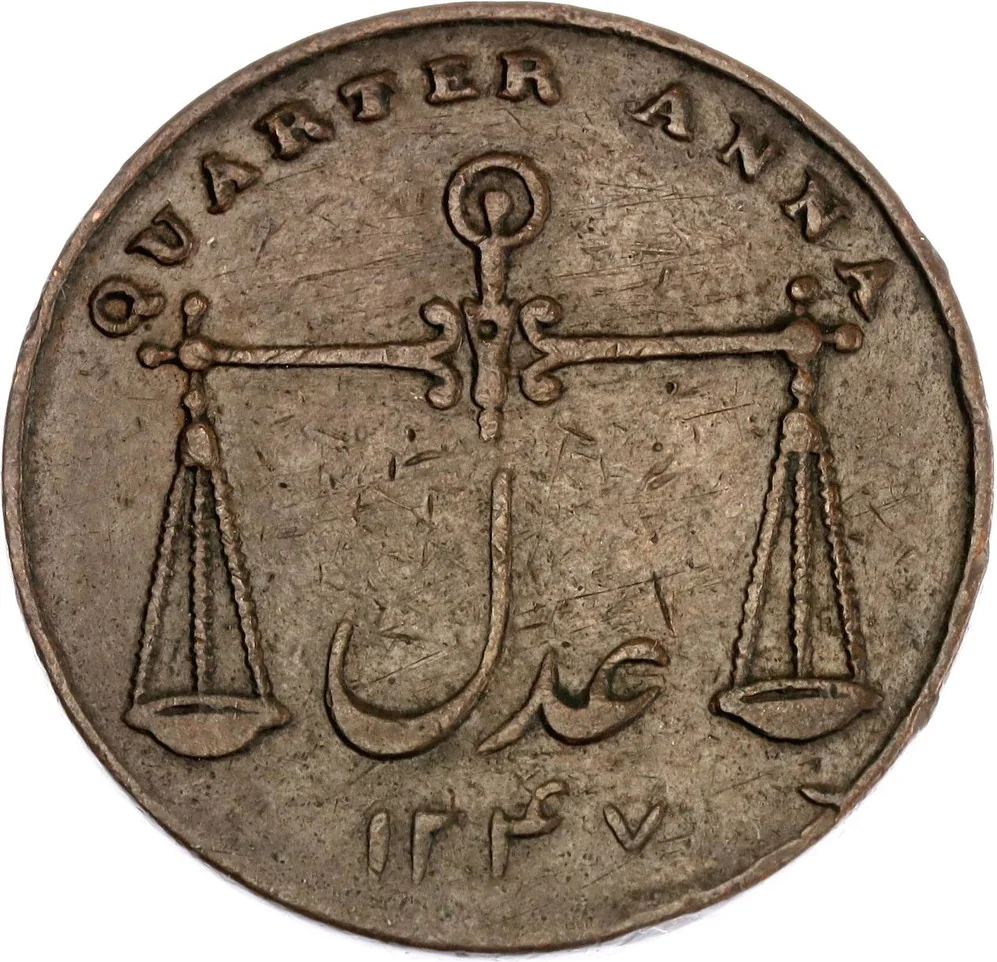
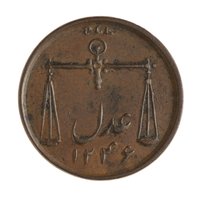
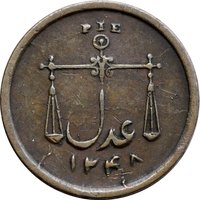
| Symbol> Scale |
| Symbols> Coat of Arms |
Mints
| Name | Mark |
|---|---|
| Mumbai / Bombay | — |
Mintings
| Year | Mint Mark | Mintage | Quality | Collection |
|---|---|---|---|---|
| 1830 | — | — | ||
| 1830 | — | — | Proof | |
| 1832 | — | — | ||
| 1832 | — | — |
Historical background
In 1830, the Bombay Presidency operated under a complex and often chaotic multi-currency system, a legacy of its history as a hub for regional and international trade. The official currency was the silver rupee, but not a single, uniform coin. The dominant standard was the "Bombay rupee," a descendant of the old Mughal sikka, but it competed in circulation with other silver rupees from neighbouring regions like the "Surat rupee." Alongside these, gold mohurs and small denomination copper coins (pice and dubbas) were used for local transactions. This proliferation of coins of varying weight, purity, and value, many worn or clipped, created significant challenges for commerce and administration.
The situation was further complicated by the widespread use of two distinct monetary units for accounting: the sicca rupee and the Company's rupee. The sicca rupee was a notional money of account, used for large-scale government and mercantile bookkeeping, representing an ideal standard of weight and fineness. The actual physical coins in circulation (current rupees) were valued at a discount against this sicca standard, a rate that fluctuated. Meanwhile, the East India Company's own accounts were kept in "Company's rupees," adding another layer of calculation. This disconnect between the ideal accounting unit and the physical medium of exchange necessitated constant conversion and bred confusion.
This monetary disorder was recognised as a serious impediment to economic stability and efficient revenue collection. The 1830s would therefore become a pivotal decade for currency reform in Bombay. The Presidency was on the cusp of major change, culminating in the Coinage Act of 1835, which introduced a unified, all-India silver rupee bearing the portrait of the British monarch. This act aimed to supersede the patchwork of local currencies, establishing a standard "Company's Rupee" as the sole legal tender, thereby simplifying and centralising the monetary system under colonial authority.
The situation was further complicated by the widespread use of two distinct monetary units for accounting: the sicca rupee and the Company's rupee. The sicca rupee was a notional money of account, used for large-scale government and mercantile bookkeeping, representing an ideal standard of weight and fineness. The actual physical coins in circulation (current rupees) were valued at a discount against this sicca standard, a rate that fluctuated. Meanwhile, the East India Company's own accounts were kept in "Company's rupees," adding another layer of calculation. This disconnect between the ideal accounting unit and the physical medium of exchange necessitated constant conversion and bred confusion.
This monetary disorder was recognised as a serious impediment to economic stability and efficient revenue collection. The 1830s would therefore become a pivotal decade for currency reform in Bombay. The Presidency was on the cusp of major change, culminating in the Coinage Act of 1835, which introduced a unified, all-India silver rupee bearing the portrait of the British monarch. This act aimed to supersede the patchwork of local currencies, establishing a standard "Company's Rupee" as the sole legal tender, thereby simplifying and centralising the monetary system under colonial authority.
🌱 Fairly Common