

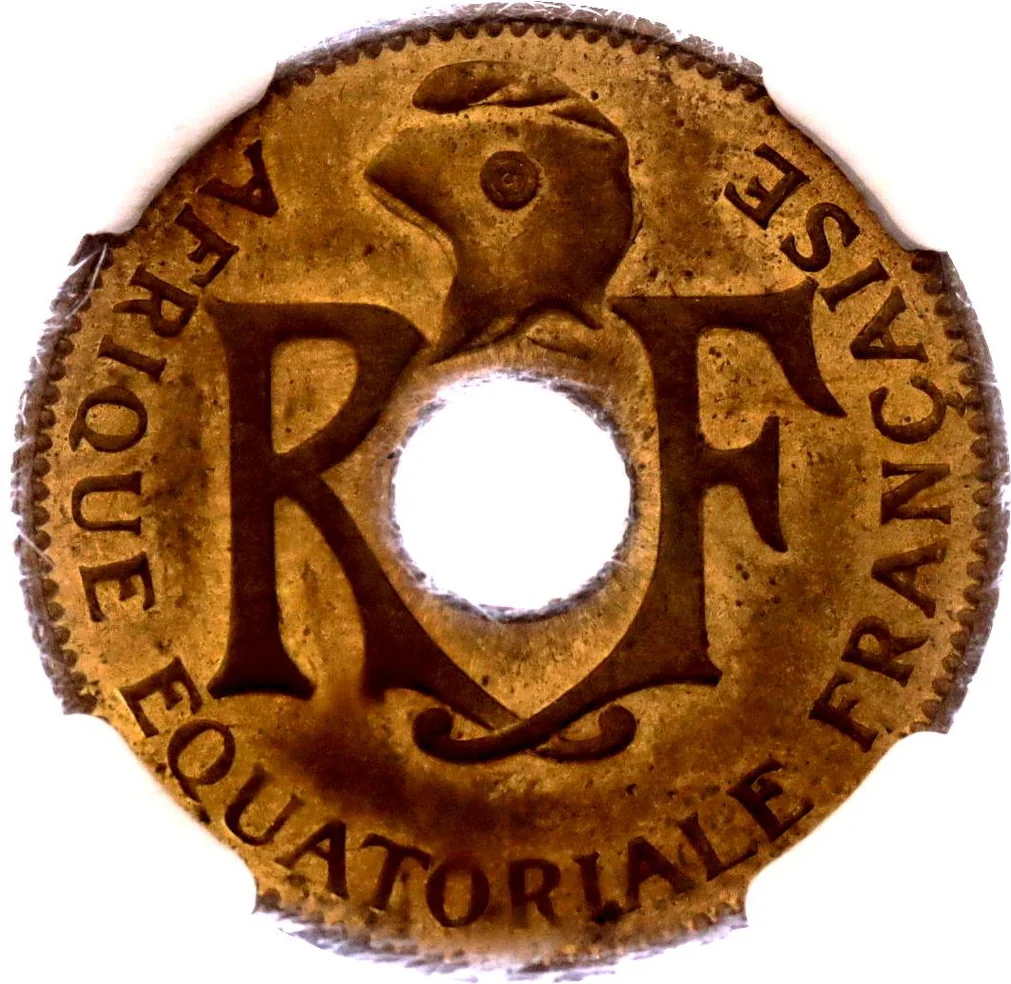
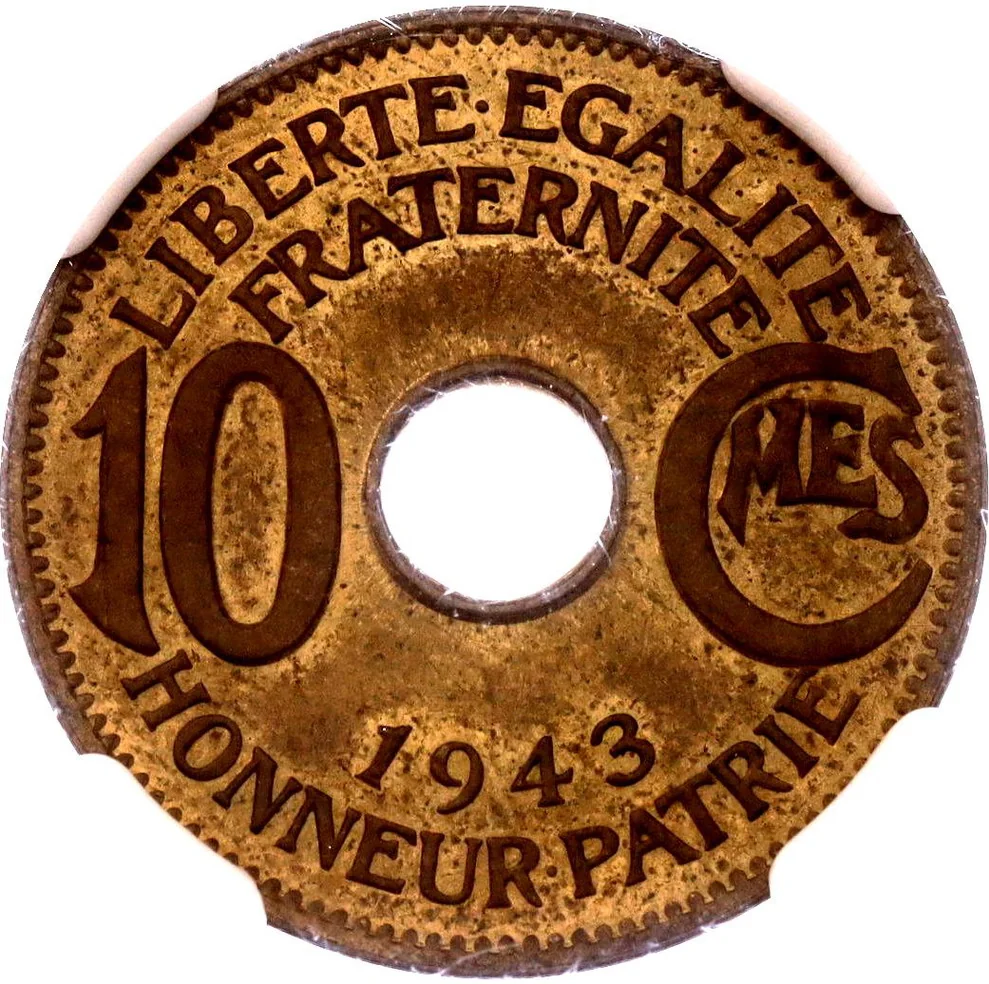
10 centimes – French Equatorial Africa
Add to wishlist
Context
Year: 1943
Country: Central African States
Issuer: French Equatorial Africa
Period:
(1940—1945)
Currency:
(1945—1960)
Demonetized: Yes
Total mintage: 13,000,000
Material
Diameter: 20.9 mm
Weight: 3.05 g
Thickness: 1.4 mm
Shape: Round with a round hole
Composition: Brass
Standard: Gold tenth ounce
Magnetic: No
Technique: Milled
Alignment: Coin alignment
flip
References
KM: #
Numista: #9435
Value
Exchange value: 0.10 FCFA
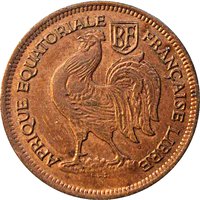
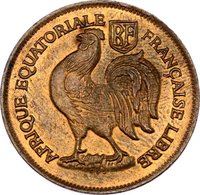
Obverse
Description:
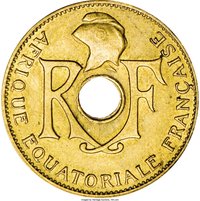
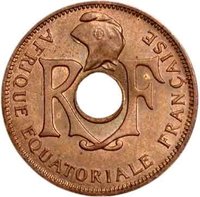
RF monogram. Phrygian cap with rosette.
Inscription:
RF
AFRIQUE EQUATORIALE FRANÇAISE
AFRIQUE EQUATORIALE FRANÇAISE
Translation:
French Equatorial Africa
Script: Latin
Language: French
Engraver: Edmond-Émile Lindauer
Reverse
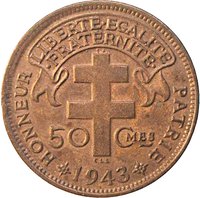
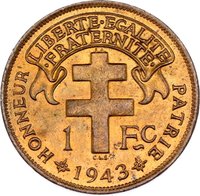
Description:
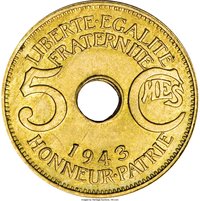
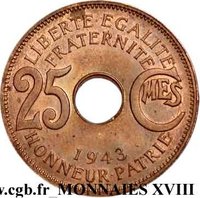
Liberty, Equality, Fraternity (1789). London government motto: Dieu et mon droit (c. 1200).
Inscription:
LIBERTE·EGALITE
FRATERNITE
10 CMES
1943
HONNEUR·PATRIE
FRATERNITE
10 CMES
1943
HONNEUR·PATRIE
Translation:
LIBERTY EQUALITY
FRATERNITY
10 FRANCS
1943
HONOR HOMELAND
FRATERNITY
10 FRANCS
1943
HONOR HOMELAND
Script: Latin
Language: French
Engraver: Edmond-Émile Lindauer
Edge
Plain
Mints
| Name | Mark |
|---|---|
| Pretoria | — |
Mintings
| Year | Mint Mark | Mintage | Quality | Collection |
|---|---|---|---|---|
| 1943 | — | 13,000,000 |
Historical background
In 1943, the currency situation in French Equatorial Africa (FEA) was defined by its alignment with the Free French cause under General Charles de Gaulle. Following the fall of France in 1940, the federation, led by Governor-General Félix Éboué, was the first major colonial territory to rally to Free France. As a result, it broke from the Vichy-controlled Banque de l'Afrique Occidentale (BAO), which issued the colonial franc, and established its own independent monetary system. The Free French authorities in Brazzaville created a provisional currency, issuing special banknotes and coins that were overstamped or distinctly marked to distinguish them from Vichy currency and ensure their legitimacy within Allied-held territories.
This new currency, often referred to as the "Free French franc" or "Brazzaville franc," was pegged not to the metropolitan French franc but directly to the British pound sterling at a fixed rate of 176.625 FEF to £1. This crucial economic decision was driven by necessity, as FEA's financial survival depended on support from the British Treasury and access to Allied resources. The peg provided much-needed stability and facilitated trade within the Allied war economy, allowing the federation to export vital raw materials like rubber, timber, and uranium (from the then-French Congo) to support the Allied war effort.
The currency arrangement was a powerful symbol of political sovereignty and a practical tool for the Free French administration. It allowed FEA to function as an economically viable entity, funding its own administration and military contributions, such as the famed French Expeditionary Corps that fought in North Africa and Italy. This financial autonomy was a cornerstone of FEA's role as the material and symbolic base of Free France during the war, setting the stage for post-war monetary reforms that would eventually lead to the creation of the CFA franc in 1945.
This new currency, often referred to as the "Free French franc" or "Brazzaville franc," was pegged not to the metropolitan French franc but directly to the British pound sterling at a fixed rate of 176.625 FEF to £1. This crucial economic decision was driven by necessity, as FEA's financial survival depended on support from the British Treasury and access to Allied resources. The peg provided much-needed stability and facilitated trade within the Allied war economy, allowing the federation to export vital raw materials like rubber, timber, and uranium (from the then-French Congo) to support the Allied war effort.
The currency arrangement was a powerful symbol of political sovereignty and a practical tool for the Free French administration. It allowed FEA to function as an economically viable entity, funding its own administration and military contributions, such as the famed French Expeditionary Corps that fought in North Africa and Italy. This financial autonomy was a cornerstone of FEA's role as the material and symbolic base of Free France during the war, setting the stage for post-war monetary reforms that would eventually lead to the creation of the CFA franc in 1945.
💎 Very Rare