

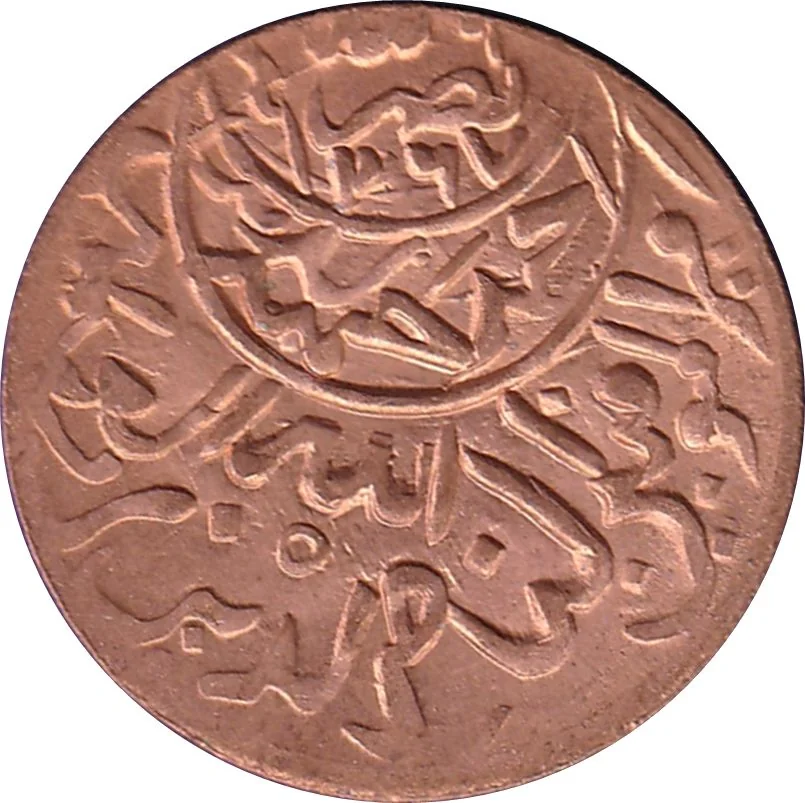
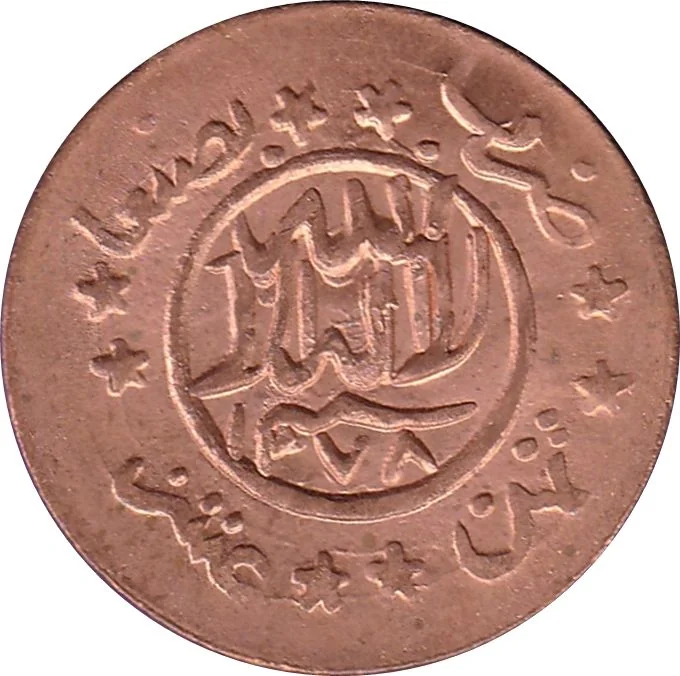
1⁄80 rial – Mutawakkilite Kingdom
Add to wishlist
Yemen
Context
Years: 1949–1963
Country: Yemen
Issuer: Mutawakkilite Kingdom
Ruler: Ahmad bin Yahya
Currency:
(1918—1974)
Demonetized: Yes
Material
References
Y: #
Numista: #942
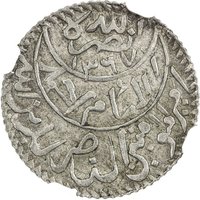
Obverse
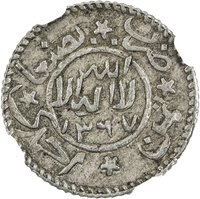
Reverse
Edge
Plain
Mintings
| Year | Mint Mark | Mintage | Quality | Collection |
|---|---|---|---|---|
| 1949 | — | — | ||
| 1952 | — | — | ||
| 1953 | — | — | ||
| 1954 | — | — | ||
| 1955 | — | — | ||
| 1956 | — | — | ||
| 1956 | — | — | ||
| 1957 | — | — | ||
| 1959 | — | — | ||
| 1959 | — | — | ||
| 1960 | — | — | ||
| 1961 | — | — | ||
| 1962 | — | — | ||
| 1963 | — | — |
Historical background
By 1949, the currency situation in the Mutawakkilite Kingdom of Yemen was characterized by a complex and fragmented monetary system, reflecting the country's isolation and traditional economic structures. The primary official currency was the Yemeni Riyal, a large, silver coin first minted in the early 20th century. However, its circulation was limited, and the economy heavily relied on a variety of other metallic currencies. Austrian Maria Theresa thalers (MT$), centuries-old silver coins with a fixed weight and purity, remained the dominant medium for large transactions and foreign trade, prized for their trusted intrinsic value. Alongside these, various Ottoman, British, and Indian coins also circulated freely, creating a multi-currency environment without a central banking authority.
This monetary fragmentation presented significant challenges for both internal administration and external commerce. The lack of a unified, state-controlled paper currency or a modern minting capability hindered economic development and state revenue collection. Exchange rates between the different silver coins fluctuated based on weight, purity, and local demand, complicating trade and taxation. Furthermore, Imam Yahya's government had limited capacity to influence the money supply, as the inflow of foreign silver coins was dictated by the kingdom's trade balance, primarily from the export of coffee and the receipt of foreign aid.
The year 1949 itself did not see a major monetary reform, but the existing system was under growing strain. The global shift away from silver-based currencies and the increasing integration of the region into the modern economic sphere highlighted the kingdom's anachronistic financial isolation. Pressure for modernization was building, setting the stage for the more significant currency reforms that would follow in the next decade, as the kingdom began to cautiously engage with the outside world and seek to establish a more centralized and modern monetary system.
This monetary fragmentation presented significant challenges for both internal administration and external commerce. The lack of a unified, state-controlled paper currency or a modern minting capability hindered economic development and state revenue collection. Exchange rates between the different silver coins fluctuated based on weight, purity, and local demand, complicating trade and taxation. Furthermore, Imam Yahya's government had limited capacity to influence the money supply, as the inflow of foreign silver coins was dictated by the kingdom's trade balance, primarily from the export of coffee and the receipt of foreign aid.
The year 1949 itself did not see a major monetary reform, but the existing system was under growing strain. The global shift away from silver-based currencies and the increasing integration of the region into the modern economic sphere highlighted the kingdom's anachronistic financial isolation. Pressure for modernization was building, setting the stage for the more significant currency reforms that would follow in the next decade, as the kingdom began to cautiously engage with the outside world and seek to establish a more centralized and modern monetary system.
🌱 Fairly Common