

½ qirsh – Darfur
Add to wishlist
Sudan
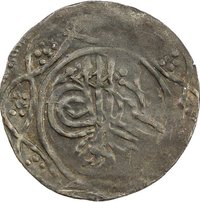
Obverse
Description:
Tughra encircled.
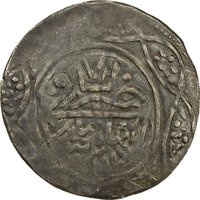
Reverse
Description:
Value and date circled
Inscription:
ضرب في
الفاشر
الفاشر
Translation:
Struck in
Al-Fashir
Al-Fashir
Language: Arabic
Edge
Mints
| Name | Mark |
|---|---|
| Al-Fashir | — |
Mintings
| Year | Mint Mark | Mintage | Quality | Collection |
|---|---|---|---|---|
| 1910 | — | — |
Historical background
In 1910, Darfur existed in a complex monetary landscape, shaped by its recent and incomplete integration into the Anglo-Egyptian Sudan. Just five years earlier, the Sultanate of Darfur had been an independent state with its own economic systems. The traditional currency was the Maria Theresa thaler (MT$), a silver coin minted in Austria but ubiquitous in Northeast Africa and the Red Sea trade. Alongside these "dollars," transactions were heavily reliant on barter, with staple goods like cotton cloth (dammur), grain, salt, and livestock serving as common mediums of exchange and units of account, especially in rural areas.
The Anglo-Egyptian administration, established after the fall of Sultan Ali Dinar's predecessor in 1916, was actively imposing a new monetary order. They promoted the Egyptian pound (which was pegged to and equivalent to the British pound sterling) and its subsidiary piastres as the official currency for taxation and government transactions. However, this push was in its early and uneven stages. In practice, the Maria Theresa thaler remained deeply trusted and in widespread circulation, particularly for larger or long-distance trade, creating a de facto bimetallic system alongside the new official currency.
Consequently, Darfur in 1910 was a region of monetary duality and transition. The coexistence of the Egyptian pound, the Maria Theresa thaler, and various commodity monies reflected the broader political reality: the external framework of a colonial state was being superimposed upon, but had not yet replaced, Darfur’s established indigenous economic and social structures. Exchange rates between these currencies fluctuated based on local market conditions and the availability of silver, making the period one of financial adaptation and uncertainty for its inhabitants.
The Anglo-Egyptian administration, established after the fall of Sultan Ali Dinar's predecessor in 1916, was actively imposing a new monetary order. They promoted the Egyptian pound (which was pegged to and equivalent to the British pound sterling) and its subsidiary piastres as the official currency for taxation and government transactions. However, this push was in its early and uneven stages. In practice, the Maria Theresa thaler remained deeply trusted and in widespread circulation, particularly for larger or long-distance trade, creating a de facto bimetallic system alongside the new official currency.
Consequently, Darfur in 1910 was a region of monetary duality and transition. The coexistence of the Egyptian pound, the Maria Theresa thaler, and various commodity monies reflected the broader political reality: the external framework of a colonial state was being superimposed upon, but had not yet replaced, Darfur’s established indigenous economic and social structures. Exchange rates between these currencies fluctuated based on local market conditions and the availability of silver, making the period one of financial adaptation and uncertainty for its inhabitants.

✨ Legendary