

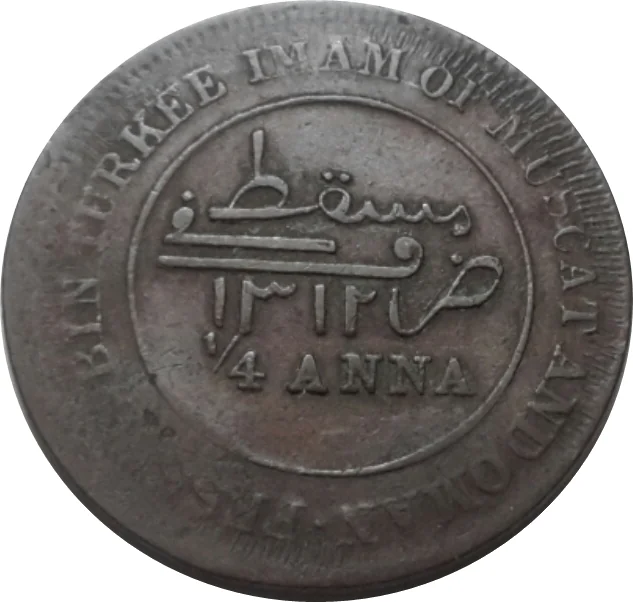
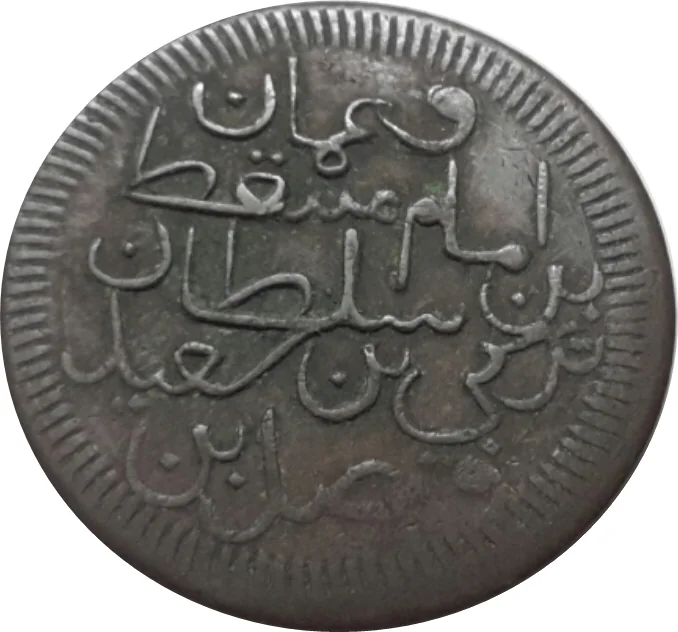
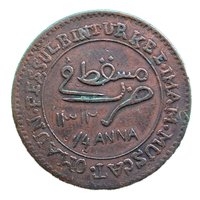
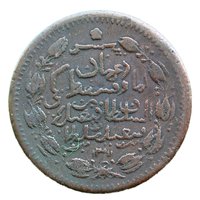
¼ anna – Muscat and Oman
Add to wishlist
Oman
Context
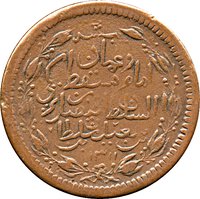
Year: 1895
Islamic (Hijri) Year:: 1312
Country: Oman
Issuer: Muscat and Oman
Ruler: Faisal bin Turki
Currency:
(1891—1959)
Demonetized: Yes
Material
References
KM: #
Numista: #94163
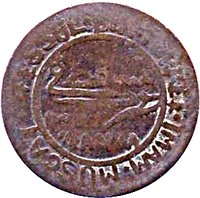
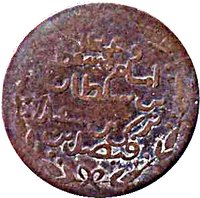
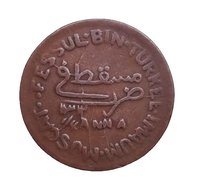
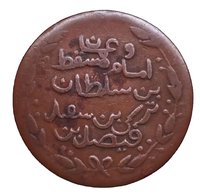
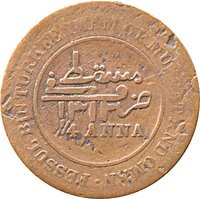
Reverse
Inscription:
Fessul Bin Turkee. Imam of Muscat and Oman
1/4 ANNA
1/4 ANNA
Script: Arabic
Edge
Plain
Mints
| Name | Mark |
|---|---|
| Muscat | — |
Mintings
| Year | Mint Mark | Mintage | Quality | Collection |
|---|---|---|---|---|
| 1895 | — | — |
Historical background
In 1895, the currency situation in Muscat and Oman was a complex tapestry of indigenous and foreign coins, reflecting the Sultanate's pivotal position in Indian Ocean trade. The primary unit of account was the Maria Theresa Thaler (MT$) , a large silver coin minted in Austria but ubiquitous throughout the Arabian Peninsula and East Africa. Its high silver content and consistent design made it the preferred coin for large transactions and external trade. Alongside the thaler, the Indian Rupee was equally vital due to Oman's deep political and commercial ties with British India. Rupees circulated widely, especially in coastal mercantile centres, and their value fluctuated against the thaler based on the relative price of silver.
This bimetallic system was complicated by a plethora of other coins in circulation. Older Omani sadiyyah rupees (struck locally until the 1870s), British sovereigns, French francs, and various Turkish and Persian coins all passed in commerce. The lack of a standardised national currency meant exchange rates were negotiated locally, often to the advantage of money changers (sarrafs). Furthermore, the chronic shortage of small change was addressed by cutting larger coins, like the MT$ and rupees, into fractional pieces (halves and quarters), which were then weighed for minor transactions.
The monetary landscape was directly tied to Oman's political fragility. By 1895, the interior was under the de facto control of the Imamate of Oman, while Sultan Faisal bin Turki (r. 1888-1913) in Muscat relied heavily on British political and financial support. This dependence, formalised by the Canning Award of 1861, cemented the rupee's dominance and hindered any move toward a unified, sovereign currency. Thus, the currency situation was not merely an economic issue but a manifestation of the Sultanate's fractured sovereignty and its subordination within the British imperial economic sphere.
This bimetallic system was complicated by a plethora of other coins in circulation. Older Omani sadiyyah rupees (struck locally until the 1870s), British sovereigns, French francs, and various Turkish and Persian coins all passed in commerce. The lack of a standardised national currency meant exchange rates were negotiated locally, often to the advantage of money changers (sarrafs). Furthermore, the chronic shortage of small change was addressed by cutting larger coins, like the MT$ and rupees, into fractional pieces (halves and quarters), which were then weighed for minor transactions.
The monetary landscape was directly tied to Oman's political fragility. By 1895, the interior was under the de facto control of the Imamate of Oman, while Sultan Faisal bin Turki (r. 1888-1913) in Muscat relied heavily on British political and financial support. This dependence, formalised by the Canning Award of 1861, cemented the rupee's dominance and hindered any move toward a unified, sovereign currency. Thus, the currency situation was not merely an economic issue but a manifestation of the Sultanate's fractured sovereignty and its subordination within the British imperial economic sphere.
💎 Extremely Rare